


Evolution of gut Bifidobacterium population in healthy Japanese infants over the first three years of life: a quantitative assessment
- PMID: 28855672
- PMCID: PMC5577255
- DOI: 10.1038/s41598-017-10711-5
Evolution of gut Bifidobacterium population in healthy Japanese infants over the first three years of life: a quantitative assessment
Abstract
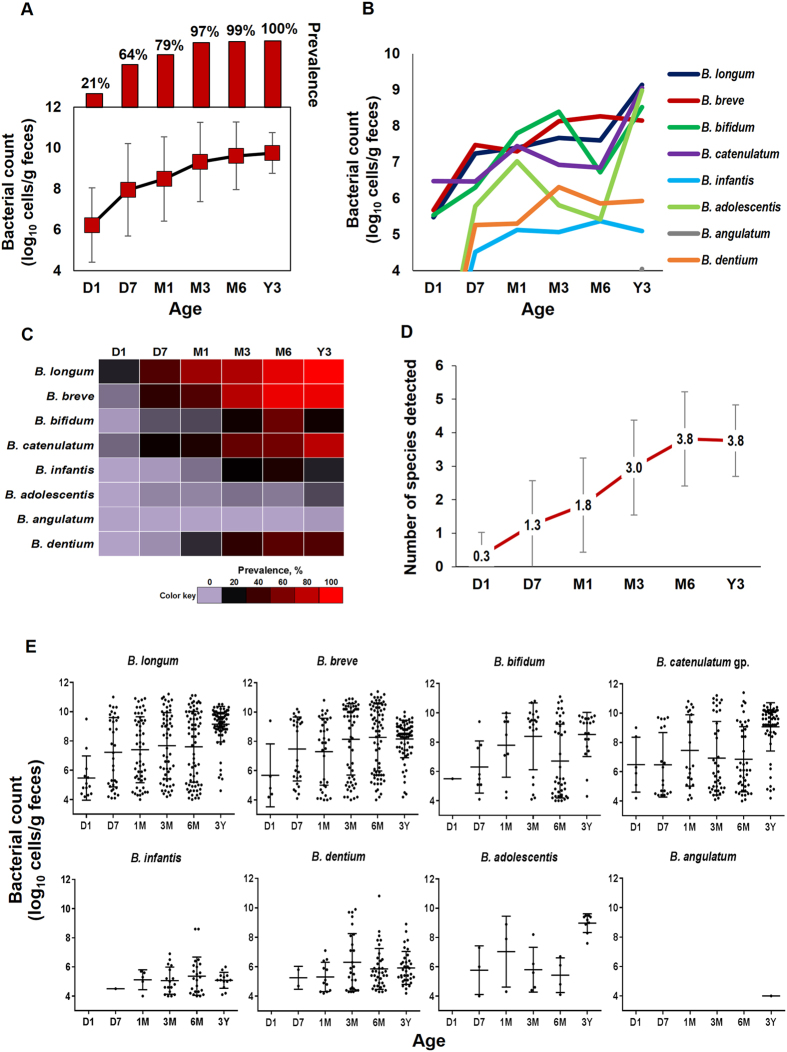
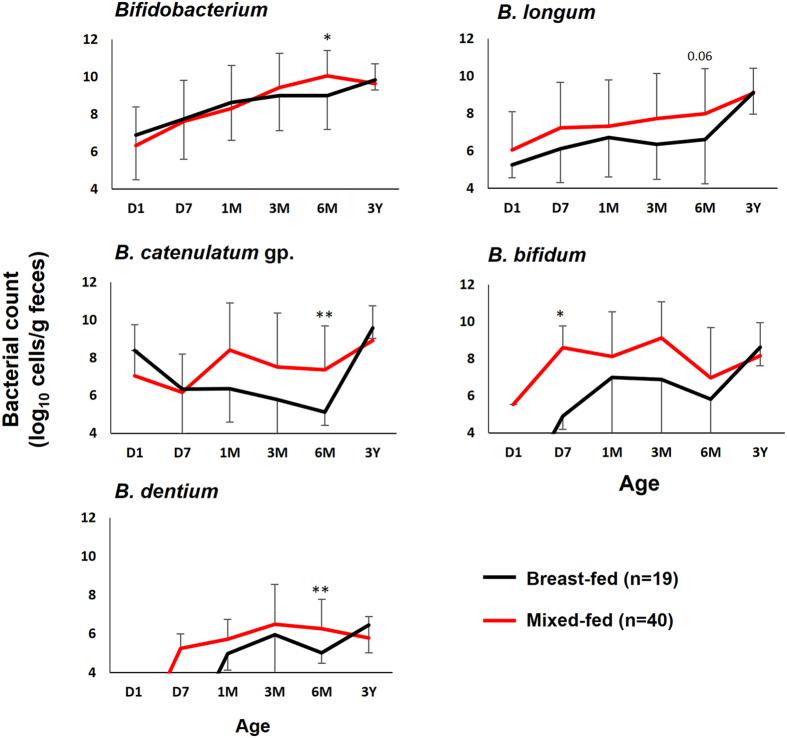
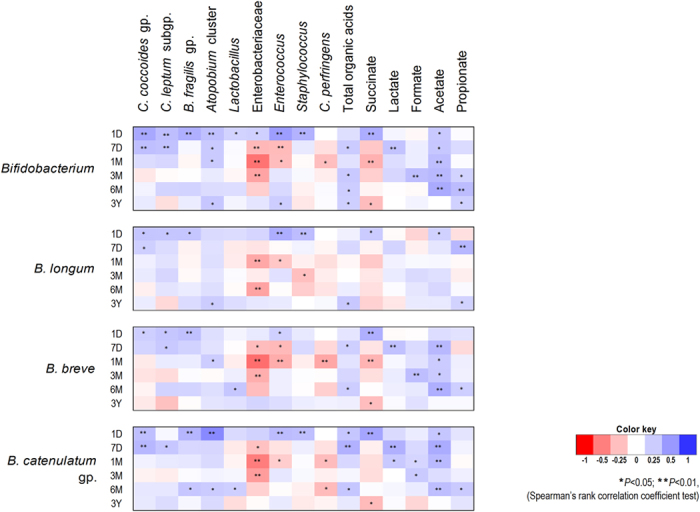
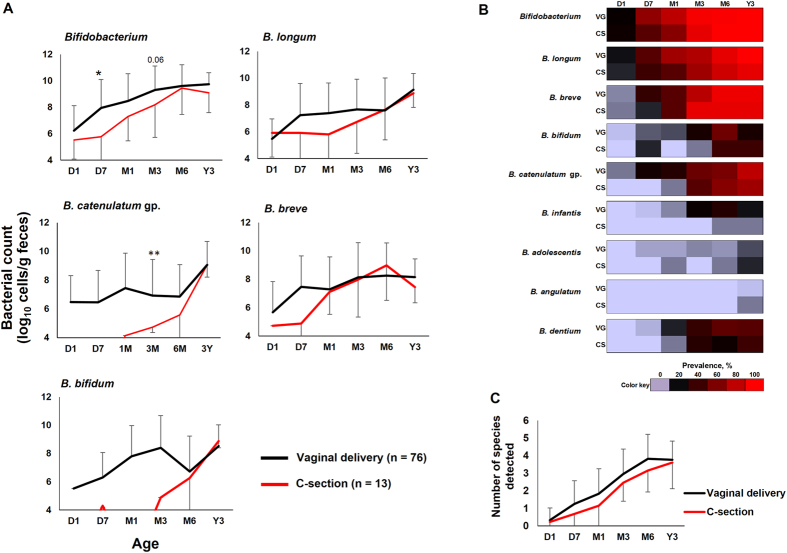
Bifidobacteria are important members of human gut microbiota; however, quantitative data on their early-life dynamics is limited. Here, using a sensitive reverse transcription-qPCR approach, we demonstrate the carriage of eight signature infant-associated Bifidobacterium species (B. longum, B. breve, B. bifidum, B. catenulatum group, B. infantis, B. adolescentis, B. angulatum and B. dentium) in 76 healthy full-term vaginally-born infants from first day to three years of life. About 21% babies carry bifidobacteria at first day of life (6.2 ± 1.9 log10 cells/g feces); and this carriage increases to 64% (8.0 ± 2.2), 79% (8.5 ± 2.1), 97% (9.3 ± 1.8), 99% (9.6 ± 1.6), and 100% (9.7 ± 0.9) at age 7 days, 1, 3 and 6 months, and 3 years, respectively. B. longum, B. breve, B. catenulatum group and B. bifidum are among the earliest and abundant bifidobacterial clades. Interestingly, infants starting formula-feed as early as first week of life have higher bifidobacterial carriage compared to exclusively breast-fed counterparts. Bifidobacteria demonstrate an antagonistic correlation with enterobacteria and enterococci. Further analyses also reveal a relatively lower/ delayed bifidobacterial carriage in cesarean-born babies. The study presents a quantitative perspective of the early-life gut Bifidobacterium colonization and shows how factors such as birth and feeding modes could influence this acquisition even in healthy infants.
Conflict of interest statement
The authors declare that they have no competing interests.
Figures
References
Publication types
MeSH terms
LinkOut - more resources
Full Text Sources
Other Literature Sources
Medical
