


Resuscitative Endovascular Balloon Occlusion of the Aorta in trauma: a systematic review of the literature
- PMID: 28855960
- PMCID: PMC5575940
- DOI: 10.1186/s13017-017-0153-2
Resuscitative Endovascular Balloon Occlusion of the Aorta in trauma: a systematic review of the literature
Abstract
Aims: Resuscitative endovascular balloon occlusion of the aorta has been a hot topic in trauma resuscitation during these last years. The aims of this systematic review are to analyze when, how, and where this technique is performed and to evaluate preliminary results.
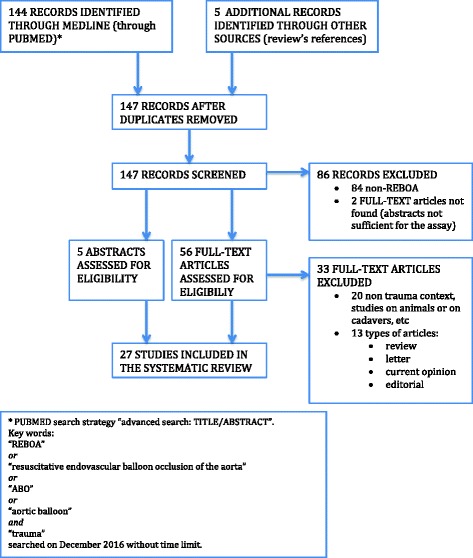
Methods: The literature search was performed on online databases in December 2016, without time limits. Studies citing endovascular balloon occlusion of the aorta in trauma were retrieved for evaluation.
Results: Sixty-one articles met the inclusion criteria and were selected for the systematic review. Overall, they included 1355 treated with aortic endovascular balloon occlusion, and 883 (65%) patients died after the procedure. In most of the included cases, a shock state seemed to be present before the procedure. Time of death and inflation site was not described in the majority of included studies. Procedure-related and shock-related complications are described. Introducer sheath size and comorbidity seems to play the role of risk factors.
Conclusions: Resuscitative endovascular balloon occlusion of the aorta is increasingly used in trauma victim resuscitation all over the world, to elevate blood pressure and limit fluid infusion, while other procedures aimed to stop the bleeding are performed. High mortality rate is probably due to the severity of the injuries. Time and place of balloon insertion, zone of balloon inflation, and inflation cutoff time are very heterogeneous.
Keywords: Aortic balloon occlusion; Bleeding; Hemorrhagic shock; REBOA; Severe trauma; Systematic review; Trauma center; Trauma system.
Conflict of interest statement
Ethics approval and consent to participate
Not applicable.
Consent for publication
Not applicable.
Competing interests
The authors declare that they have no competing interests.
Publisher’s Note
Springer Nature remains neutral with regard to jurisdictional claims in published maps and institutional affiliations.
Figures
References
Publication types
MeSH terms
LinkOut - more resources
Full Text Sources
Other Literature Sources
Miscellaneous
