Review
. 2017 Dec;35(12):2323-2330.
doi: 10.1002/stem.2696. Epub 2017 Sep 23.

Concise Review: Mechanisms of Quiescent Hair Follicle Stem Cell Regulation

Affiliations
Review

Concise Review: Mechanisms of Quiescent Hair Follicle Stem Cell Regulation

Rui Yi. Stem Cells. 2017 Dec.

Abstract

Maintaining a pool of adult stem cells is essential for tissue homeostasis and wound repair. In mammalian tissues, notably hair follicles, blood, and muscle, stem cells acquire quiescence and infrequently divide for self-renewal. Mechanistic understanding of stem cell quiescence is critical for applying these multipotent cells in regenerative medicine and interrogating their roles in human diseases such as cancer. Quiescent and dividing epithelial stem cells located in hair follicle are conspicuously organized in a spatiotemporally specific manner, allowing them to be studied at a considerable depth. Recent advancements in mouse genetics, genomics, and imaging have revealed unprecedented insights into establishment, maintenance, and regulation of quiescent hair follicle stem cells. This concise review summarizes the progress with a focus on mechanisms mediated by signaling pathways and transcription factors and discusses their implications in the understanding of stem cell biology. Stem Cells 2017;35:2323-2330.

Keywords: Adult stem cells; Cell signaling; Epidermis; Self-renewal; Transcriptional regulation.


Figures

Figure 1
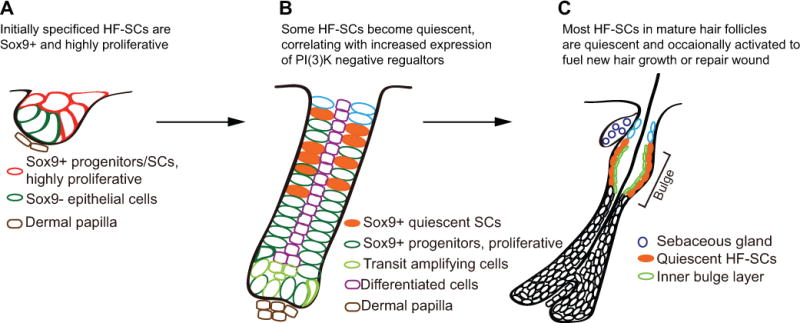
Figure 1. Specification of hair follicle stem cells and the establishment of quiescent cellular state during embryonic skin development
A. In newly formed hair germs, HF-SCs are specified as Sox9-expressing progenitors. At this stage, all Sox9-expressing cells are highly proliferative. B. When hair follicles continue to grow, some HF-SCs exit cell cycle and adapt the quiescent cellular state. Whereas the precise mechanism remains to be determined, the establishment of quiescence is generally correlated with increased expression of several negative regulators of the PI(3)K pathway. C. In fully developed hair follicles, HF-SCs are mostly quiescent and only occasionally activated to fuel hair growth or repair wound.
Figure 2
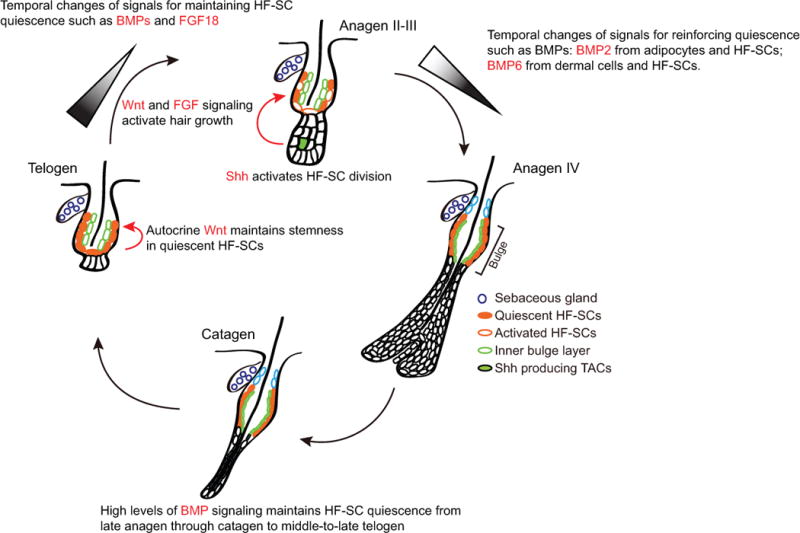
Figure 2. Signaling pathways control the quiescence and activation of hair follicle stem cells
BMP signaling and FGF18 governs the quiescent cellular state whereas Wnt and FGF7/10 promotes hair growth. Shh produced by transit amplifying cells at the Matrix activates self-renewal of HF-SCs in early Anagen such as Anagen II and III.
Figure 3
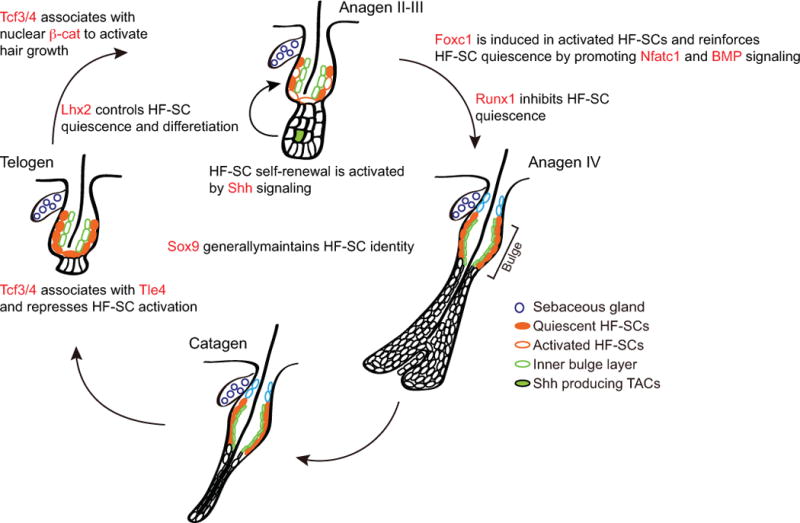
Figure 3. Transcription factors regulate the quiescence and activation of hair follicle stem cells
Both positive and negative transcription regulators are identified to control the quiescence of hair follicle stem cells at distinct stages of hair cycle.

References

    1. Blanpain C, Fuchs E. Stem cell plasticity. Plasticity of epithelial stem cells in tissue regeneration. Science. 2014;344:1242281. - PMC - PubMed
    1. Plikus MV, Gay DL, Treffeisen E, et al. Epithelial stem cells and implications for wound repair. Semin Cell Dev Biol. 2012;23:946–953. - PMC - PubMed
    1. Kretzschmar K, Watt FM. Markers of epidermal stem cell subpopulations in adult mammalian skin. Cold Spring Harb Perspect Med. 2014;4 - PMC - PubMed
    1. Millar SE, Willert K, Salinas PC, et al. WNT signaling in the control of hair growth and structure. Dev Biol. 1999;207:133–149. - PubMed
    1. Andl T, Reddy ST, Gaddapara T, et al. WNT signals are required for the initiation of hair follicle development. Dev Cell. 2002;2:643–653. - PubMed

Publication types