


Ascorbyl palmitate-incorporated paclitaxel-loaded composite nanoparticles for synergistic anti-tumoral therapy
- PMID: 28856937
- PMCID: PMC8241186
- DOI: 10.1080/10717544.2017.1370619
Ascorbyl palmitate-incorporated paclitaxel-loaded composite nanoparticles for synergistic anti-tumoral therapy
Abstract
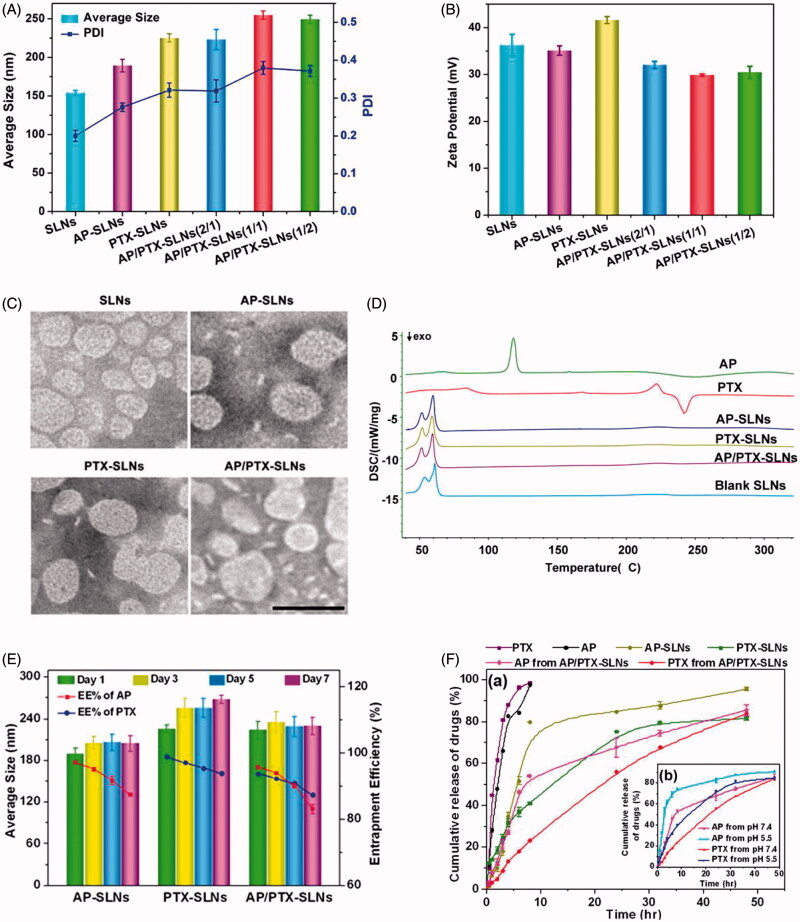
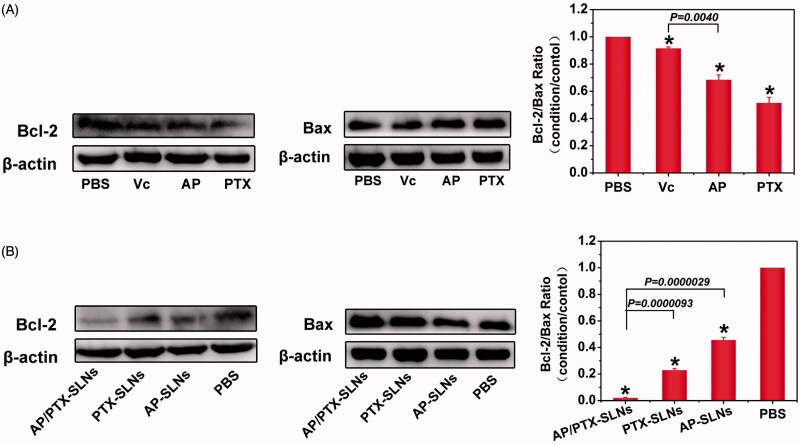
A co-loaded drug delivery system based on ascorbyl palmitate that can transport various functional drugs to their targets within a tumor represents an attractive strategy for increasing the efficiency of anticancer treatment. In this study, we developed a dual drug delivery system to encapsulate ascorbyl palmitate (AP) and paclitaxel (PTX) for synergistic cancer therapy. AP, which is a vitamin C derivative, and PTX were incorporated into solid lipid nanoparticles (AP/PTX-SLNs), which were used to treat murine B16F10 melanoma that had metastasized to the lungs of mice. These nanoparticles were spherical with an average size of 223 nm as measured by transmission electron microscope and dynamic light scattering. In vitro cytotoxicity assays indicated that the AP/PTX-SLNs with an AP/PTX mass ratio of 2/1 provided the optimal synergistic anticancer efficacy. In vivo, AP/PTX-SLNs were revealed to be much more effective in suppressing tumor growth in B16F10-bearing mice and in eliminating cancer cells in the lungs than single drug (AP or PTX)-loaded SLNs via a synergistic effect through reducing the Bcl-2/Bax ratio. Furthermore, no marked side effects were observed during the treatment with the AP/PTX-SLNs, indicating that the co-delivery system with ascorbyl palmitate holds promising clinical potential in cancer therapy.
Keywords: Vitamin C; ascorbyl palmitate; derivative; paclitaxel; synergistic anticancer efficacy.
Conflict of interest statement
The authors report no conflicts of interest.
Figures
References
-
- Austria R, Semenzato A, Bettero A. (1997). Stability of vitamin C derivatives in solution and topical formulations. J Pharm Biomed Anal 15:795–801. - PubMed
-
- Banks WA, Kastin AJ. (1985). Peptides and the blood-brain barrier: lipophilicity as a predictor of permeability. Brain Res Bull 15:287–92. - PubMed
-
- Cameron E, Campbell A. (1974). The orthomolecular treatment of cancer. II. Clinical trial of high-dose ascorbic acid supplements in advanced human cancer. Chemico-Biol Interact 9:285–315. - PubMed
-
- Cao X, Luo J, Gong T, et al. (2015). Coencapsulated doxorubicin and bromotetrandrine lipid nanoemulsions in reversing multidrug resistance in breast cancer in vitro and in vivo. Mol Pharm 12:274–86. - PubMed
MeSH terms
Substances
LinkOut - more resources
Full Text Sources
Other Literature Sources
Research Materials
