


Preoperative intravenous glucocorticoids can reduce postoperative acute pain following total knee arthroplasty: A meta-analysis
- PMID: 28858092
- PMCID: PMC5585486
- DOI: 10.1097/MD.0000000000007836
Preoperative intravenous glucocorticoids can reduce postoperative acute pain following total knee arthroplasty: A meta-analysis
Abstract
Background: The ability of preoperative intravenous glucocorticoids to control pain after total knee arthroplasty (TKA) has been examined in many studies, but it remains controversial. Therefore, we undertook a meta-analysis of randomized controlled trials (RCTs) to evaluate the efficacy and safety of preoperative intravenous glucocorticoids for postoperative pain management after TKA.
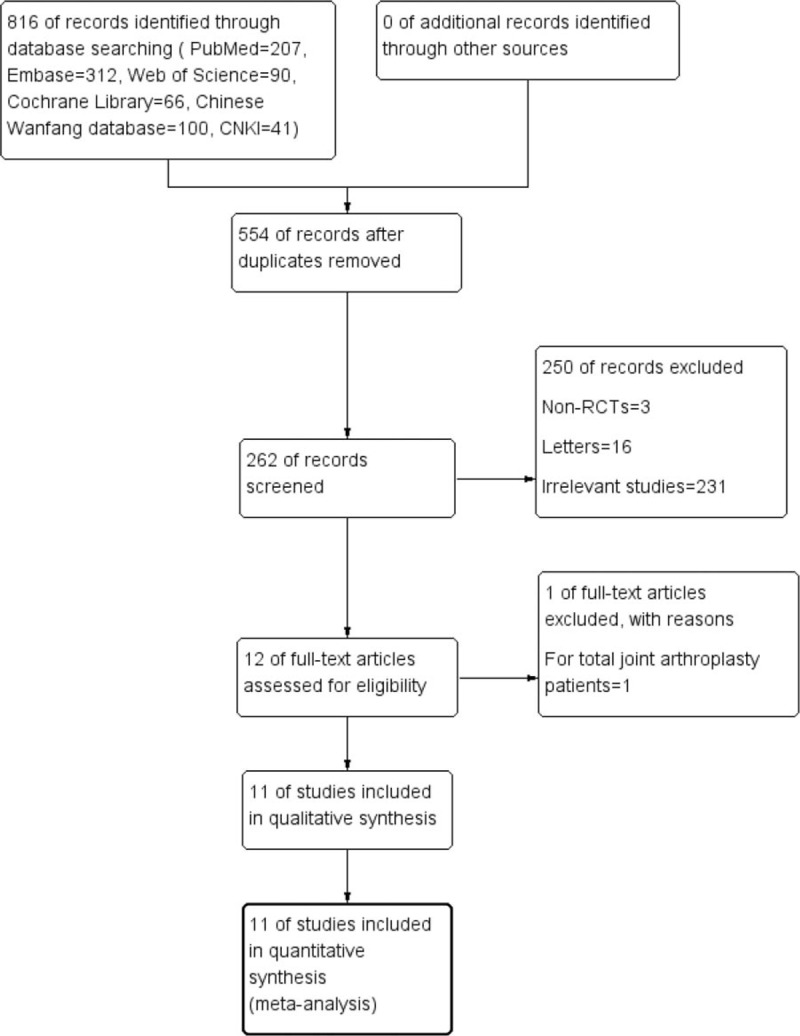
Methods: We systematically searched RCTs from electronic databases, including PubMed, Embase, Web of Science, the Cochrane Library, the Chinese Wanfang Database, and the China National Knowledge Infrastructure database. The outcomes included visual analogue scale (VAS) scores at 6, 12, 24, 48, and 72 hours after TKA; the occurrence of postoperative nausea and vomiting (PONV); blood glucose at 6 and 24 hours after TKA; and the occurrence of infection.
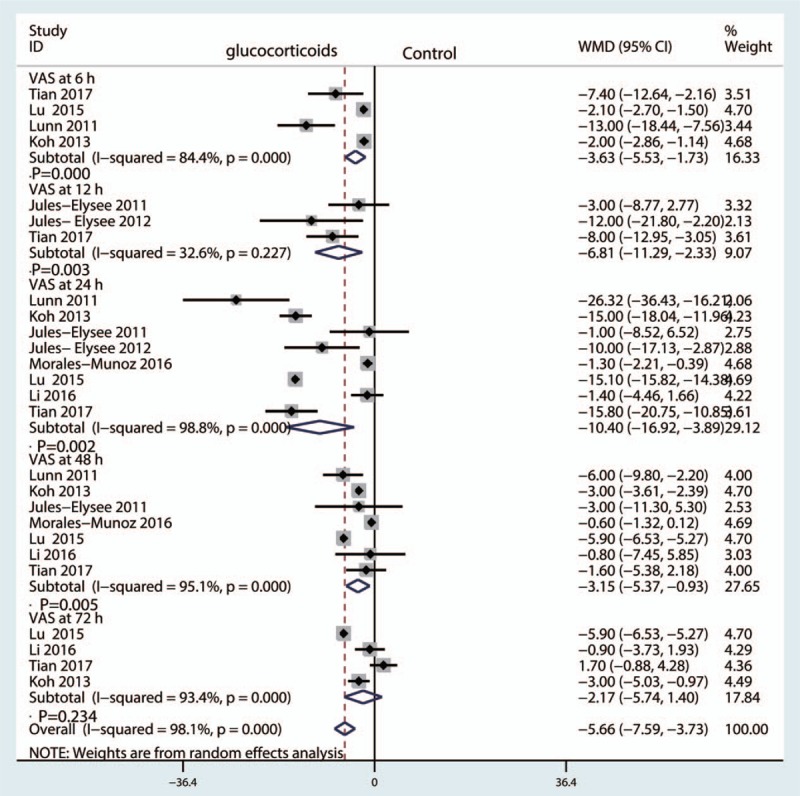
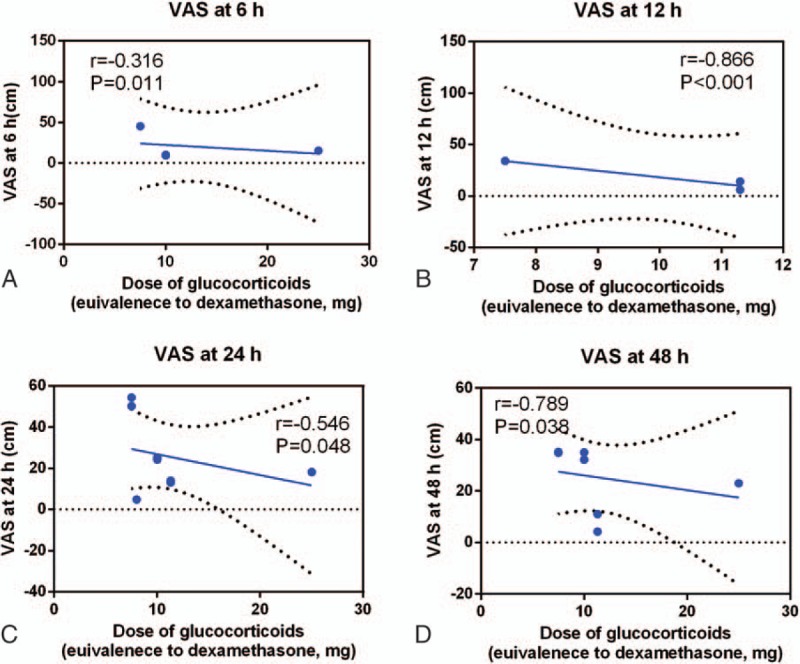
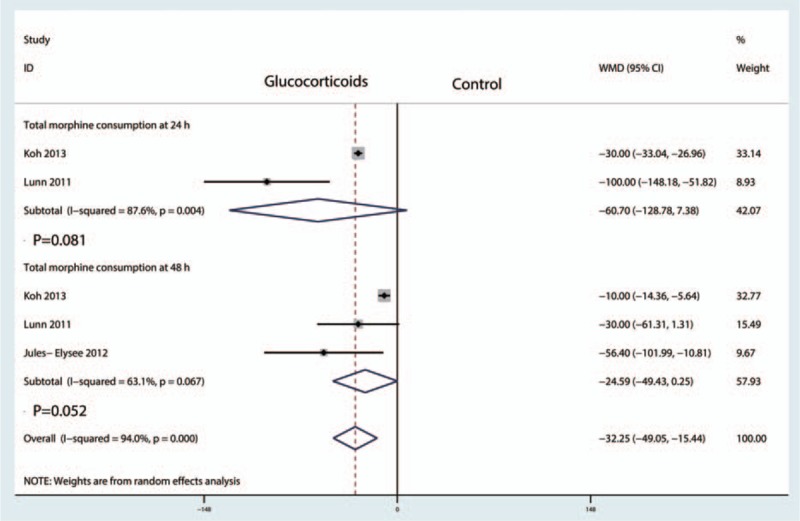
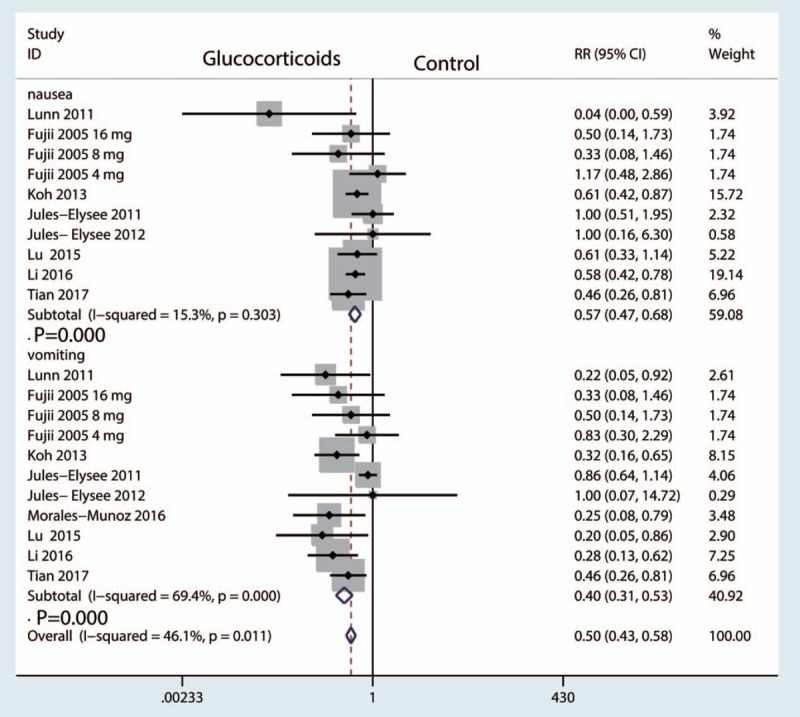
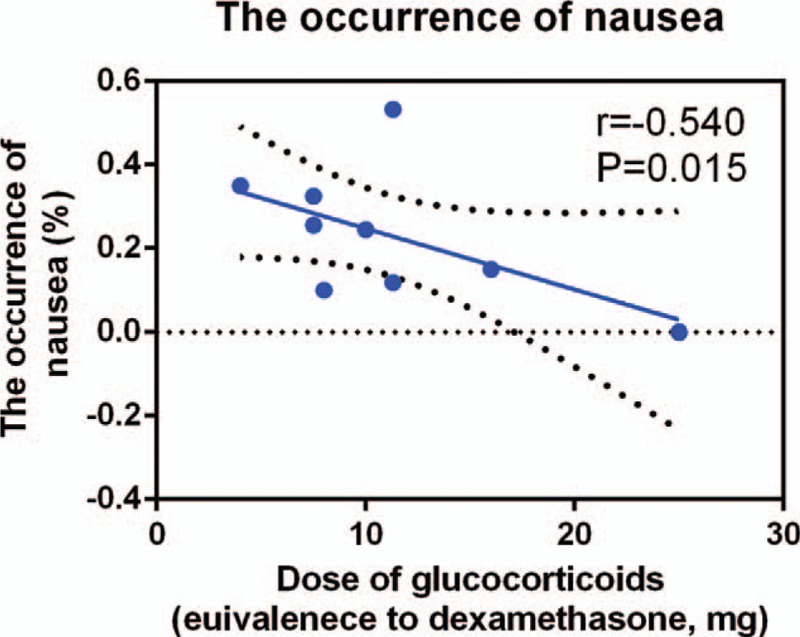
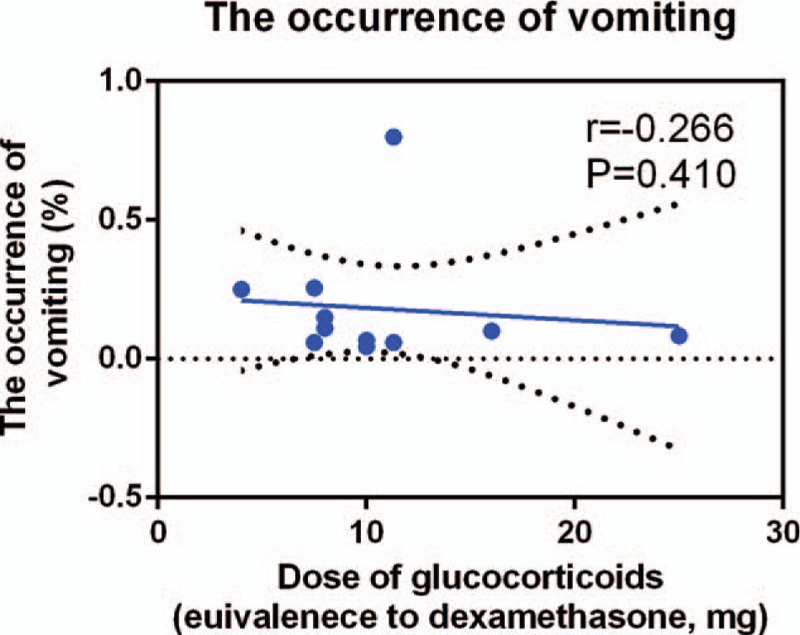
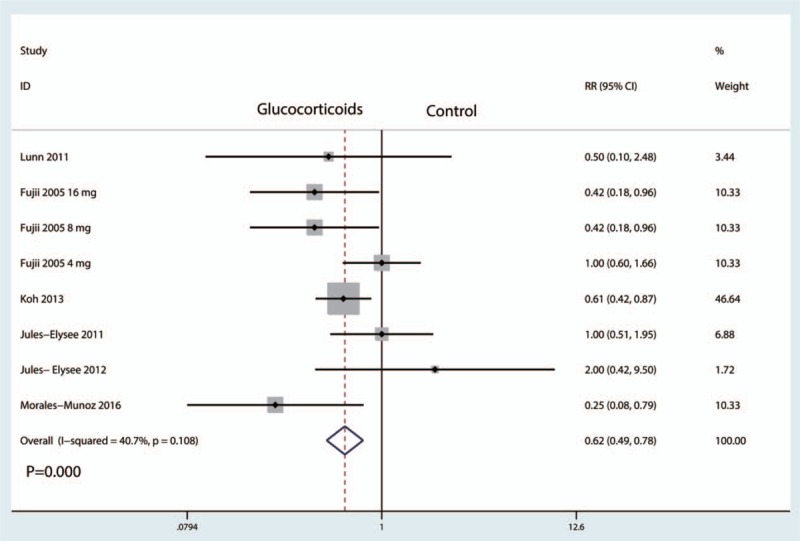
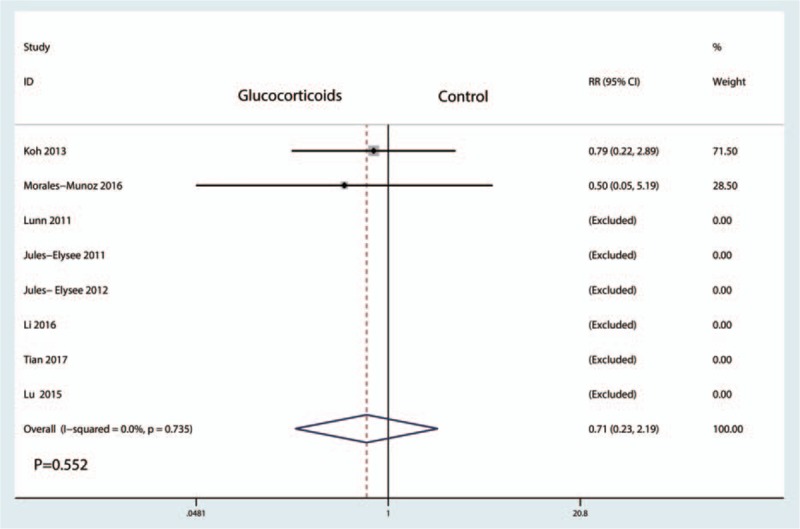
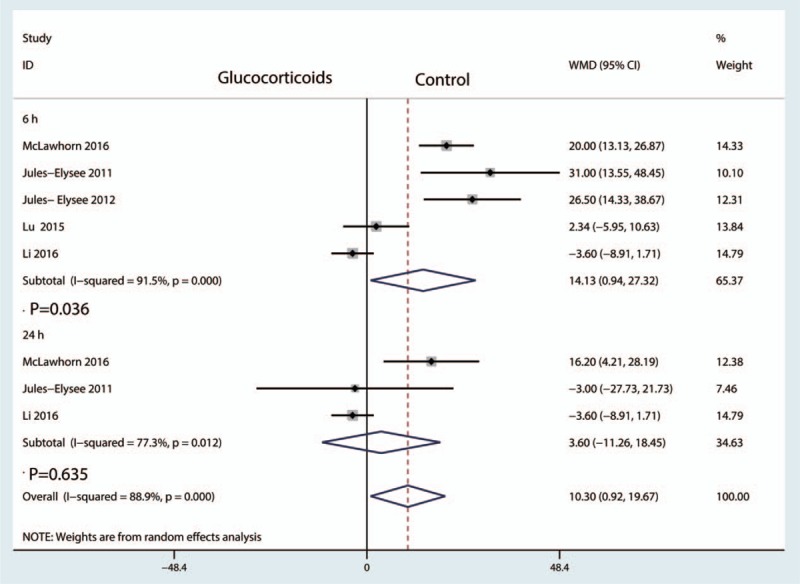
Results: Of the identified studies, a total of 11 RCTs involving 1000 patients (glucocorticoids = 501, control = 499) were included in this meta-analysis. Compared with a placebo, preoperative intravenous glucocorticoids significantly reduced VAS scores at 6, 12, 24, and 48 hours, with decreases of 3.63 points, 6.81 points, 10.40 points, and 3.15 points, respectively, on a 110-point VAS. Moreover, intravenous glucocorticoids were associated with significant decreases of 19.4% and 16.8% in the occurrence of nausea and vomiting, respectively. However, intravenous glucocorticoids were also associated with increased blood glucose with no clinical importance at 6 hours after TKA. No significant difference was found in the occurrence of infection or in blood glucose at 24 hours after TKA.
Conclusion: Preoperative intravenous glucocorticoids are an effective and safe method to reduce postoperative pain and PONV in patients following TKA. More studies are necessary to identify the optimal dose and type of glucocorticoids for maximal pain control.
Conflict of interest statement
The authors report no conflicts of interest.
Figures
References
-
- Kurtz S, Ong K, Lau E, et al. Projections of primary and revision hip and knee arthroplasty in the United States from 2005 to 2030. J Bone Joint Surg Am 2007;89:780–5. - PubMed
-
- Terkawi AS, Mavridis D, Sessler DI, et al. Pain management modalities after total knee arthroplasty: a network meta-analysis of 170 randomized controlled trials. Anesthesiology 2017;126:923–37. - PubMed
Publication types
MeSH terms
Substances
LinkOut - more resources
Full Text Sources
Other Literature Sources
Medical
