Review
. 2017 Aug 31;7(9):246.
doi: 10.3390/nano7090246.

Mini Review: Nanosheet Technology towards Biomedical Application

Affiliations
Review

Mini Review: Nanosheet Technology towards Biomedical Application

Sheng Zhang et al. Nanomaterials (Basel). .

Abstract

The fabrication technique of ultrathin film (commonly known as nanosheets) has been significantly developed over the years. Due to the mechanical properties of nanosheets, such as high levels of adhesion and flexibility, this made nanosheets the ideal candidate in biomedical applications. In this review, innovative biomedical applications of nanosheets are discussed, which include, drug delivery, wound treatment, and functional nanosheets towards flexible biodevices, etc. Finally, the future outlook of nanosheet technology towards a biomedical application is discussed.

Keywords: drug delivery; fragmented nanosheets; nanosheet; wound treatment.


Conflict of interest statement

The authors declare no conflict of interest.

Figures
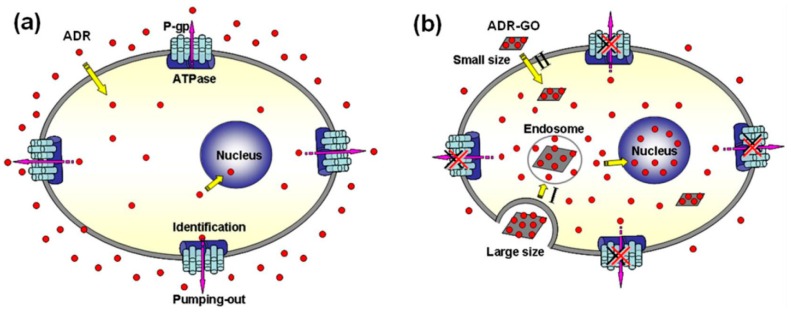
Figure 1
Figure 1
Schematic diagram of (a) the adriamycin (ADR) resistance mechanism of surface P-gp in MCF-7/ADR cells and (b) the mechanism of Adriamycin graphene oxide (ADR-GO) reversing the ADR resistance [14].
Figure 2
Figure 2
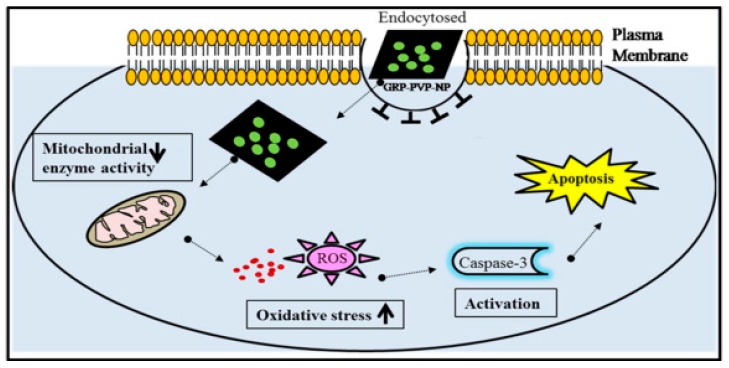
Schematic diagram of potential mechanism with graphene-poly(vinylpyrrolidone) nanoparticle composite (GRP-PVP-NP) induced cytotoxicity in cancer cells [15].
Figure 3
Figure 3
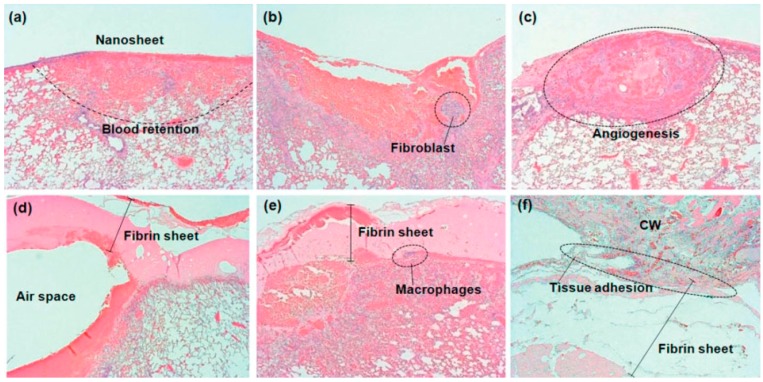
Upper panels correspond to the polysaccharide nanosheet, and lower panels correspond to the fibrin sheet, at 3 h (a,d), 3 days (b,e), and 7 days (c,f) after repair [19].
Figure 4
Figure 4
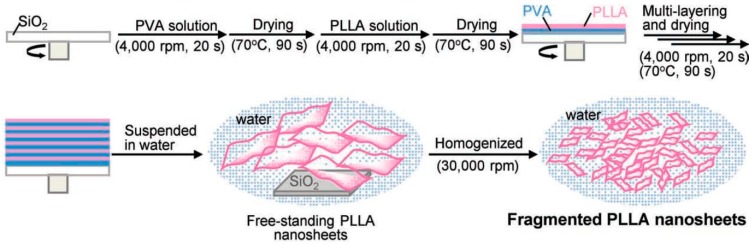
Preparation of fragmented PLLA nanosheets [22].
Figure 5
Figure 5
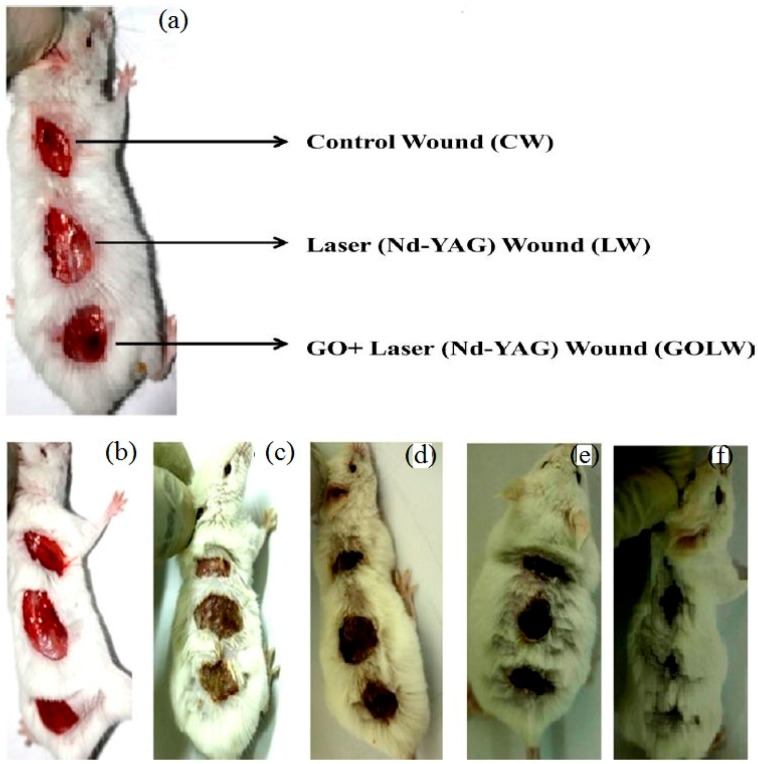
(a) Location of wounds, (b) fresh wounds on dorsal surface of mice, (c) Infection started after 3 days with injection of S. aureus on wounds, (d,e) condition of wounds after 6 days of treatment, (f) wound treatment on the dorsal surface of mice by using GO and Nd-YAG laser [23].
Figure 6
Figure 6
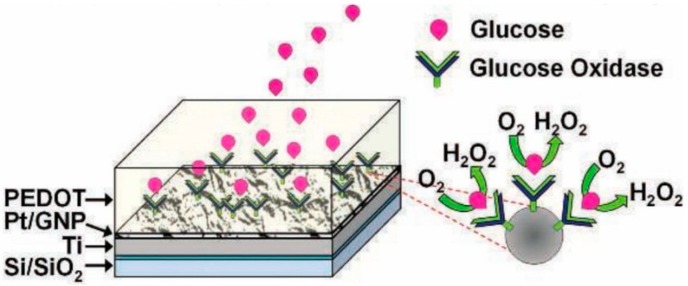
Schematic diagram of GO/PEDOT biofunctionalized PtNP-MGPN glucose biosensor [28].
Figure 7
Figure 7
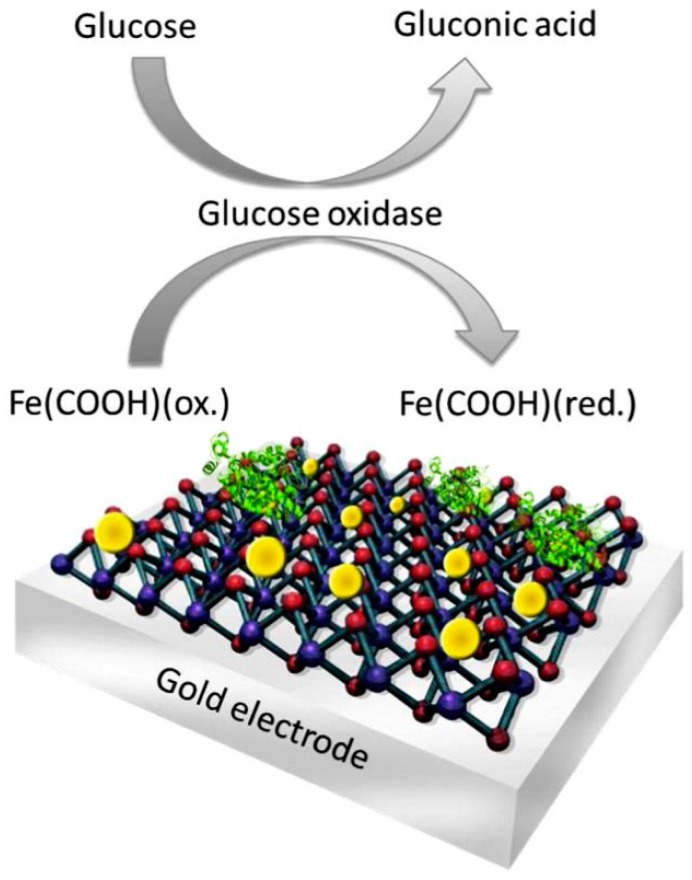
Schematic diagram of Au nanoparticle-structuring on a MoS2 nanosheet [29].

References

    1. Mallwitz F., Laschewsky A. Direct access to stable, freestanding polymer membranes by layer-by-layer assembly of polyelectrolytes. Adv. Mater. 2005;17:1296–1299. doi: 10.1002/adma.200401123. - DOI
    1. Geim A.K. Graphene: Status and prospects. Science. 2009;324:1530–1534. doi: 10.1126/science.1158877. - DOI - PubMed
    1. Guo S., Dong S. Graphene nanosheet: Synthesis, molecular engineering, thin film, hybrids, and energy and analytical applications. Chem. Soc. Rev. 2011;40:2644–2672. doi: 10.1039/c0cs00079e. - DOI - PubMed
    1. Umar A., Alshahrani A.A., Algarni H., Kumar R. CuO nanosheets as potential scaffolds for gas sensing applications. Sens. Actuators B-Chem. 2017;250:24–31. doi: 10.1016/j.snb.2017.04.062. - DOI
    1. Yin X., Liu X., Pan Y., Walsh A.K., Yang H. Hanoi tower-like multilayered ultrathin palladium nanosheets. Nano Lett. 2014;14:7188–7194. doi: 10.1021/nl503879a. - DOI - PubMed