Evaluating the Multitarget Effects of Combinations through Multistep Clustering of Pharmacological Data: the Example of the Commercial Preparation Iberogast
- PMID: 28859216
- PMCID: PMC6193281
- DOI: 10.1055/s-0043-116852
Evaluating the Multitarget Effects of Combinations through Multistep Clustering of Pharmacological Data: the Example of the Commercial Preparation Iberogast
Abstract
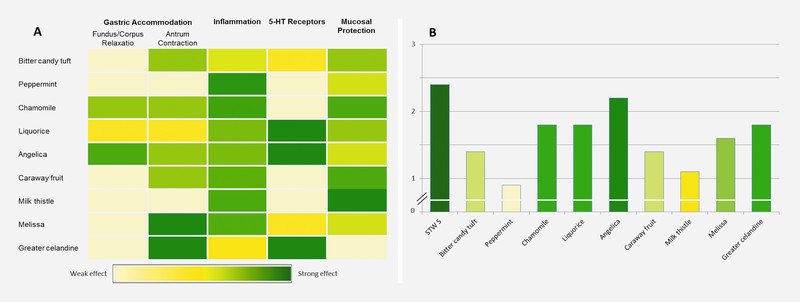
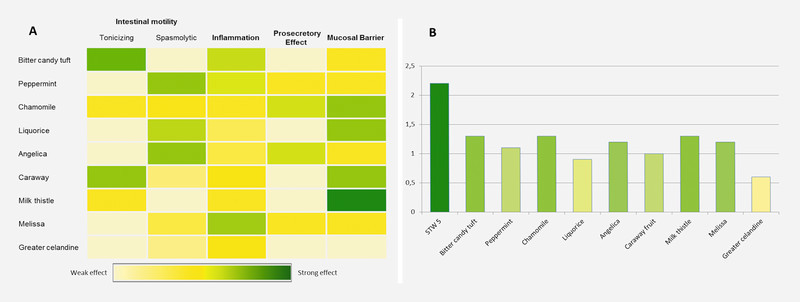
Herbal combination preparations are widely used in traditional herbal medicine and are even established as modern evidence-based herbal medicinal products. The rationale behind such combinations is often questioned and assessing the contribution of each of the combination partners to overall activity is challenging. STW 5 (Iberogast) is such a combination with confirmed clinical efficacy in functional gastrointestinal disorders. It consists of nine plant extracts responsible for its multitarget function in these multifactorial diseases with their heterogeneous and overlapping pathomechanisms. This makes the combination an ideal candidate for the use of the newly described method of stepwise cluster analysis, a standardized procedure to transfer heterogeneous pharmacological data, from different models, into effect size categories. This allows for a stepwise cluster formation starting from the level of single tests up to the level of different pathomechanisms involved in the development of a certain disease, in this case functional dyspepsia subtypes and irritable bowel syndrome. In the current article, an overview on the pharmacological data on STW 5 and its single components is provided. The data are further analyzed using stepwise cluster formation, resulting in a summary of the different modes of action of STW 5 along with an evaluation of the contribution of the single constituents to the overall multitarget effects of the herbal combination preparation.
Georg Thieme Verlag KG Stuttgart · New York.
Conflict of interest statement
Conflict of Interest: HA an OK are fully employed by Steigerwald Arzneimittelwerk GmbH. MS and GL received consultancy fees from the same company.
Figures
References
-
- Allescher H D. Functional dyspepsia – a multicausal disease and its therapy. Phytomedicine. 2006;13 05:2–11. - PubMed
-
- Rösch W, Liebregts T, Gundermann K J, Vinson B, Holtmann G. Phytotherapy for functional dyspepsia: a review of the clinical evidence for the herbal preparation STW 5. Phytomedicine. 2006;13 05:114–121. - PubMed
-
- Drossman D A. Functional gastrointestinal disorders: history, pathophysiology, clinical features, and Rome IV. Gastroenterology. 2016;150:1262–1279. - PubMed
-
- Sunderland R. Irritable bowel syndrome in adults: symptoms, treatment and management. Nurs Stand. 2017;31:52–63. - PubMed
Publication types
MeSH terms
Substances
LinkOut - more resources
Full Text Sources
Other Literature Sources
Medical