Optimization of human, animal, and environmental health by using the One Health approach
- PMID: 28859266
- PMCID: PMC5583413
- DOI: 10.4142/jvs.2017.18.S1.263
Optimization of human, animal, and environmental health by using the One Health approach
Abstract
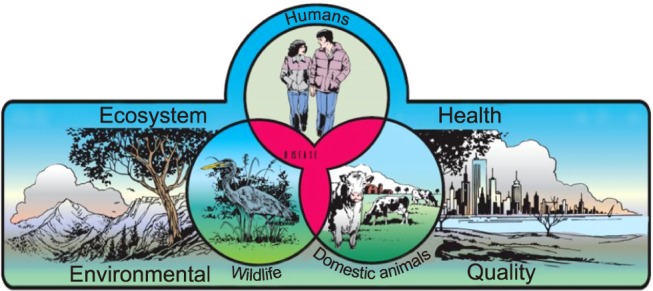
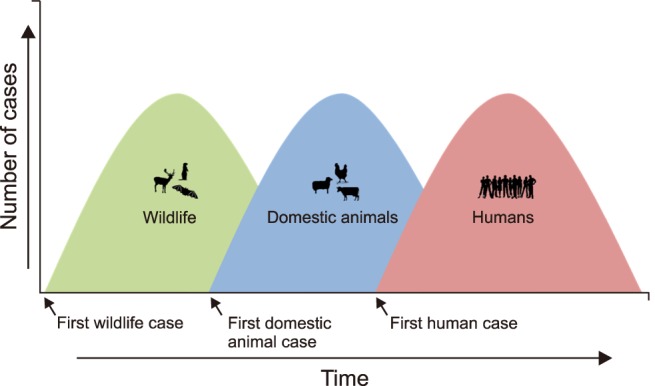
Emerging diseases are increasing burdens on public health, negatively affecting the world economy, causing extinction of species, and disrupting ecological integrity. One Health recognizes that human, domestic animal, and wildlife health are interconnected within ecosystem health and provides a framework for the development of multidisciplinary solutions to global health challenges. To date, most health-promoting interventions have focused largely on single-sector outcomes. For example, risk for transmission of zoonotic pathogens from bush-meat hunting is primarily focused on human hygiene and personal protection. However, bush-meat hunting is a complex issue promoting the need for holistic strategies to reduce transmission of zoonotic disease while addressing food security and wildlife conservation issues. Temporal and spatial separation of humans and wildlife, risk communication, and other preventative strategies should allow wildlife and humans to co-exist. Upstream surveillance, vaccination, and other tools to prevent pathogen spillover are also needed. Clear multi-sector outcomes should be defined, and a systems-based approach is needed to develop interventions that reduce risks and balance the needs of humans, wildlife, and the environment. The ultimate goal is long-term action to reduce forces driving emerging diseases and provide interdisciplinary scientific approaches to management of risks, thereby achieving optimal outcomes for human, animal, and environmental health.
Keywords: One Health; avian influenza; disease prevention; emerging infectious diseases; global health.
Conflict of interest statement
Figures
References
-
- Abbott RC, Osorio JE, Bunck CM, Rocke TE. Sylvatic plague vaccine: a new tool for conservation of threatened and endangered species? Ecohealth. 2012;9:243–250. - PubMed
-
- Bevins SN, Dusek RJ, White CL, Gidlewski T, Bodenstein B, Mansfield KG, DeBruyn P, Kraege D, Rowan E, Gillin C, Thomas B, Chandler S, Baroch J, Schmit B, Grady MJ, Miller RS, Drew ML, Stopak S, Zscheile B, Bennett J, Sengl J, Brady C, Ip HS, Spackman E, Killian ML, Torchetti MK, Sleeman JM, Deliberto TJ. Widespread detection of highly pathogenic H5 influenza viruses in wild birds from the Pacific Flyway of the United States. Sci Rep. 2016;6:28980. - PMC - PubMed
-
- Blehert DS, Lorch JM, Ballmann AE, Cryan PM, Meteyer CU. Bat white-nose syndrome in North America. Microbe. 2011;6:267–273.
-
- Boyles JG, Cryan PM, McCracken GF, Kunz TH. Economic importance of bats in agriculture. Science. 2011;332:41–42. - PubMed
Publication types
MeSH terms
LinkOut - more resources
Full Text Sources
Other Literature Sources
Medical