Review
. 2017 Aug 21:12:6027-6044.
doi: 10.2147/IJN.S132434. eCollection 2017.

Liposomal curcumin and its application in cancer

Affiliations
Review

Liposomal curcumin and its application in cancer

Ting Feng et al. Int J Nanomedicine. .

Abstract

Curcumin (CUR) is a yellow polyphenolic compound derived from the plant turmeric. It is widely used to treat many types of diseases, including cancers such as those of lung, cervices, prostate, breast, bone and liver. However, its effectiveness has been limited due to poor aqueous solubility, low bioavailability and rapid metabolism and systemic elimination. To solve these problems, researchers have tried to explore novel drug delivery systems such as liposomes, solid dispersion, microemulsion, micelles, nanogels and dendrimers. Among these, liposomes have been the most extensively studied. Liposomal CUR formulation has greater growth inhibitory and pro-apoptotic effects on cancer cells. This review mainly focuses on the preparation of liposomes containing CUR and its use in cancer therapy.

Keywords: bioavailability; cancer; curcumin; drug delivery; liposomes.


Conflict of interest statement

Disclosure The authors report no conflicts of interest in this work.

Figures
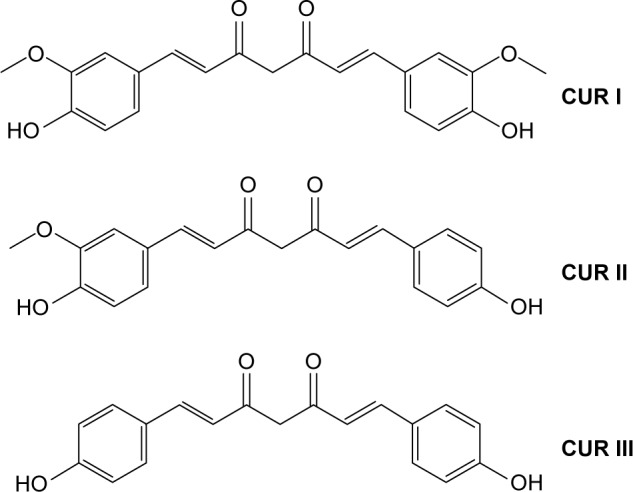
Figure 1
Figure 1
Structures of three major curcuminoids. Abbreviation: CUR, curcumin.
Figure 2
Figure 2
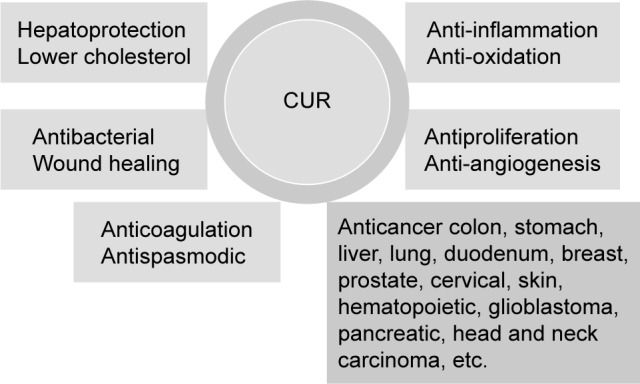
Pharmacological activities of CUR. Abbreviation: CUR, curcumin.
Figure 3
Figure 3
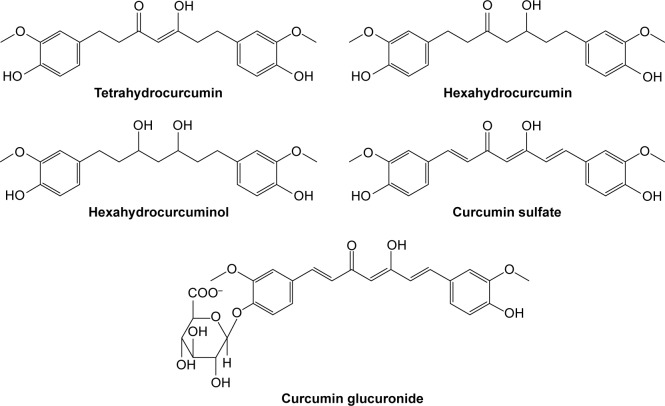
Main metabolites of CUR in rats and humans. Abbreviation: CUR, curcumin.
Figure 4
Figure 4
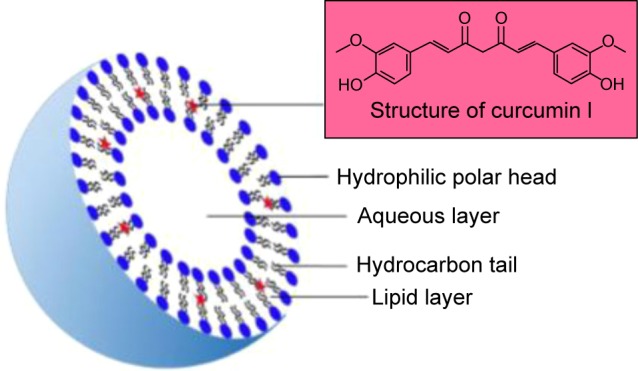
The basic structure of CUR liposomes. Notes: Diameter of CUR liposomes varies from 25 nm to 1,000 nm with one phospholipid bilayer including hydrophobic tail and hydrophilic head in aqueous solution. The liposomes have a globular shape where there is a central aqueous space and outer lipid bilayer. As a lipophilic drug, CUR was absolutely distributed in outer lipid bilayer. Abbreviation: CUR, curcumin.
Figure 5
Figure 5
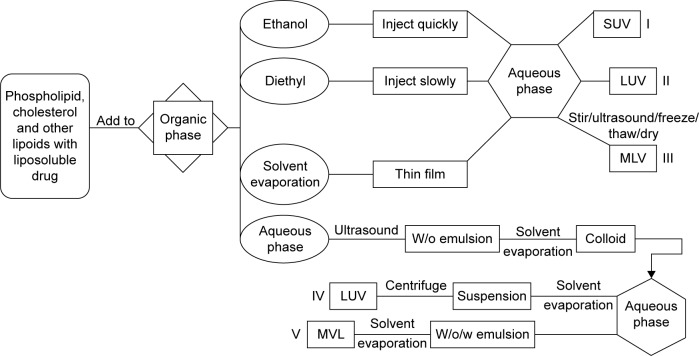
Preparation methods of CUR liposomes. Notes: (I) Ethanol injection method was used to prepare SUV. (II) Diethyl injection method was used to prepare LUV. (III) MLV were prepared by thin-film dispersion method, thin-film ultrasonic dispersion method, freeze–thawing method and freeze-dried method. (IV) Reversed-phase evaporation method was for preparation of LUV. (V) The double emulsion method was applied to the preparation of multivesicular liposomes (MVL). Abbreviations: CUR, curcumin; SUV, small unilamellar vesicles; LUV, large unilamellar vesicles; MLV, multilamellar vesicles; MVL, multivesicular liposomes.
Figure 6
Figure 6
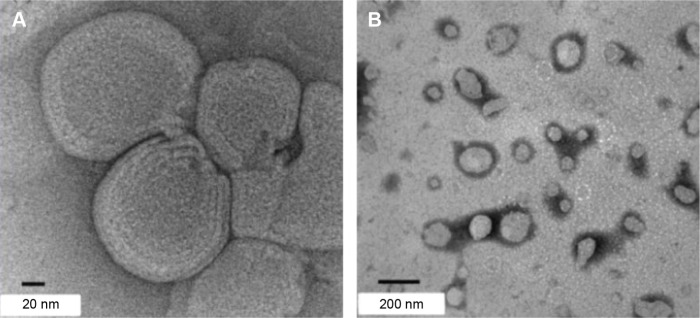
TEM images of CS-coated CUR nanoliposomes with a scale bar of (A) 20 nm and (B) 200 nm. Note: Reprinted with permission from Shin GH, Chung SK, Kim JT, Joung HJ, Park HJ. Preparation of chitosan-coated nanoliposomes for improving the mucoadhesive property of curcumin using the ethanol injection method. J Agric Food Chem. 2013;61(46):11119. Copyright (2013) American Chemical Society. Abbreviations: TEM, transmission electron microscopy; CS, chitosan; CUR, curcumin.
Figure 7
Figure 7
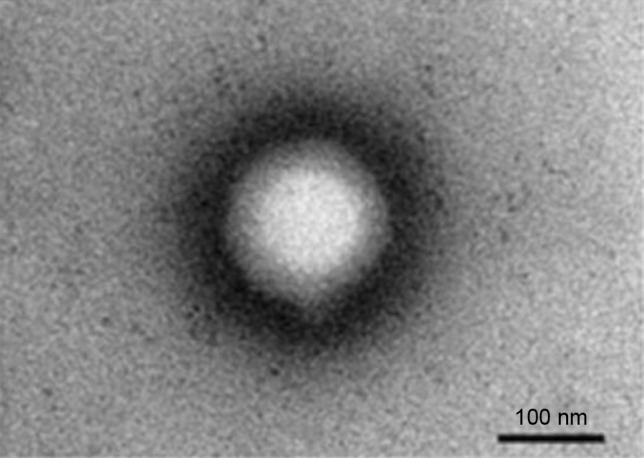
TEM image of a cationic liposome-PEG-PEI-loaded CUR with a scale bar of 100 nm. Note: Reprinted from Nanomedicine. 8(3). Lin YL, Liu YK, Tsai NM, et al. A Lipo-PEG-PEI complex for encap sulating curcumin that enhances its antitumor effects on curcumin-sensitive and curcumin-resistance cells. Copyright (2012) with permission from Elsevier. Abbreviations: TEM, transmission electron microscopy; CUR, curcumin.
Figure 8
Figure 8
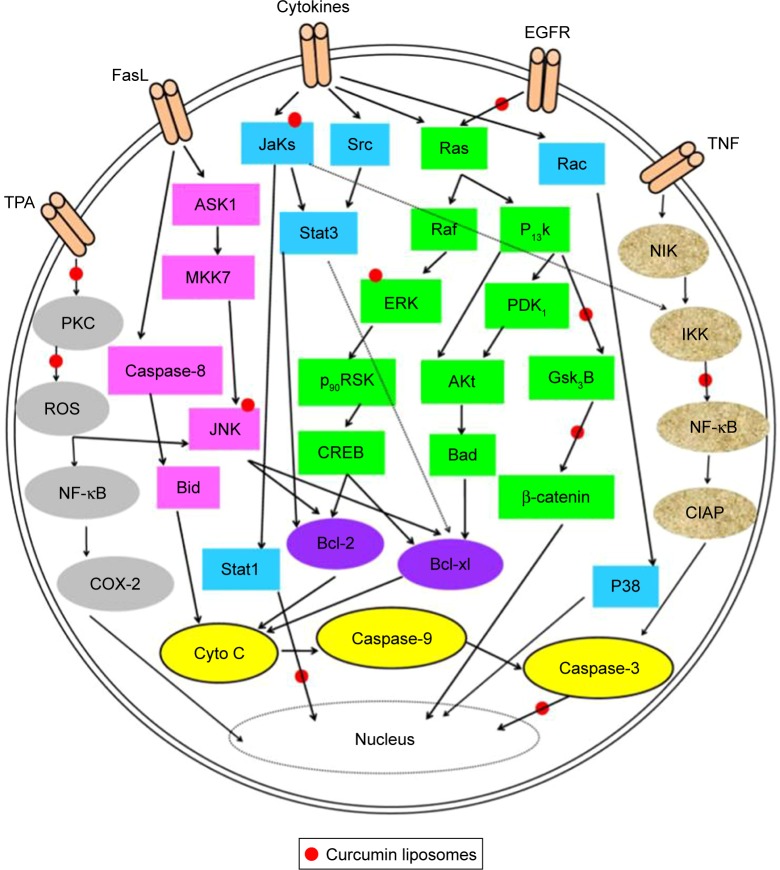
A model was used to illustrate the multifunctional targets of CUR liposomes for cancer and inflammation by tumor promoter TPA, extracellular growth factors, inflammatory cytokines and apoptotic markers. Abbreviations: CUR, curcumin; EGFR, epidermal growth factor receptor.

References

    1. Erez A, Shchelochkov OA, Plon SE, Scaglia F, Lee B. Insights into the pathogenesis and treatment of cancer from inborn errors of metabolism. Am J Hum Genet. 2011;88(4):402–421. - PMC - PubMed
    1. Prasanna A, Ahmed MM, Mohiuddin M, Coleman CN. Exploiting sensitization windows of opportunity in hyper and hypo-fractionated radiation therapy. J Thorac Dis. 2014;6(4):287–302. - PMC - PubMed
    1. Giacosa A, Morazzoni P, Bombardelli E, Riva A, Bianchi Porro G, Rondanelli M. Can nausea and vomiting be treated with ginger extract? Eur Rev Med Pharmacol Sci. 2015;19(7):1291–1296. - PubMed
    1. Lang JY. The concept and prospect of combined for tumor. Cancer Control Treat. 2008;21(2):116–118.
    1. Di Maio M, Basch E, Bryce J, Perrone F. Patient-reported outcomes in the evaluation of toxicity of anticancer treatments. Nat Rev Clin Oncol. 2016;13(5):951–955. - PubMed

MeSH terms

LinkOut - more resources