


Evaluation of an automated protocol for efficient and reliable DNA extraction of dietary samples
- PMID: 28861241
- PMCID: PMC5574753
- DOI: 10.1002/ece3.3197
Evaluation of an automated protocol for efficient and reliable DNA extraction of dietary samples
Abstract
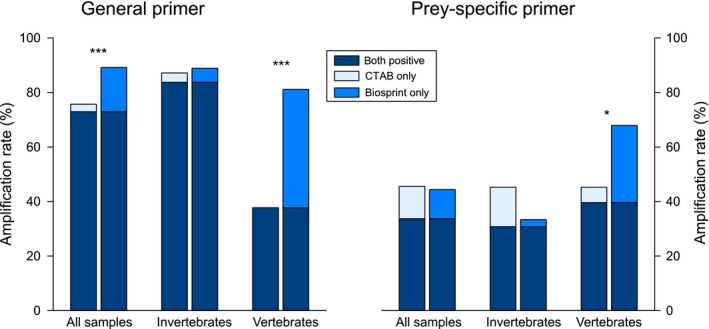
Molecular techniques have become an important tool to empirically assess feeding interactions. The increased usage of next-generation sequencing approaches has stressed the need of fast DNA extraction that does not compromise DNA quality. Dietary samples here pose a particular challenge, as these demand high-quality DNA extraction procedures for obtaining the minute quantities of short-fragmented food DNA. Automatic high-throughput procedures significantly decrease time and costs and allow for standardization of extracting total DNA. However, these approaches have not yet been evaluated for dietary samples. We tested the efficiency of an automatic DNA extraction platform and a traditional CTAB protocol, employing a variety of dietary samples including invertebrate whole-body extracts as well as invertebrate and vertebrate gut content samples and feces. Extraction efficacy was quantified using the proportions of successful PCR amplifications of both total and prey DNA, and cost was estimated in terms of time and material expense. For extraction of total DNA, the automated platform performed better for both invertebrate and vertebrate samples. This was also true for prey detection in vertebrate samples. For the dietary analysis in invertebrates, there is still room for improvement when using the high-throughput system for optimal DNA yields. Overall, the automated DNA extraction system turned out as a promising alternative to labor-intensive, low-throughput manual extraction methods such as CTAB. It is opening up the opportunity for an extensive use of this cost-efficient and innovative methodology at low contamination risk also in trophic ecology.
Keywords: BioSprint; DNA isolation; cetyltrimethylammonium bromide; molecular gut content analysis; molecular scatology; trophic interactions.
Figures
References
-
- Albaugh, G. P. , Iyengar, V. , Lohani, A. , Malayeri, M. , Bala, S. , & Nair, P. P. (1992). Isolation of exfoliated colonic epithelial‐cells, a novel, noninvasive approach to the study of cellular markers. International Journal of Cancer, 52, 347–350. - PubMed
-
- Bell, J. , Traugott, M. , Sunderland, K. , Skirvin, D. , Mead, A. , Kravar‐Garde, L. , … Symondson, W. (2008). Beneficial links for the control of aphids: The effects of compost applications on predators and prey. Journal of Applied Ecology, 45, 1266–1273.
-
- Boyd, J. (2002). Robotic laboratory automation. Science, 295, 517–518. - PubMed
-
- Burgar, J. , Murray, D. , Craig, M. , Haile, J. , Houston, J. , Stokes, V. , & Bunce, M. (2014). Who's for dinner? High‐throughput sequencing reveals bat dietary differentiation in a biodiversity hotspot where prey taxonomy is largely undescribed. Molecular Ecology, 23, 3605–3617. - PubMed
LinkOut - more resources
Full Text Sources
Other Literature Sources
