


Age-related cataracts: Role of unfolded protein response, Ca2+ mobilization, epigenetic DNA modifications, and loss of Nrf2/Keap1 dependent cytoprotection
- PMID: 28864287
- PMCID: PMC5600869
- DOI: 10.1016/j.preteyeres.2017.08.003
Age-related cataracts: Role of unfolded protein response, Ca2+ mobilization, epigenetic DNA modifications, and loss of Nrf2/Keap1 dependent cytoprotection
Abstract
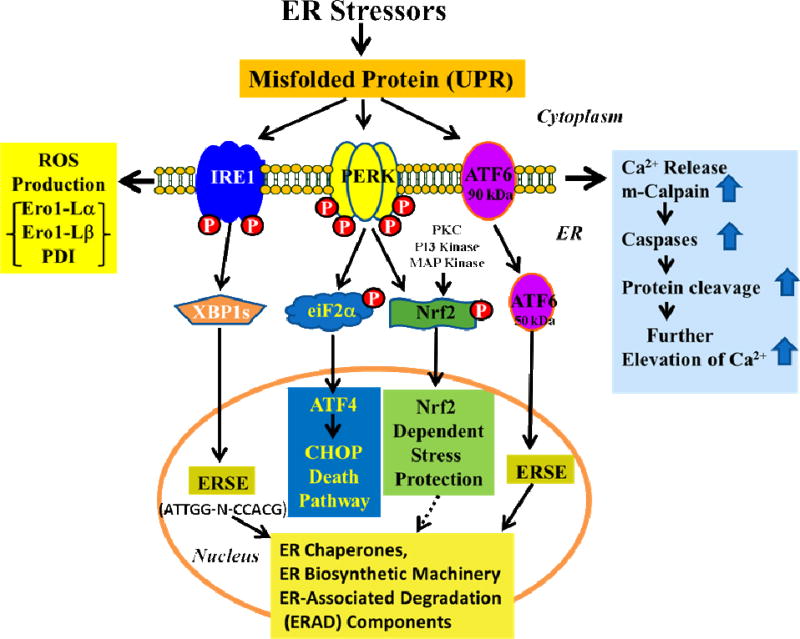
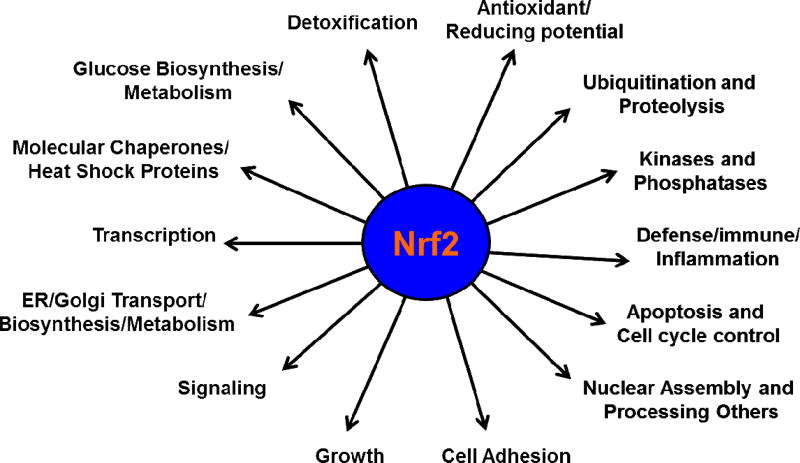
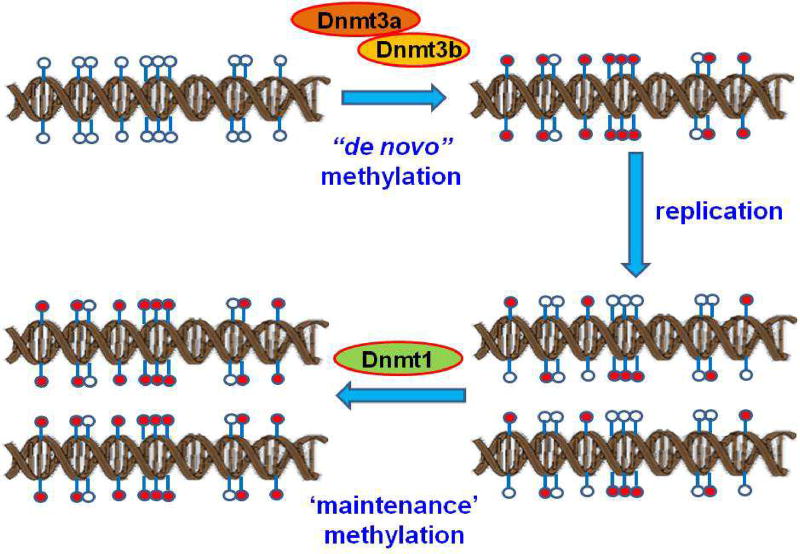
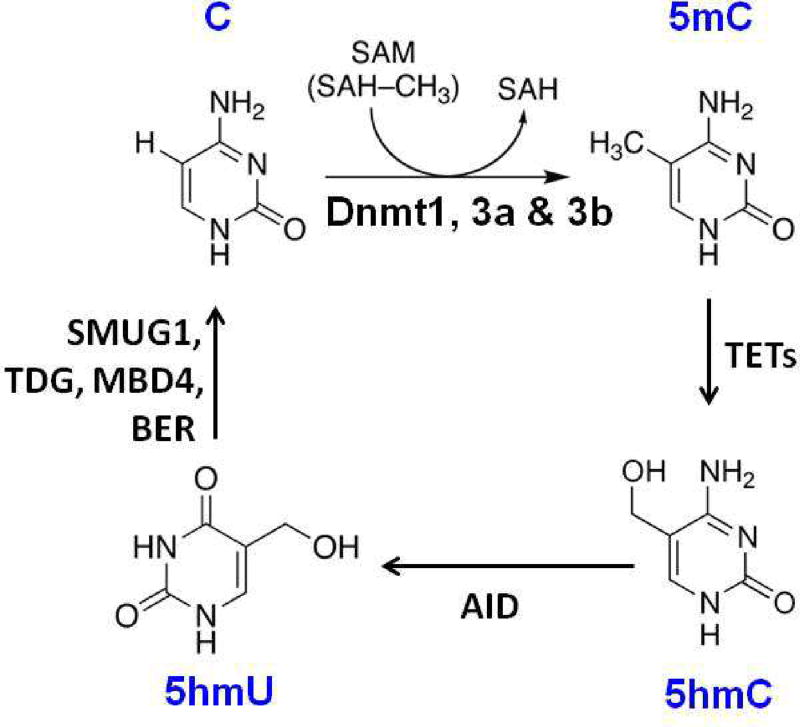
Age-related cataracts are closely associated with lens chronological aging, oxidation, calcium imbalance, hydration and crystallin modifications. Accumulating evidence indicates that misfolded proteins are generated in the endoplasmic reticulum (ER) by most cataractogenic stresses. To eliminate misfolded proteins from cells before they can induce senescence, the cells activate a clean-up machinery called the ER stress/unfolded protein response (UPR). The UPR also activates the nuclear factor-erythroid-2-related factor 2 (Nrf2), a central transcriptional factor for cytoprotection against stress. Nrf2 activates nearly 600 cytoprotective target genes. However, if ER stress reaches critically high levels, the UPR activates destructive outputs to trigger programmed cell death. The UPR activates mobilization of ER-Ca2+ to the cytoplasm and results in activation of Ca2+-dependent proteases to cleave various enzymes and proteins which cause the loss of normal lens function. The UPR also enhances the overproduction of reactive oxygen species (ROS), which damage lens constituents and induce failure of the Nrf2 dependent cytoprotection. Kelch-like ECH-associated protein 1 (Keap1) is an oxygen sensor protein and regulates the levels of Nrf2 by the proteasomal degradation. A significant loss of DNA methylation in diabetic cataracts was found in the Keap1 promoter, which overexpresses the Keap1 protein. Overexpressed Keap1 significantly decreases the levels of Nrf2. Lower levels of Nrf2 induces loss of the redox balance toward to oxidative stress thereby leading to failure of lens cytoprotection. Here, this review summarizes the overall view of ER stress, increases in Ca2+ levels, protein cleavage, and loss of the well-established stress protection in somatic lens cells.
Keywords: 2′,7′-dichlorodihydrofluorescein diacetate; 5-Aza; 5-aza-2′-deoxycytidine; 5-methylcytosine; 5mC; AID; ARCs; ARE; ATF6; Age-related cataracts; BiP; DNA methylation; DNA methyltransferases; Dnmts; ER; ER oxidoreductin 1; ER stress; ER-associated degradation; ERAD; Ero1; GSH; H2DCFDA; HIF-1; IRE1; Ig binding protein; Keap1; Kelch-like ECH-associated protein 1; NF-κB; Nrf2; PDI; PERK; PKC; PMCA; ROS; SERCA; TDG; TET1; UPR; Unfolded protein response; X-box transcription factor-1; XBP-1; activating transcription factor 6; activation-induced cytidine deaminase; age-related cataracts; antioxidant response element; eIF2α; endoplasmic reticulum; eukaryotic translation initiation factor 2α; glutathione; hypoxia-inducible factor-1; inositol-requiring kinase 1; nuclear factor-erythroid-2-related factor 2; nuclear factor-κB; pVHL; plasma membrane Ca(2+)-ATPases; protein disulfide isomerase; protein kinase C; protein kinase R (PKR)-like endoplasmic reticulum kinase; reactive oxygen species; sarco/endoplasmic reticulum Ca(2+)-ATPases; ten-eleven translocation 1; thymine-DNA glycosylase; unfolded protein response; von Hippel-Lindau.
Copyright © 2017 Elsevier Ltd. All rights reserved.
Figures
References
-
- Abraham MA, Korula A, Jayakrishnan K, John GT, Thomas PP, Jacob CK. Prognostic factors in diffuse proliferative lupus nephritis. J Assoc Physicians India. 1999;47:862–865. - PubMed
-
- Alam J, Stewart D, Touchard C, Boinapally S, Choi AM, Cook JL. Nrf2, a Cap'n'Collar transcription factor, regulates induction of the heme oxygenase-1 gene. J Biol Chem. 1999;274:26071–26078. - PubMed
-
- Aldana JP, Marcovich R, Singhal P, Reddy K, Morgenstern N, El-Hakim A, Smith AD, Lee BR. Immune response to laparoscopic bowel injury. J Endourol. 2003;17:317–322. - PubMed
-
- Allan GF, Leng X, Tsai SY, Weigel NL, Edwards DP, Tsai MJ, O'Malley BW. Hormone and antihormone induce distinct conformational changes which are central to steroid receptor activation. J Biol Chem. 1992;267:19513–19520. - PubMed
Publication types
MeSH terms
Substances
Grants and funding
LinkOut - more resources
Full Text Sources
Other Literature Sources
Medical
Research Materials
Miscellaneous
