Cerebellar abscesses, infective endocarditis and bacteraemia due to a rare pathogen: Streptococcus constellatus
- PMID: 28864559
- PMCID: PMC5589049
- DOI: 10.1136/bcr-2017-221374
Cerebellar abscesses, infective endocarditis and bacteraemia due to a rare pathogen: Streptococcus constellatus
Abstract
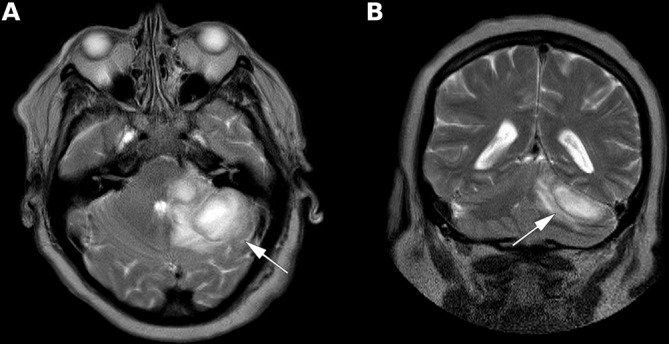
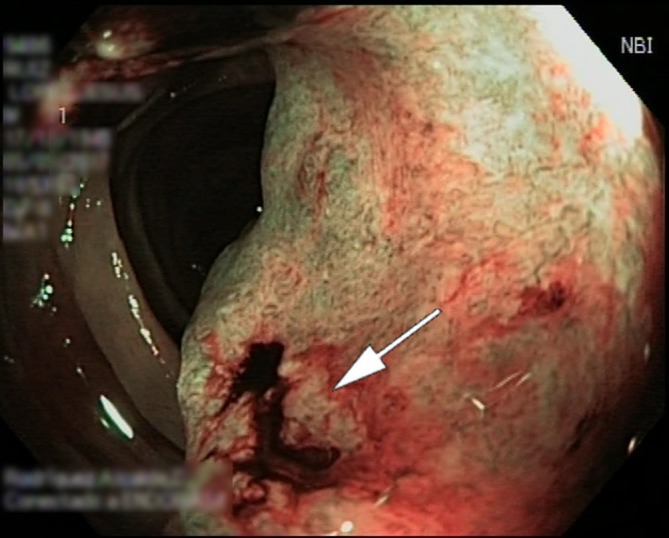
Intracranial infections may result from contiguity, such as mastoiditis or acute otitis media, or from haematogenous dissemination from an infectious source. Streptococcus constellatus, a coccus from the normal genital, oral and gastrointestinal flora, has a tendency to form abscesses, but not to cause infective endocarditis (IE). Also, S. constellatus is an extremely rare causative agent of brain abscess. We report the case of a woman with a colorectal tumour who presented with IE and cerebellar abscesses due to a S. constellatus bacteraemia.
Keywords: General Practice / Family Medicine; Infectious Diseases.
© BMJ Publishing Group Ltd (unless otherwise stated in the text of the article) 2017. All rights reserved. No commercial use is permitted unless otherwise expressly granted.
Conflict of interest statement
Competing interests: None declared.
Figures
References
-
- Claridge JE, Attorri S, Musher DM, et al. Streptococcus intermedius, Streptococcus constellatus, and Streptococcus anginosus ("Streptococcus milleri group") are of different clinical importance and are not equally associated with abscess. Clin Infect Dis 2001;32:1511–5. 10.1086/320163 - DOI - PubMed
-
- Yoshino Y, Kimura Y, Sakai T, et al. Infective endocarditis due to a rare pathogen, Streptococcus constellatus, in a patient with gingivitis: a case report and review of the literature. Open Med 2013;8:489–92. 10.2478/s11536-013-0167-4 - DOI
Publication types
MeSH terms
Substances
LinkOut - more resources
Full Text Sources
Other Literature Sources
Medical