


Identifying Patients With High Data Completeness to Improve Validity of Comparative Effectiveness Research in Electronic Health Records Data
- PMID: 28865143
- PMCID: PMC6026022
- DOI: 10.1002/cpt.861
Identifying Patients With High Data Completeness to Improve Validity of Comparative Effectiveness Research in Electronic Health Records Data
Abstract
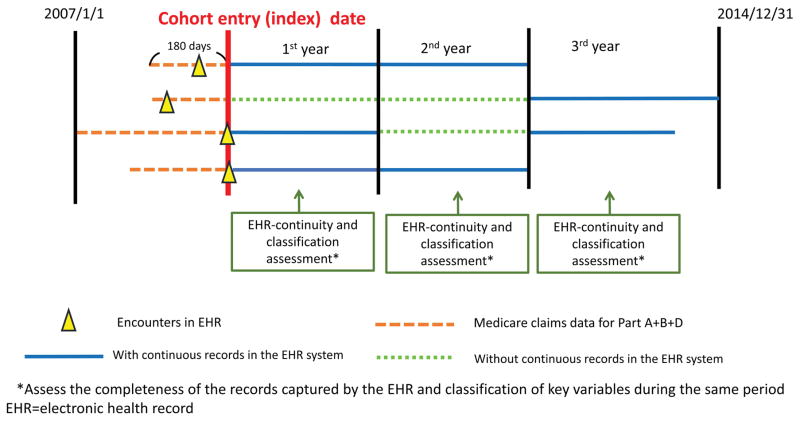
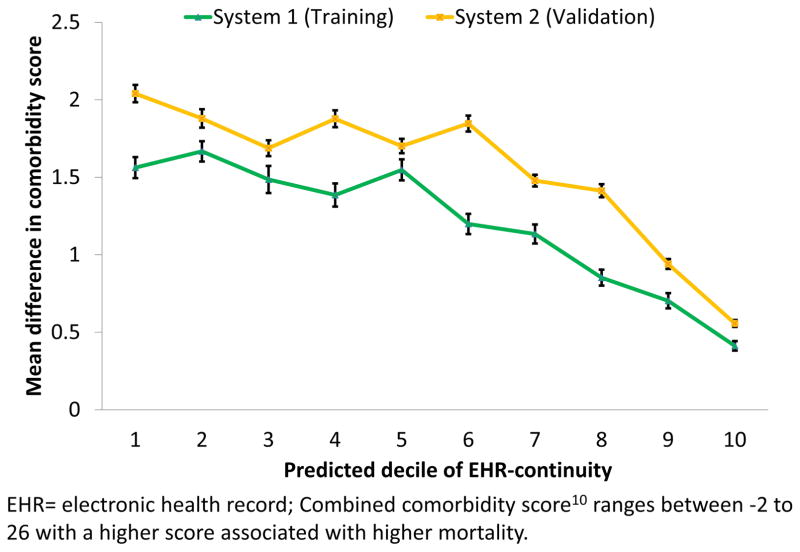
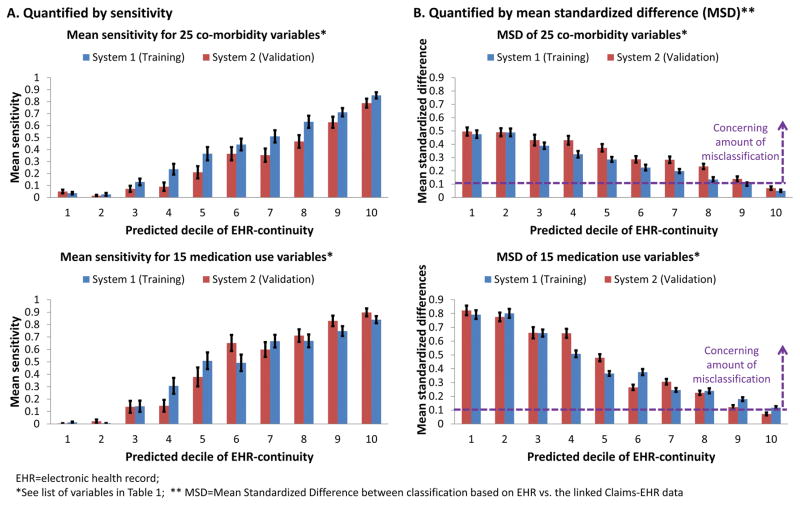
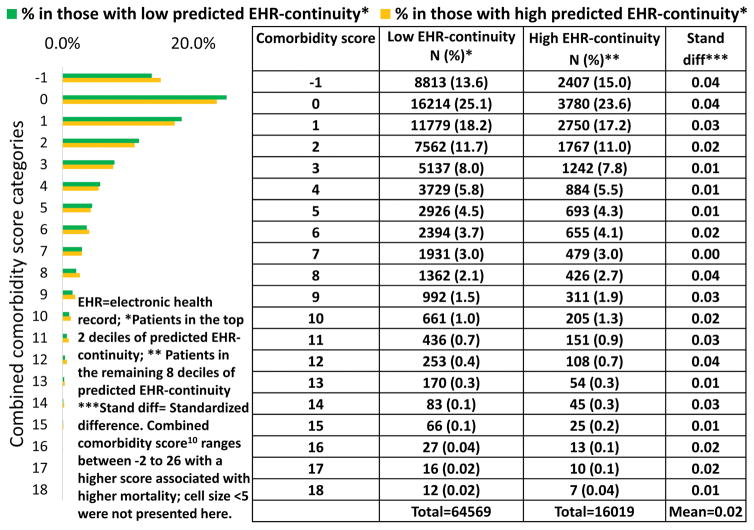
Electronic health record (EHR)-discontinuity, i.e., having medical information recorded outside of the study EHR system, is associated with substantial information bias in EHR-based comparative effectiveness research (CER). We aimed to develop and validate a prediction model identifying patients with high EHR-continuity to reduce this bias. Based on 183,739 patients aged ≥65 in EHRs from two US provider networks linked with Medicare claims data from 2007-2014, we quantified EHR-continuity by mean proportion of encounters captured (MPEC) by the EHR system. We built a prediction model for MPEC using one EHR system as training and the other as the validation set. Patients with top 20% predicted EHR-continuity had 3.5-5.8-fold smaller misclassification of 40 CER-relevant variables, compared to the remaining study population. The comorbidity profiles did not differ substantially by predicted EHR-continuity. These findings suggest that restriction of CER to patients with high predicted EHR-continuity may confer a favorable validity to generalizability trade-off.
© 2017 American Society for Clinical Pharmacology and Therapeutics.
Conflict of interest statement
Conflict of interest: none declared
Figures
References
-
- Randhawa GS. Building electronic data infrastructure for comparative effectiveness research: accomplishments, lessons learned and future steps. J Comp Eff Res. 2014;3:567–572. - PubMed
-
- Lin KJ, Glynn RJ, Singer DE, Schneeweiss S. The impact of care-discontinuity on recording patient characteristics critical for comparative effectiveness research using electronic health records. 22nd Annual International Meeting of International Society For Pharmacoeconomics and Outcomes Research; Boston, USA. 2017.
-
- Hennessy S. Use of health care databases in pharmacoepidemiology. Basic & clinical pharmacology & toxicology. 2006;98:311–313. - PubMed
Publication types
MeSH terms
Grants and funding
LinkOut - more resources
Full Text Sources
Other Literature Sources
