Erdheim-Chester Disease: The Importance of Information Integration
- PMID: 28868020
- PMCID: PMC5567069
- DOI: 10.1159/000477658
Erdheim-Chester Disease: The Importance of Information Integration
Abstract
Background: Erdheim-Chester disease (ECD) is a rare non-Langerhans cell histiocytosis disorder that utilizes the RAS-RAF-MEK-ERK pathway. It has a highly variable clinical presentation, where virtually any organ can be involved, thus having the potential of posing a great diagnostic challenge. Over half of the reported cases have the BRAF V600E mutation and have shown a remarkable response to vemurafenib.
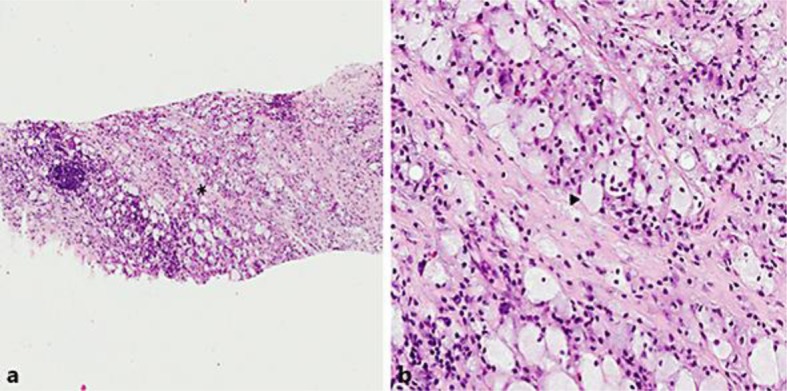
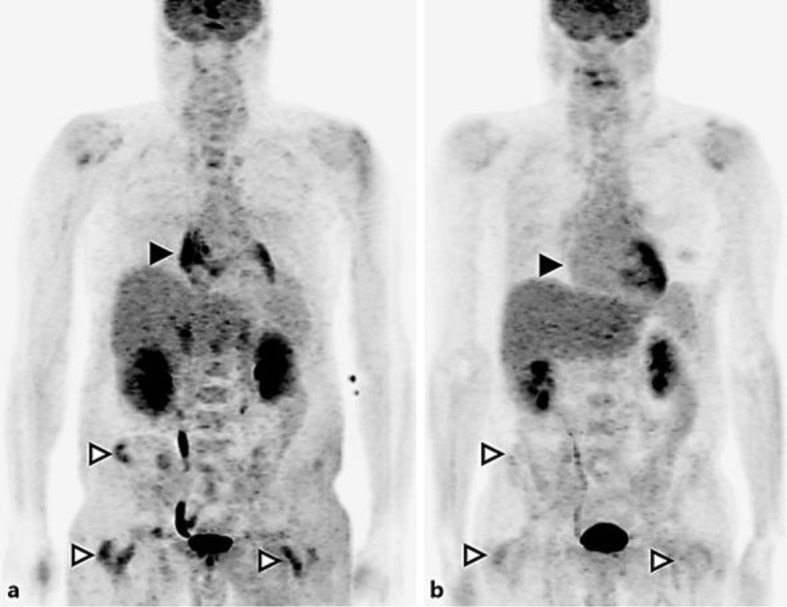
Case presentation: We describe herein a patient with a history of stroke-like symptoms and retroperitoneal fibrosis that on initial pathology raised the possibility of IgG4-related disease. However, the patient was refractory to high-dose steroids and progressed further, developing an epicardial soft tissue mass and recurrent neurological symptoms. Integration of the above findings with new information at another hospital about a radiological history of symmetrical lower extremities long bone lesions raised the differential diagnosis of ECD. Molecular analysis of formalin-fixed paraffin-embedded tissue of both of the patient's retroperitoneal biopsies (the second one of which had shown a small focus of foamy histiocytes, CD68+/CD1a-) was positive for BRAF mutation, confirming the diagnosis of ECD. The patient demonstrated a dramatic and sustained metabolic response to vemurafenib on follow-up positron emission tomography scans.
Conclusion: This case highlights the need for developing a high index of suspicion for presentations of retroperitoneal fibrosis that could represent IgG4-related disease but fail to respond to steroids. When unusual multisystem involvement occurs, one should consider a diagnosis of a rare histiocytosis. Vemurafenib appears to be an effective treatment for even advanced cases of both ECD and Langerhans histiocytosis bearing the BRAF V600E mutation.
Keywords: BRAF V600E; Erdheim-Chester disease; IgG4-related disease; Vemurafenib.
Figures
References
-
- Swerdlow SH, Campo E, Harris NL, et al., editors. WHO Classification of Tumours of Haematopoietic and Lymphoid Tissues. (4th ed) Lyon: International Agency for Research of Cancer; 2008. pp. 252–253.
-
- Campochiaro C, Tomelleri A, Cavalli G, Berti A, Dagna L. Erdheim-Chester disease. Eur J Intern Med. 2015;26:223–229. - PubMed
-
- Stone JH, Brito-Zerón P, Bosch X, Ramos-Casals M. Diagnostic approach to the complexity of IgG4-related disease. Mayo Clin Proc. 2015;90:927–939. - PubMed
-
- Deshpande V, et al. Consensus statement on the pathology of IgG4-related disease. Mod Pathol. 2012;25:1181–1192. - PubMed
-
- Khosroshahi A, Stone JH. Treatment approaches to IgG4-related systemic disease. Curr Opin Rheumatol. 2011;23:67–71. - PubMed
Publication types
LinkOut - more resources
Full Text Sources
Other Literature Sources
Research Materials
Miscellaneous