The Effectiveness of Green Tea or Green Tea Extract on Insulin Resistance and Glycemic Control in Type 2 Diabetes Mellitus: A Meta-Analysis
- PMID: 28868822
- PMCID: PMC5583402
- DOI: 10.4093/dmj.2017.41.4.251
The Effectiveness of Green Tea or Green Tea Extract on Insulin Resistance and Glycemic Control in Type 2 Diabetes Mellitus: A Meta-Analysis
Abstract
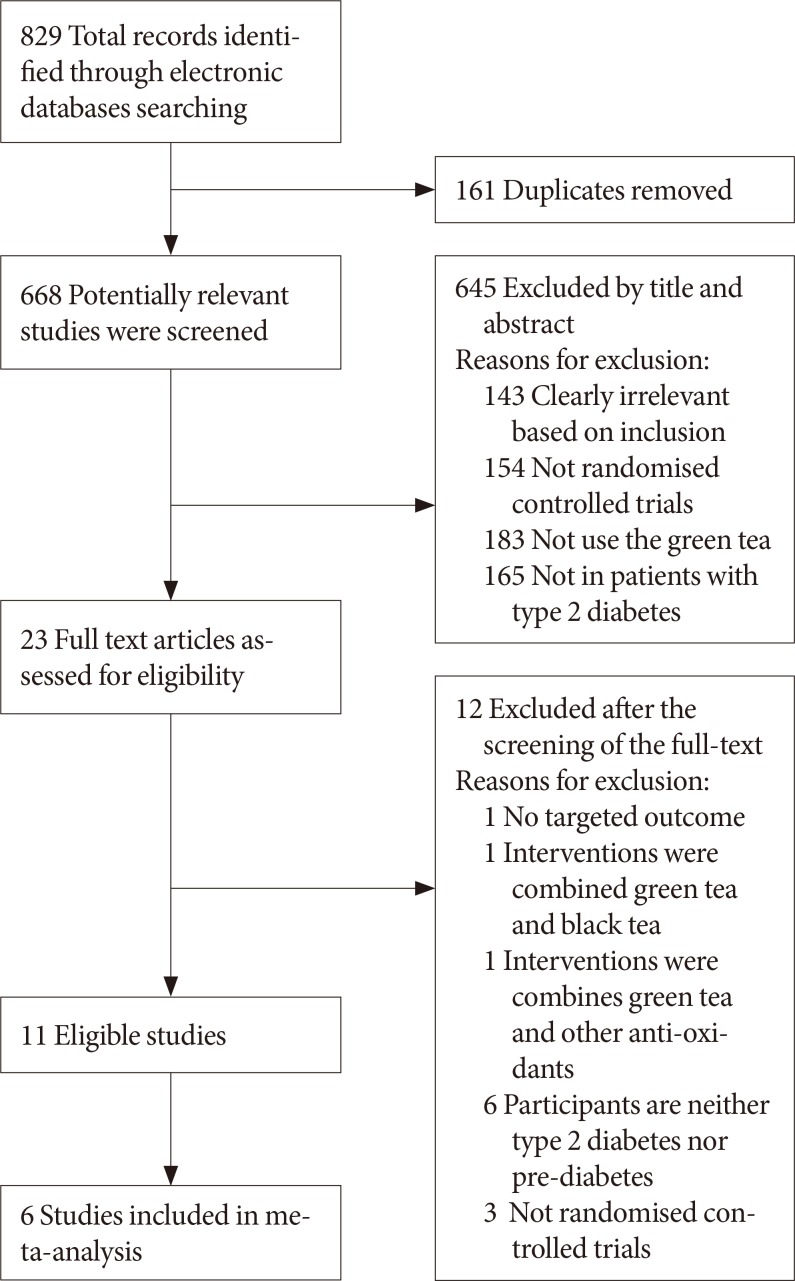
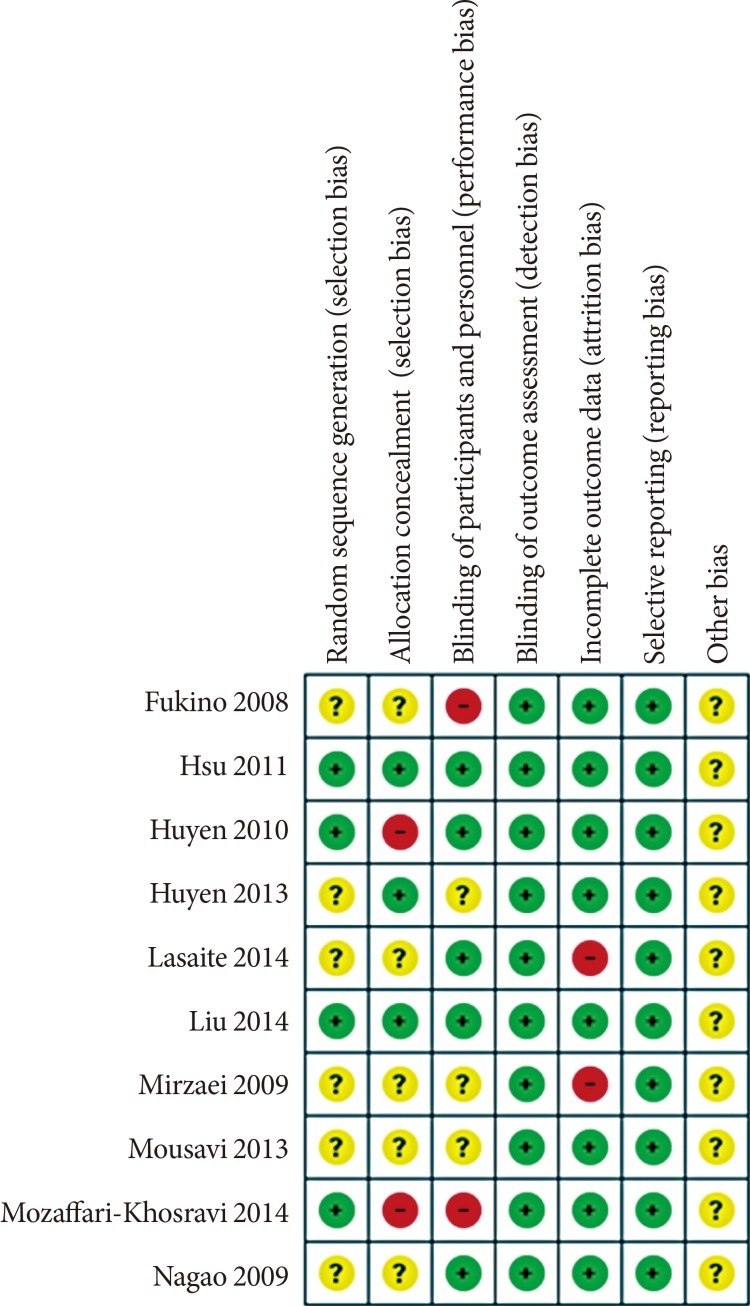
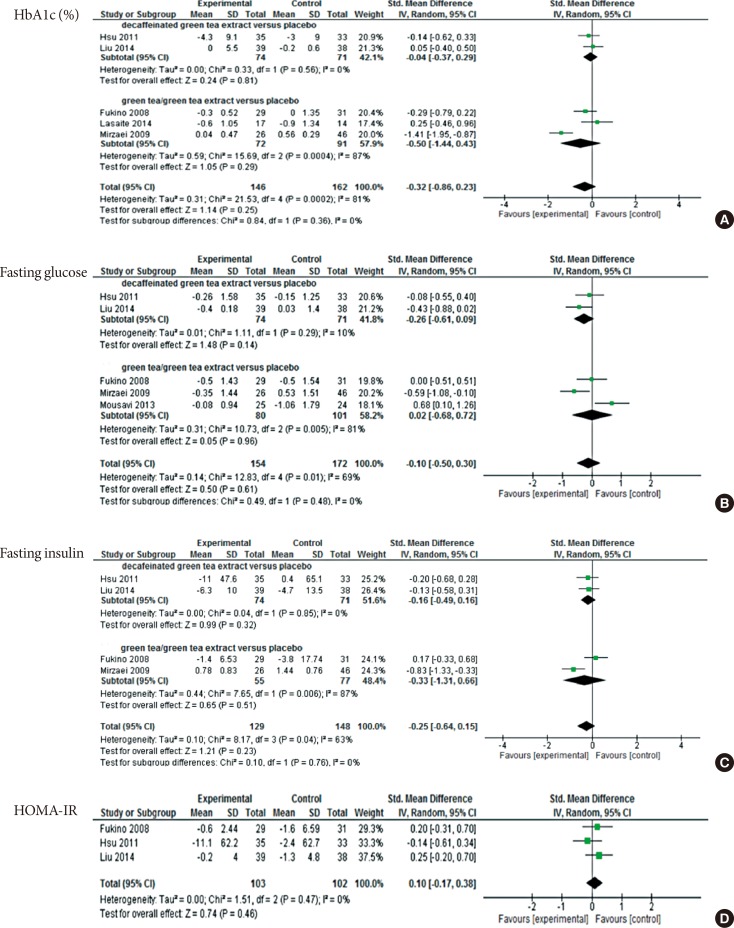
Green tea or green tea extract (GT/GTE) has been demonstrated to reduce insulin resistance and improve glycemic control. However, evidence for this health beneficial effect is inconsistent. This systematic review evaluated the effect of GT/GTE on insulin resistance and glycemic control in people with pre-diabetes/type 2 diabetes mellitus (T2DM). Ovid MEDLINE, Embase, AMED, Web of Science, and the Cochrane Library were searched up to April 2017 for randomised controlled trials of participants with pre-diabetes or T2DM, where the intervention was GT/GTE. Meta-analysis was performed to assess the standardised mean difference (SMD) in biomarkers of insulin resistance and glycemic control between GT/GTE and placebo groups. Six studies (n=382) were pooled into random-effects meta-analysis. Overall, no differences were found between GT/GTE and the placebo for glycosylated hemoglobin (HbA1c: SMD, -0.32; 95% confidence interval [CI], -0.86 to 0.23), homeostatic model assessment for insulin resistance (HOMA-IR: SMD, 0.10; 95% CI, -0.17 to 0.38), fasting insulin (SMD, -0.25; 95% CI, -0.64 to 0.15), and fasting glucose (SMD, -0.10; 95% CI, -0.50 to 0.30). No evidence support the consumption of GT/GTE could reduce the levels of HbA1c, HOMA-IR, fasting insulin, or fasting glucose in people with pre-diabetes/T2DM. However, the studies included were small and of varying quality.
Keywords: Diabetes mellitus, type 2; Glycemic control; Green tea; Insulin resistance; Meta-analysis.
Copyright © 2017 Korean Diabetes Association.
Conflict of interest statement
No potential conflict of interest relevant to this article was reported.
Figures
References
-
- World Health Organization. Obesity: preventing and managing the global epidemic. Geneva: World Health Organization; 2000. - PubMed
-
- Kahn SE, Hull RL, Utzschneider KM. Mechanisms linking obesity to insulin resistance and type 2 diabetes. Nature. 2006;444:840–846. - PubMed
-
- World Health Organization. Global status report on noncommunicable diseases 2014. Geneva: World Health Organization; 2014. - PubMed
Publication types
LinkOut - more resources
Full Text Sources
Other Literature Sources
Miscellaneous