


Alterations in fatty acid metabolism in response to obesity surgery combined with dietary counseling
- PMID: 28869586
- PMCID: PMC5637104
- DOI: 10.1038/nutd.2017.33
Alterations in fatty acid metabolism in response to obesity surgery combined with dietary counseling
Abstract
Background: The effects of obesity surgery on serum and adipose tissue fatty acid (FA) profile and FA metabolism may modify the risk of obesity-related diseases.
Methods: We measured serum (n=122) and adipose tissue (n=24) FA composition and adipose tissue mRNA expression of genes regulating FA metabolism (n=100) in participants of the Kuopio Obesity Surgery Study (KOBS, age 47.2±8.7 years, BMI 44.6±6.0, 40 men, 82 women) before and one year after obesity surgery. As part of the surgery protocol, all the subjects were instructed to add sources of unsaturated fatty acids, such as rapeseed oil and fatty fish, into their diet. The results were compared with changes in serum FA composition in 122 subjects from the Finnish Diabetes Prevention study (DPS) (age 54.3±7.1 years, BMI 32.2±4.6, 28 men, 94 women).
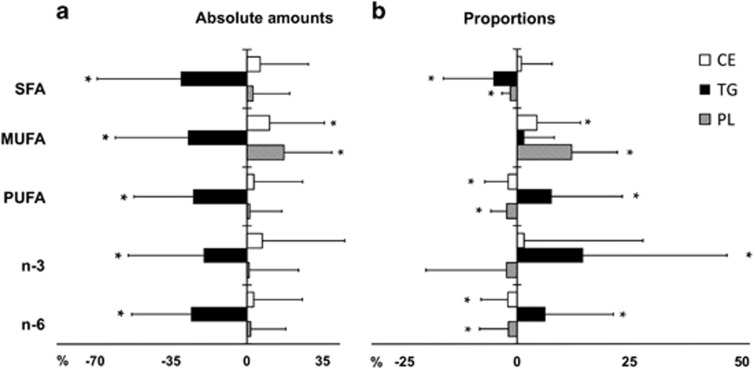
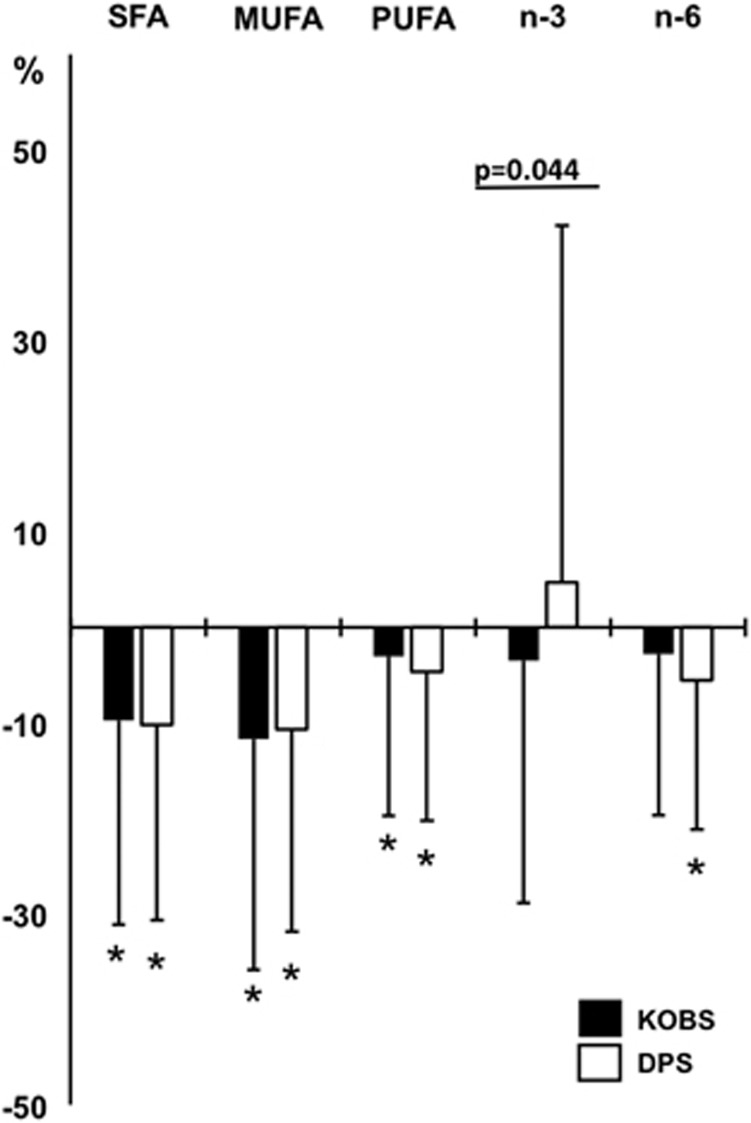
Results: The proportion of saturated FAs decreased and the proportion of n-3 and n-6 FAs increased in serum triglycerides after obesity surgery (all P<0.002). Weight loss predicted changes in quantitative amounts of saturated FAs, monounsaturated FAs, n-3 and n-6 FAs in triglycerides (P<0.002 for all). Moreover, the changes in adipose tissue FAs reflected the changes in serum FAs, and some of the changes were associated with mRNA expression of elongases and desaturases in adipose tissue (all P<0.05). In line with this the estimated activity of elongase (18:1 n-7/16:1 n-7) increased significantly after obesity surgery in all lipid fractions (all P<4 × 10⁻⁷) and the increase in the estimated activity of D5D in triglycerides was associated with higher weight loss (r=0.415, P<2 × 10⁻⁶). Changes in serum FA profile were similar after obesity surgery and lifestyle intervention, except for the change in the absolute amounts of n-3 FAs between the two studies (P=0.044).
Conclusions: Beneficial changes in serum and adipose tissue FAs after obesity surgery could be associated with changes in endogenous metabolism and diet.
Conflict of interest statement
The authors declare no conflict of interest.
Figures
References
-
- Vessby B, Gustafsson IB, Tengblad S, Boberg M, Andersson A. Desaturation and elongation of Fatty acids and insulin action. Ann N Y Acad Sci 2002; 967: 183–195. - PubMed
-
- Wang L, Folsom AR, Zheng ZJ, Pankow JS, Eckfeldt JH ARIC Study Investigators. Plasma fatty acid composition and incidence of diabetes in middle-aged adults: the Atherosclerosis Risk in Communities (ARIC) Study. Am J Clin Nutr 2003; 78: 91–98. - PubMed
-
- Klein-Platat C, Drai J, Oujaa M, Schlienger JL, Simon C. Plasma fatty acid composition is associated with the metabolic syndrome and low-grade inflammation in overweight adolescents. Am J Clin Nutr 2005; 82: 1178–1184. - PubMed
-
- Warensjo E, Ohrvall M, Vessby B. Fatty acid composition and estimated desaturase activities are associated with obesity and lifestyle variables in men and women. Nutr Metab Cardiovasc Dis 2006; 16: 128–136. - PubMed
-
- Warensjo E, Sundstrom J, Lind L, Vessby B. Factor analysis of fatty acids in serum lipids as a measure of dietary fat quality in relation to the metabolic syndrome in men. Am J Clin Nutr 2006; 84: 442–448. - PubMed
Publication types
MeSH terms
Substances
LinkOut - more resources
Full Text Sources
Other Literature Sources
Medical
Research Materials
Miscellaneous
