


Human fascioliasis by Fasciola hepatica: the first case report in Nepal
- PMID: 28870243
- PMCID: PMC5583974
- DOI: 10.1186/s13104-017-2761-z
Human fascioliasis by Fasciola hepatica: the first case report in Nepal
Abstract
Background: Fascioliasis is a zoonotic disease caused by Fasciola species. Patient may be asymptomatic or presents with jaundice and biliary colic or right hypochondriac pain due to bile duct obstruction with gastrointestinal symptoms.
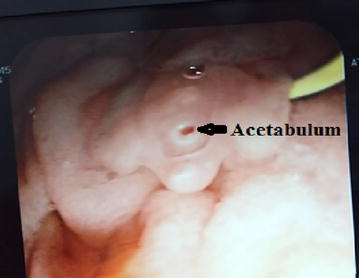
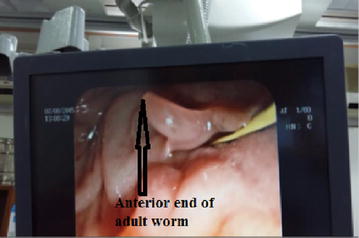
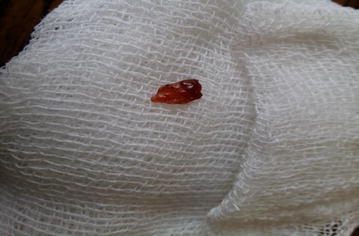
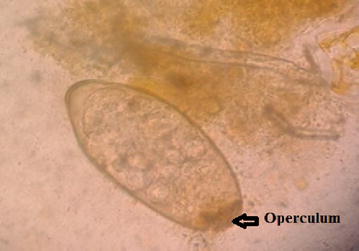
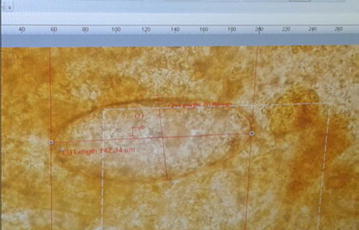
Case presentation: We report a case of human fascioliasis in a 45 years old female presented to Tribhuvan University Teaching Hospital (TUTH), Kathmandu, Nepal on August, 2015 with fever, right hypochondriac pain, jaundice and occasional vomiting with anorexia for 4 months whose alkaline phosphatase was elevated and peripheral blood smear revealed eosinophilia. The patient also gives the history of consumption of water-cress. Endoscopic Retrograde Cholagiopancretography (ERCP) showed the presence of a flat worm resembling Fasciola hepatica and stool routine examination revealed ova of F. hepatica. The patient was treated with nitazoxanide by which she got improved. Repeat stool examination 2 weeks after treatment revealed no ova of F. hepatica.
Conclusions: Patient with fascioliasis can be simply diagnosed with stool routine microscopy and treated with nitazoxanide. So patient with right hypochondriac pain, sign and symptoms of obstructive jaundice, eosinophilia and history of water-cress consumption should be suspected for fascioliasis and investigated and treated accordingly.
Keywords: Fasciola hepatica; Fascioliasis; Nepal; Right hypochondriac pain; TUTH (Tribhuvan University Teaching Hospital).
Figures
References
-
- Chatterjee KD. Parasitology (Protozoology and helminthology) 13th edition. Kolkata. 2014. p. 186–8.
-
- Arora DR, Arora BB. Medical parasitology, 3rd edition. 2010. p. 158–60.
-
- Mackie TJ, McCartney JE. Practical medical microbiology, 14th edition. 2006. p. 769.
Publication types
MeSH terms
LinkOut - more resources
Full Text Sources
Other Literature Sources
