


Triheptanoin versus trioctanoin for long-chain fatty acid oxidation disorders: a double blinded, randomized controlled trial
- PMID: 28871440
- PMCID: PMC6545116
- DOI: 10.1007/s10545-017-0085-8
Triheptanoin versus trioctanoin for long-chain fatty acid oxidation disorders: a double blinded, randomized controlled trial
Abstract
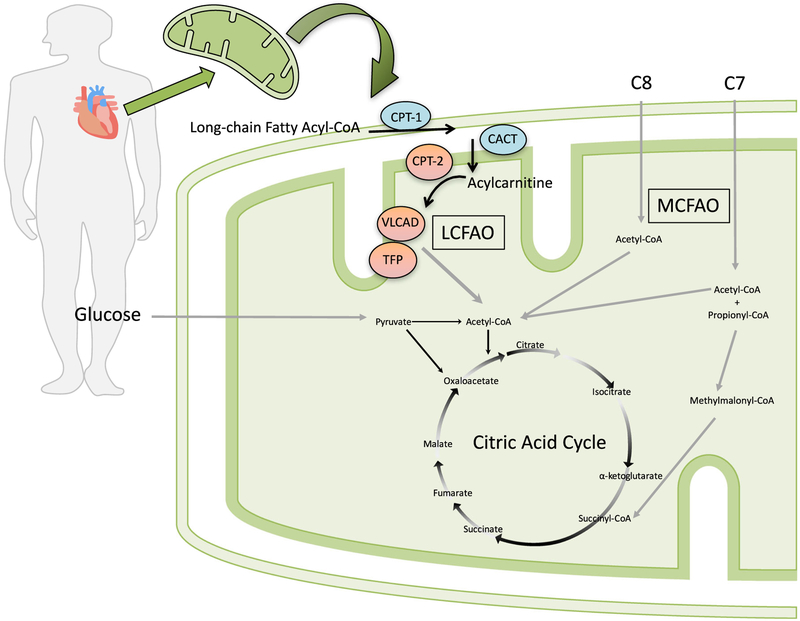
Background: Observational reports suggest that supplementation that increases citric acid cycle intermediates via anaplerosis may have therapeutic advantages over traditional medium-chain triglyceride (MCT) treatment of long-chain fatty acid oxidation disorders (LC-FAODs) but controlled trials have not been reported. The goal of our study was to compare the effects of triheptanoin (C7), an anaplerotic seven-carbon fatty acid triglyceride, to trioctanoin (C8), an eight-carbon fatty acid triglyceride, in patients with LC-FAODs.
Methods: A double blinded, randomized controlled trial of 32 subjects with LC-FAODs (carnitine palmitoyltransferase-2, very long-chain acylCoA dehydrogenase, trifunctional protein or long-chain 3-hydroxy acylCoA dehydrogenase deficiencies) who were randomly assigned a diet containing 20% of their total daily energy from either C7 or C8 for 4 months was conducted. Primary outcomes included changes in total energy expenditure (TEE), cardiac function by echocardiogram, exercise tolerance, and phosphocreatine recovery following acute exercise. Secondary outcomes included body composition, blood biomarkers, and adverse events, including incidence of rhabdomyolysis.
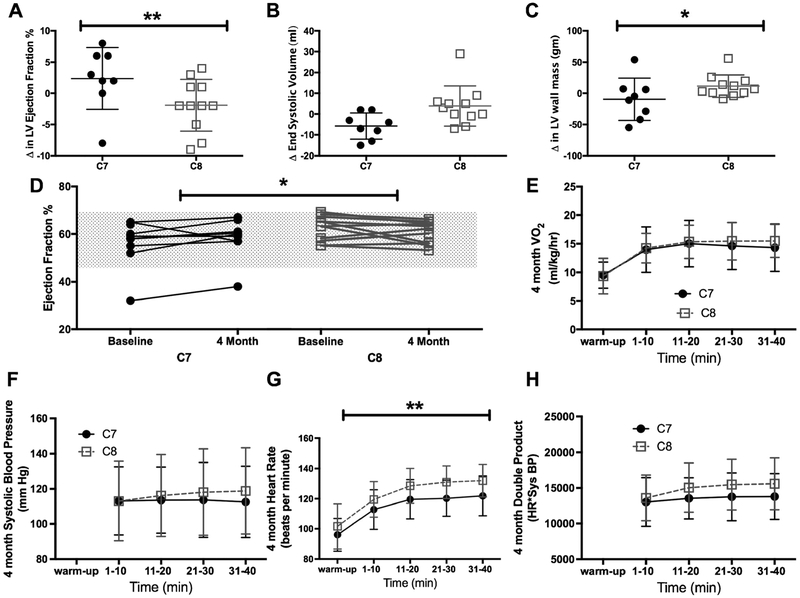
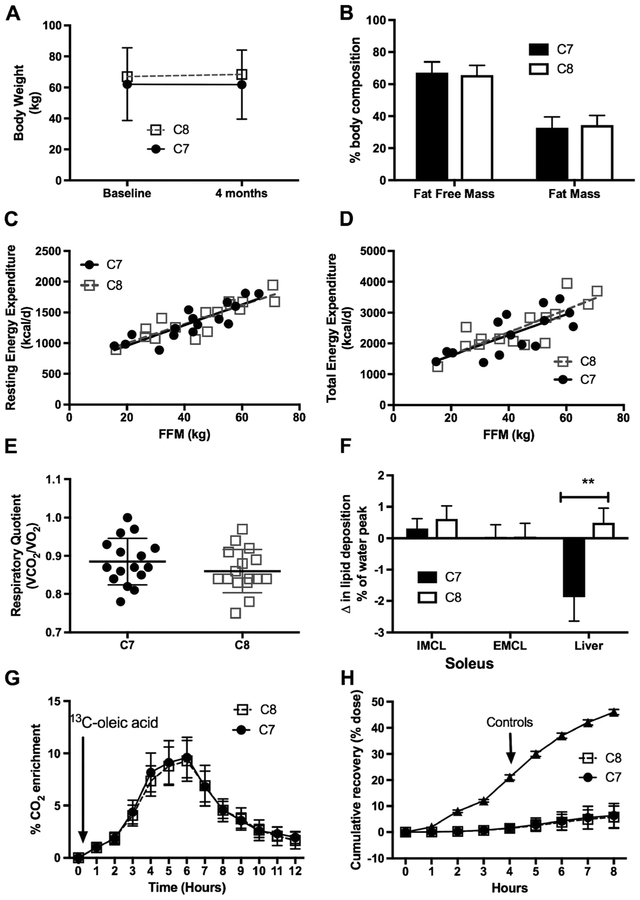
Results: Patients in the C7 group increased left ventricular (LV) ejection fraction by 7.4% (p = 0.046) while experiencing a 20% (p = 0.041) decrease in LV wall mass on their resting echocardiogram. They also required a lower heart rate for the same amount of work during a moderate-intensity exercise stress test when compared to patients taking C8. There was no difference in TEE, phosphocreatine recovery, body composition, incidence of rhabdomyolysis, or any secondary outcome measures between the groups.
Conclusions: C7 improved LV ejection fraction and reduced LV mass at rest, as well as lowering heart rate during exercise among patients with LC-FAODs.
Clinical trial registration: Clinicaltrials.gov NCT01379625.
Conflict of interest statement
S. B. Heitner, J. Martin, S. Rose, A. Goldstein, A. H. El-Gharbawy, S. Deward, M. R. Lasarev, J. Pollaro, J. P. DeLany, L. J. Burchill, B. Goodpaster, J. Shoemaker, D. Matern, and J. Vockley declare that they have no conflict of interest.
Note: Ultragenyx Pharmaceutical was not involved with the design or execution of this study and did not provide triheptanoin for the trial.
Figures
Comment in
-
Concerning "Triheptanoin vs trioctanoin for long-chain fatty acid oxidation disorders: A double blinded, randomized controlled trial" by Gillingham et al.J Inherit Metab Dis. 2019 May;42(3):394-395. doi: 10.1002/jimd.12078. Epub 2019 Mar 20. J Inherit Metab Dis. 2019. PMID: 30838661 No abstract available.
References
-
- Bennett MJ, Rinaldo P, Wilcken B, Pass KA, Watson MS, Wanders RJ (2012) Newborn screening for metabolic disorders: how are we doing, and where are we going? Clin Chem 58:324–331 - PubMed
-
- Bergouignan A, Momken I, Lefai E et al. (2013) Activity energy expen- diture is a major determinant of dietary fat oxidation and trafficking, but the deleterious effect of detraining is more marked than the beneficial effect of training at current recommendations. Am J Clin Nutr 98:648–658 - PubMed
-
- Bonnet D, Martin D, Pascale De L et al. (1999) Arrhythmias and conduc- tion defects as presenting symptoms of fatty acid oxidation disorders in children. Circulation 100:2248–2253 - PubMed
Publication types
MeSH terms
Substances
Supplementary concepts
Associated data
Grants and funding
LinkOut - more resources
Full Text Sources
Other Literature Sources
Medical
Miscellaneous
