


Clinical reappraisal of vasculobiliary anatomy relevant to laparoscopic cholecystectomy
- PMID: 28872096
- PMCID: PMC5607794
- DOI: 10.4103/jmas.JMAS_268_16
Clinical reappraisal of vasculobiliary anatomy relevant to laparoscopic cholecystectomy
Abstract
Background: Laparoscopic cholecystectomy (LC) has many advantages as compared to open cholecystectomy. However, vasculobiliary injuries still continue to be a matter of concern despite advances in laparoscopic techniques. Misidentification and misperception of vasculobiliary structures is considered to be a pivotal factor leading to injuries. Although many studies since time immemorial have stressed on the importance of anatomy, an insight into laparoscopic anatomy is what essentially constitutes the need of the hour.
Objective: To assess the frequency and the relevance of anatomical variations of extrahepatic biliary system in patients undergoing LC.
Materials and methods: The present study is an observational study performed for a period of 2 years from August 2014 to August 2016. It included all diagnosed patients of cholelithiasis undergoing routine LC performed by a single surgeon by achieving a critical view of safety. During dissection, vascular and ductal anomalies were noted and assessed for their relevance in LC.
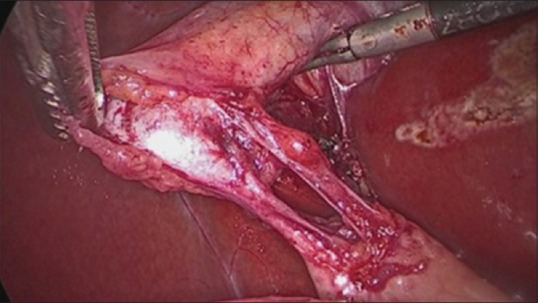
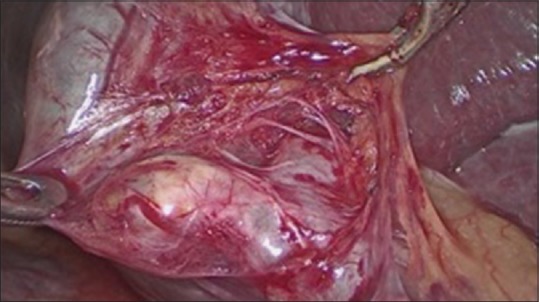
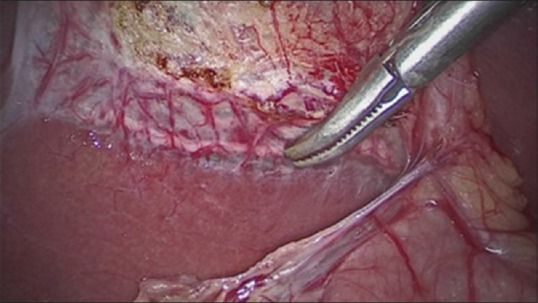
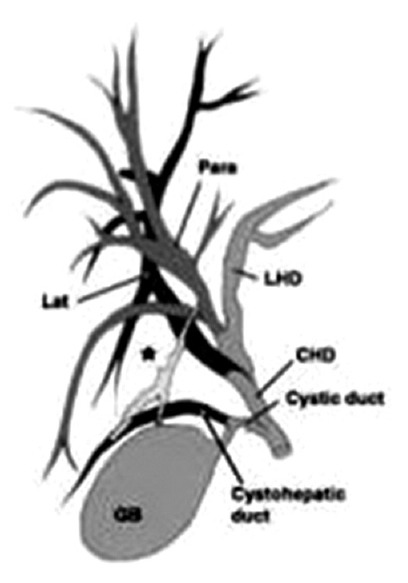
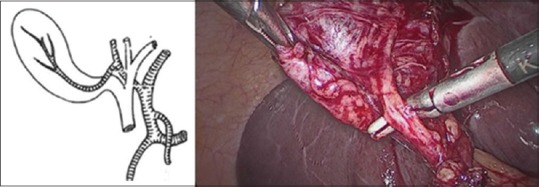
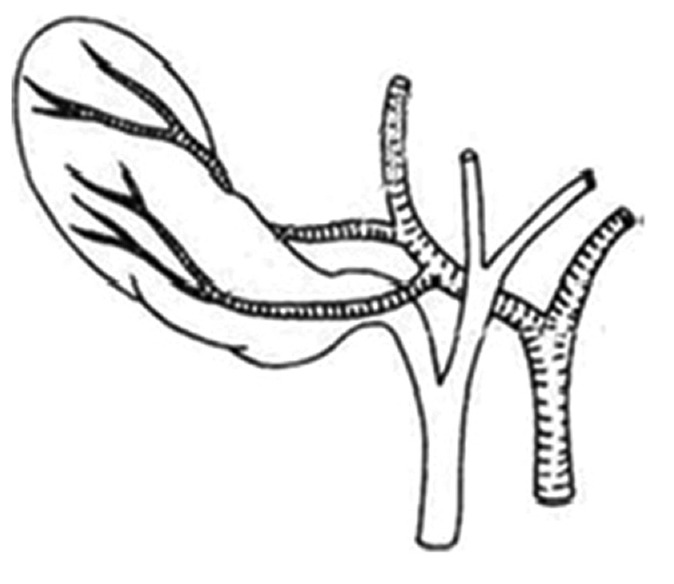
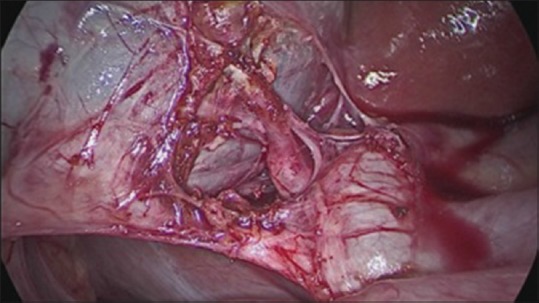
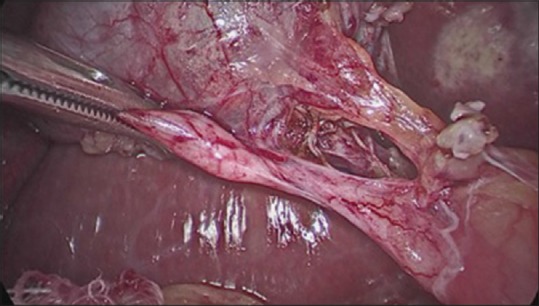
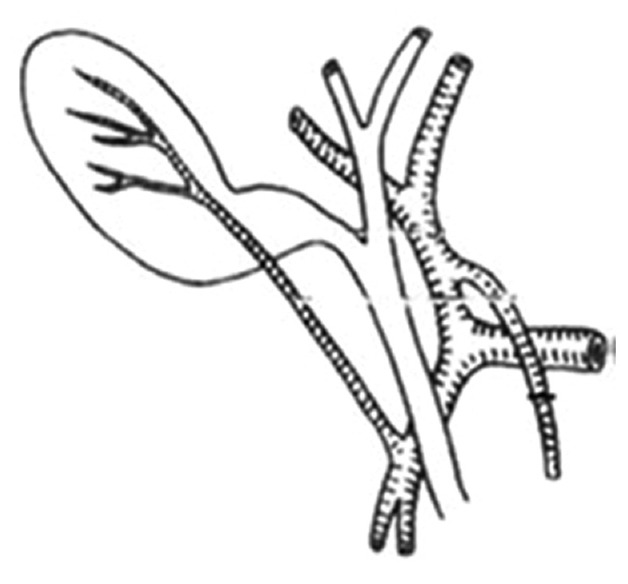
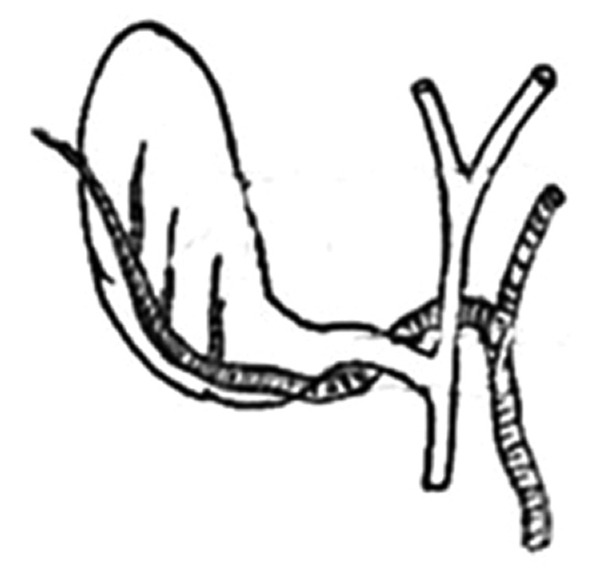
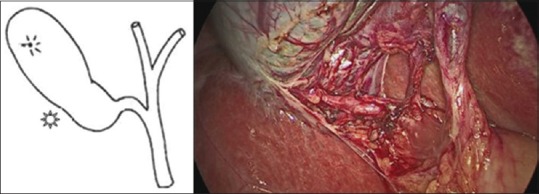
Results: Seven hundred forty cases of cholelithiasis, irrespective of pathology, comprising 280 (37.83%) men and 460 (62.16%) females with a mean age of 39.85 ± 18.82 years were included in the study. Photodocumentation and operative recordings were available in 93% of cases. Operative findings revealed 197 (26.62%) vascular anomalies and 90 (12.16%) ductal anomalies. A single cystic artery was seen in 340 cases, and a normal cystic duct was seen in 650 cases. Variations in ductal anatomy were fewer than variations in vascular anatomy.
Conclusion: Extra-biliary anatomy relevant to LC is unpredictable and varies from patient to patient. Vascular anomalies are more frequent than the ductal anomalies, and surgeon should be alert regarding their presence.
Conflict of interest statement
There are no conflicts of interest.
Figures
References
-
- Benson EA, Page RE. A practical reappraisal of the anatomy of the extrahepatic bile ducts and arteries. Br J Surg. 1976;63:853–60. - PubMed
-
- Suhocki PV, Meyers WC. Injury to aberrant bile ducts during cholecystectomy: A common cause of diagnostic error and treatment delay. AJR Am J Roentgenol. 1999;172:955–9. - PubMed
-
- Lamah M, Karanjia ND, Dickson GH. Anatomical variations of the extrahepatic biliary tree: Review of the world literature. Clin Anat. 2001;14:167–72. - PubMed
-
- Strasberg SM, Brunt LM. Rationale and use of the critical view of safety in laparoscopic cholecystectomy. J Am Coll Surg. 2010;211:132–8. - PubMed
-
- Hand BH. Anatomy and function of the extrahepatic biliary system. Clin Gastroenterol. 1973;2:3–29. - PubMed
LinkOut - more resources
Full Text Sources
Other Literature Sources