


DNA in a bottle-Rapid metabarcoding survey for early alerts of invasive species in ports
- PMID: 28873426
- PMCID: PMC5584753
- DOI: 10.1371/journal.pone.0183347
DNA in a bottle-Rapid metabarcoding survey for early alerts of invasive species in ports
Abstract
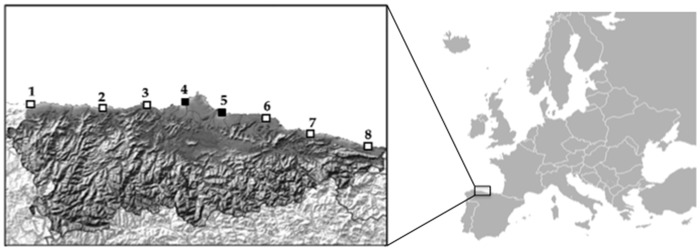
Biota monitoring in ports is increasingly needed for biosecurity reasons and safeguarding marine biodiversity from biological invasion. Present and future international biosecurity directives can be accomplished only if the biota acquired by maritime traffic in ports is controlled. Methodologies for biota inventory are diverse and now rely principally on extensive and labor-intensive sampling along with taxonomic identification by experts. In this study, we employed an extremely simplified environmental DNA (eDNA) sampling methodology from only three 1-L bottles of water per port, followed by metabarcoding (high-throughput sequencing and DNA-based species identification) using 18S rDNA and Cytochrome oxidase I as genetic barcodes. Eight Bay of Biscay ports with available inventory of fouling invertebrates were employed as a case study. Despite minimal sampling efforts, three invasive invertebrates were detected: the barnacle Austrominius modestus, the tubeworm Ficopomatus enigmaticus and the polychaete Polydora triglanda. The same species have been previously found from visual and DNA barcoding (genetic identification of individuals) surveys in the same ports. The current costs of visual surveys, conventional DNA barcoding and this simplified metabarcoding protocol were compared. The results encourage the use of metabarcoding for early biosecurity alerts.
Conflict of interest statement
Figures
References
-
- Molnar JL, Gamboa RL, Revenga C, Spalding MD. Assessing the global threat of invasive species to marine biodiversity. Front Ecol Environ. 2008; 6: 485–492.
-
- Katsanevakis S, Coll M, Piroddi C, Steenbeek J, Ben Rais Lasram F, Zenetos A et al. Invading the Mediterranean Sea: biodiversity patterns shaped by human activities. Front Mar Sci. 2014; 11: 32.
-
- Katsanevakis S, Wallentinus I, Zenetos A, Leppäkoski E, Çinar ME, Oztürk B, et al. Impacts of marine invasive alien species on ecosystem services and biodiversity: a pan-European review. Aquat Invasions. 2014; 9: 391–423.
-
- Occhipinti-Ambrogi A. Non-indigenous marine species: science and management for their control in Europe. Mares Conference 2016. February 1st to 5th, 2016. Olhão, Portugal.
-
- Grall J & Hall-Spencer JM. Problems facing maerl conservation in Brittany. Aquat Conserv. 2003; 13: S55–S64.
MeSH terms
Substances
LinkOut - more resources
Full Text Sources
Other Literature Sources
