


Prognostic significance of baseline metabolic tumor volume in relapsed and refractory Hodgkin lymphoma
- PMID: 28874350
- PMCID: PMC5691245
- DOI: 10.1182/blood-2017-06-788877
Prognostic significance of baseline metabolic tumor volume in relapsed and refractory Hodgkin lymphoma
Abstract
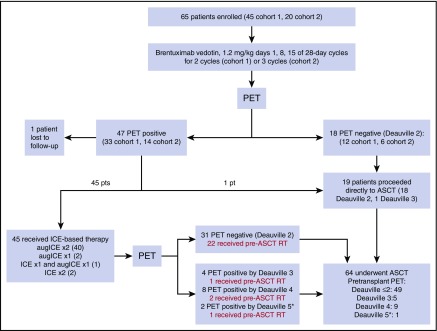
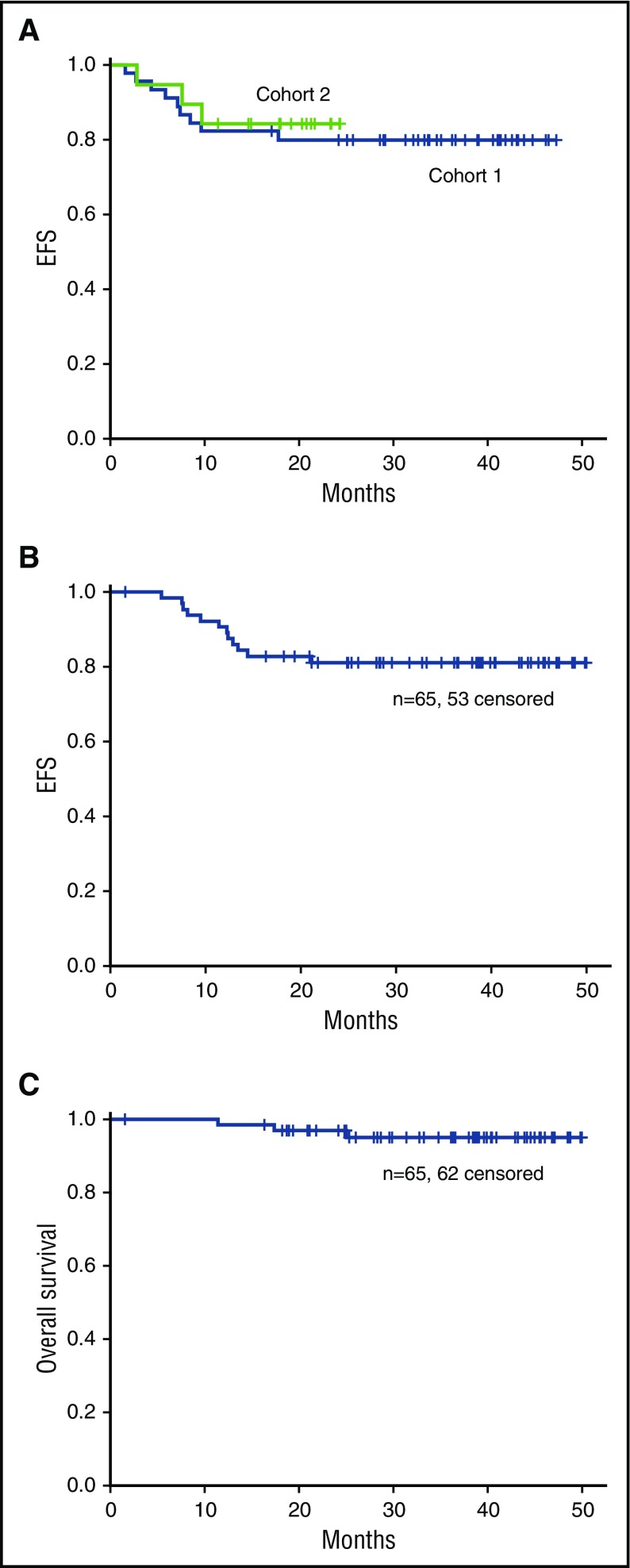
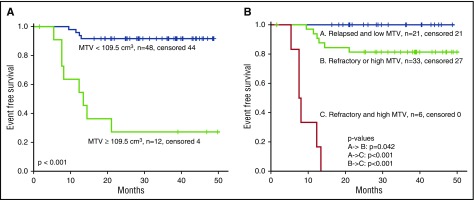
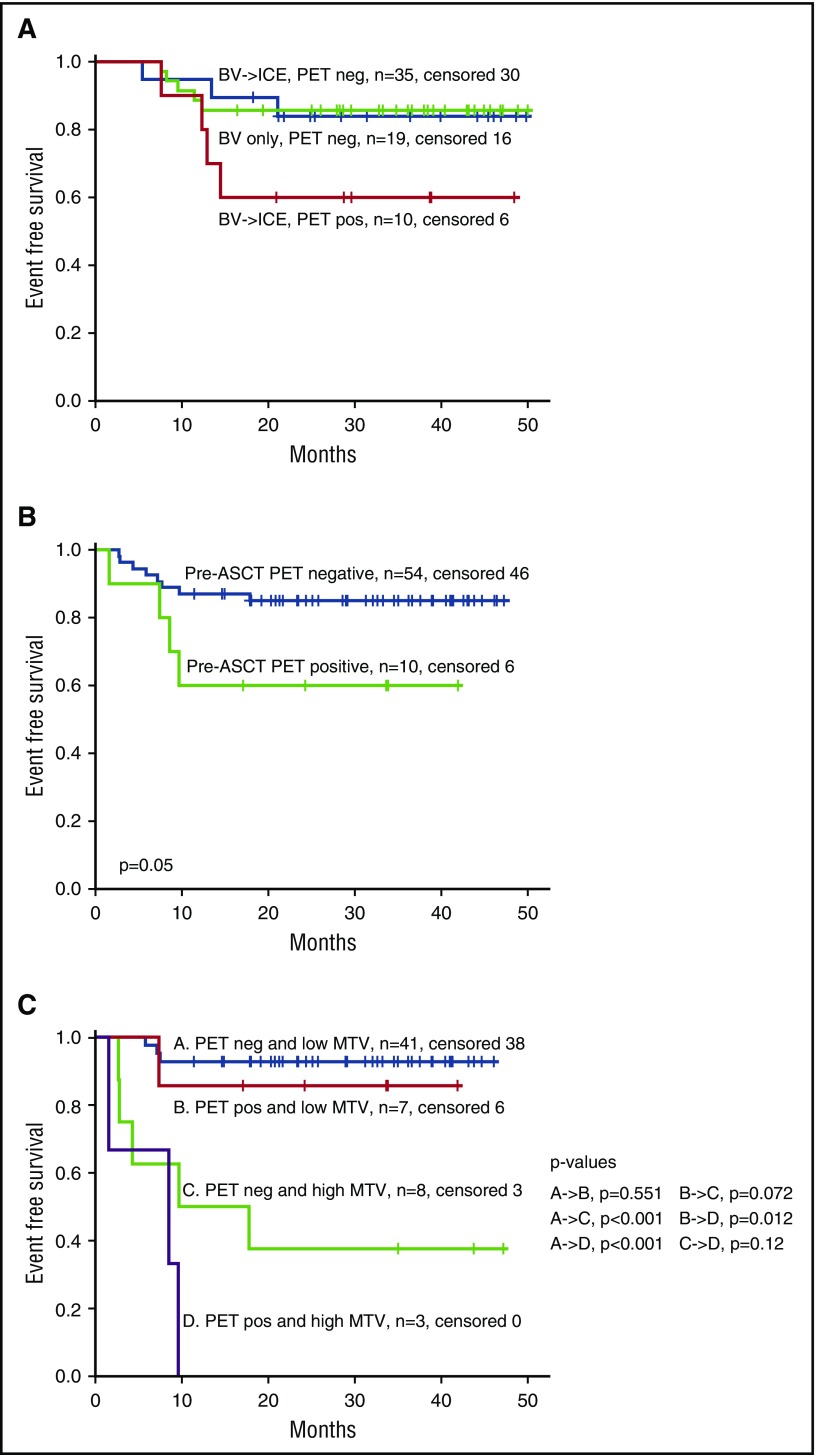
Identification of prognostic factors for patients with relapsed/refractory Hodgkin lymphoma (HL) is essential for optimizing therapy with risk-adapted approaches. In our phase 2 study of positron emission tomography (PET)-adapted salvage therapy with brentuximab vedotin (BV) and augmented ifosfamide, carboplatin, and etoposide (augICE), we assessed clinical factors, quantitative PET assessments, and cytokine and chemokine values. Transplant-eligible patients with relapsed/refractory HL received 2 (cohort 1) or 3 (cohort 2) cycles of weekly BV; PET-negative patients (Deauville score ≤2) proceeded to autologous stem cell transplantation (ASCT) whereas PET-positive patients received augICE before ASCT. Serum cytokine and chemokine levels were measured at baseline and after BV. Metabolic tumor volume (MTV) and total lesion glycolysis were measured at baseline, after BV, and after augICE. Sixty-five patients enrolled (45, cohort 1; 20, cohort 2); 49 (75%) achieved complete response and 64 proceeded to ASCT. Three-year overall survival and event-free survival (EFS) were 95% and 82%, respectively. Factors predictive for EFS by multivariable analysis were baseline MTV (bMTV) (P < .001) and refractory disease (P = .003). Low bMTV (<109.5 cm3) and relapsed disease identified a favorable group (3-year EFS, 100%). For patients who received a transplant, bMTV and pre-ASCT PET were independently prognostic; 3-year EFS for pre-ASCT PET-positive patients with low bMTV was 86%. In this phase 2 study of PET-adapted therapy with BV and augICE for relapsed/refractory HL, bMTV and refractory disease were independent prognostic factors for EFS. Furthermore, bMTV improved the predictive power of pre-ASCT PET. Future studies should optimize efficacy and tolerability of salvage therapy by stratifying patients according to risk factors such as bMTV.
© 2017 by The American Society of Hematology.
Figures
Comment in
-
Relapsed/refractory HL: FDG-PET is the trump card.Blood. 2017 Nov 16;130(20):2154-2155. doi: 10.1182/blood-2017-09-806299. Blood. 2017. PMID: 29146817 No abstract available.
-
Serious concerns on the inability of FDG-PET in excluding residual viable lymphoma.Ann Hematol. 2018 May;97(5):915-916. doi: 10.1007/s00277-018-3244-6. Epub 2018 Jan 12. Ann Hematol. 2018. PMID: 29330563 No abstract available.
References
-
- Schmitz N, Pfistner B, Sextro M, et al. ; German Hodgkin’s Lymphoma Study Group; Lymphoma Working Party of the European Group for Blood and Marrow Transplantation. Aggressive conventional chemotherapy compared with high-dose chemotherapy with autologous haematopoietic stem-cell transplantation for relapsed chemosensitive Hodgkin’s disease: a randomised trial. Lancet. 2002;359(9323):2065-2071. - PubMed
-
- Linch DC, Winfield D, Goldstone AH, et al. Dose intensification with autologous bone-marrow transplantation in relapsed and resistant Hodgkin’s disease: results of a BNLI randomised trial. Lancet. 1993;341(8852):1051-1054. - PubMed
-
- Josting A, Rudolph C, Reiser M, et al. ; Participating Centers. Time-intensified dexamethasone/cisplatin/cytarabine: an effective salvage therapy with low toxicity in patients with relapsed and refractory Hodgkin’s disease. Ann Oncol. 2002;13(10):1628-1635. - PubMed
-
- Bartlett NL, Niedzwiecki D, Johnson JL, et al. ; Cancer Leukemia Group B. Gemcitabine, vinorelbine, and pegylated liposomal doxorubicin (GVD), a salvage regimen in relapsed Hodgkin’s lymphoma: CALGB 59804. Ann Oncol. 2007;18(6):1071-1079. - PubMed
MeSH terms
Substances
Grants and funding
LinkOut - more resources
Full Text Sources
Other Literature Sources
Medical
