Survivorship, Version 2.2017, NCCN Clinical Practice Guidelines in Oncology
- PMID: 28874599
- PMCID: PMC5865602
- DOI: 10.6004/jnccn.2017.0146
Survivorship, Version 2.2017, NCCN Clinical Practice Guidelines in Oncology
Abstract
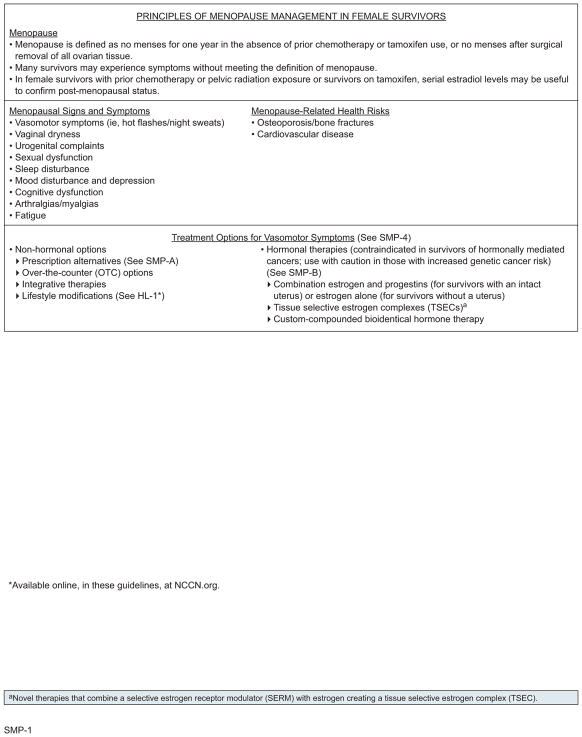
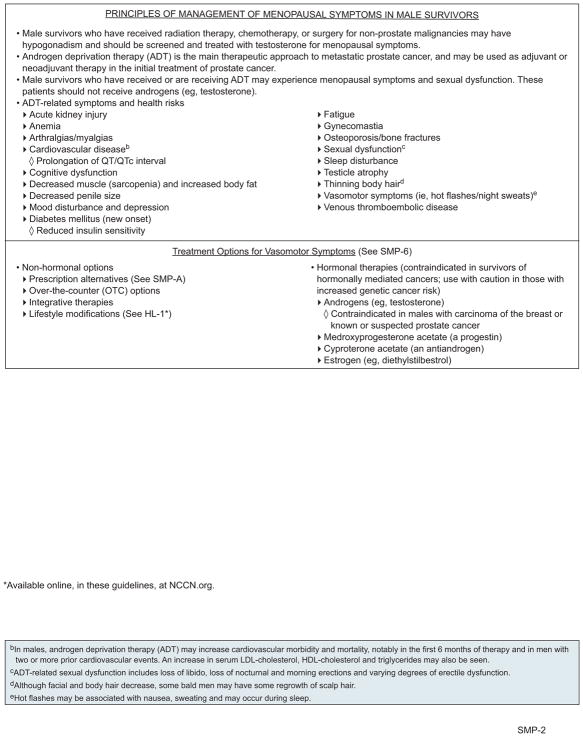
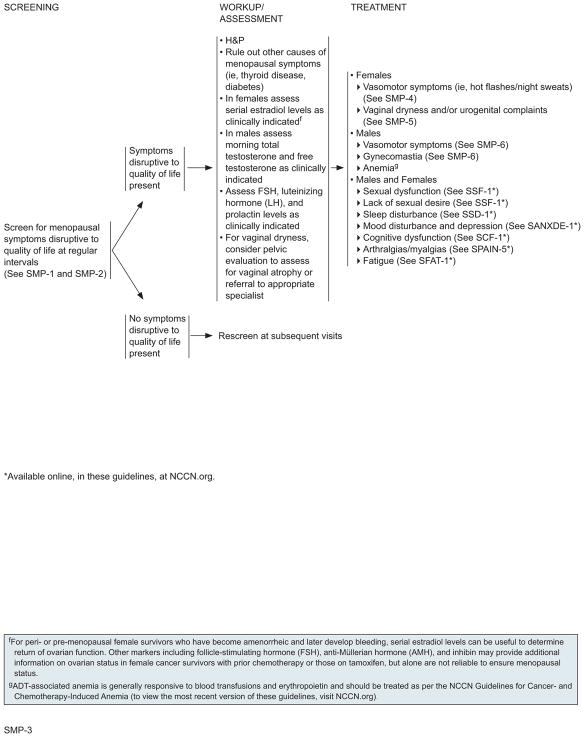
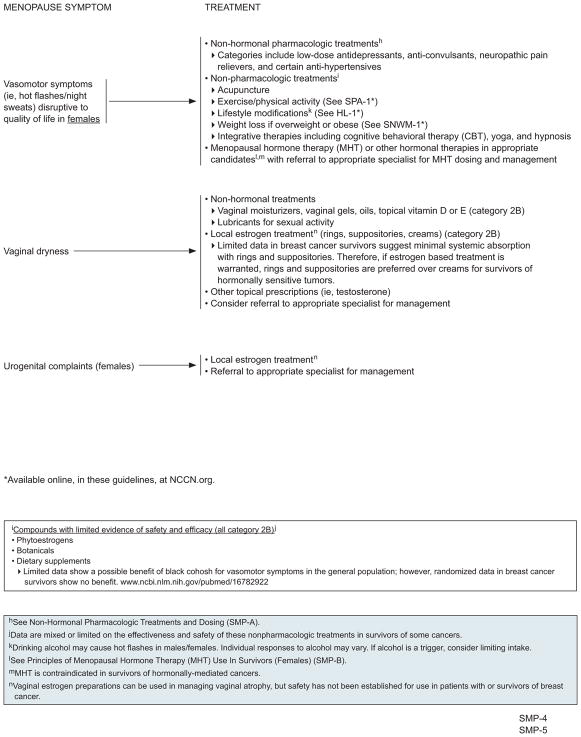
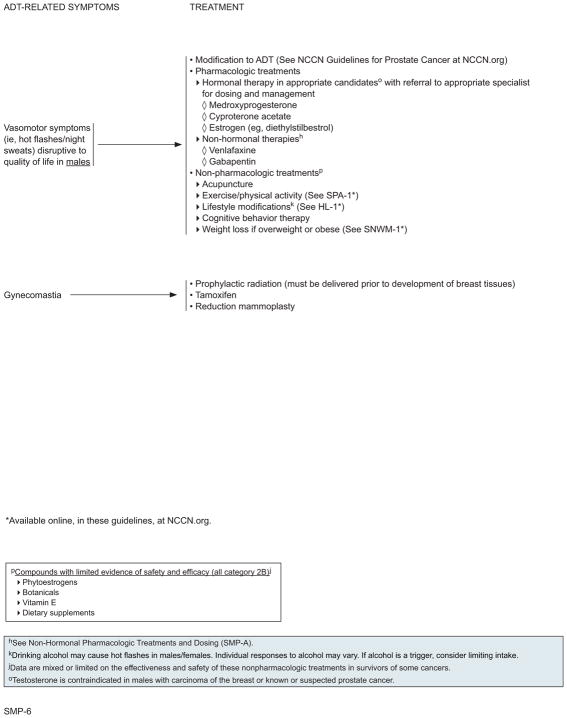
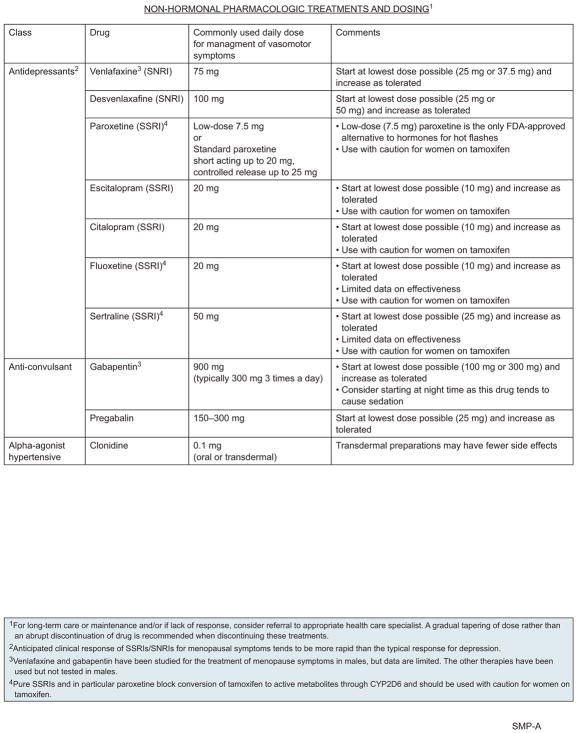
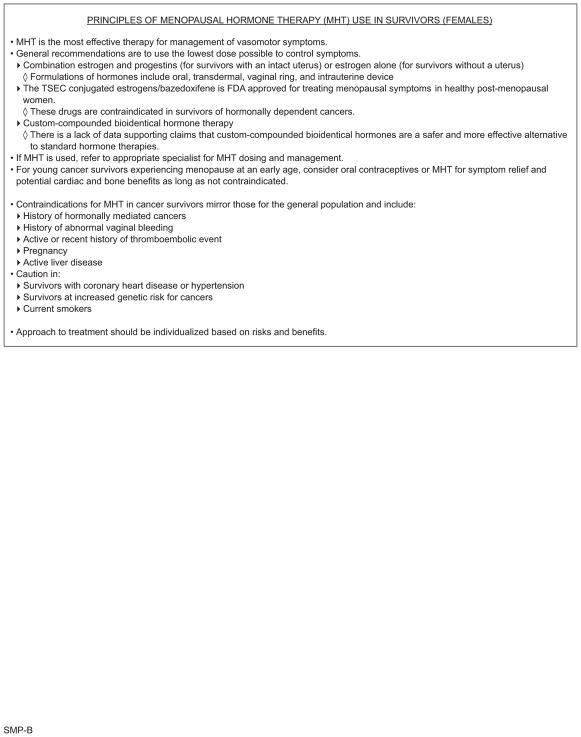
Many cancer survivors experience menopausal symptoms, including female survivors taking aromatase inhibitors or with a history of oophorectomy or chemotherapy, and male survivors who received or are receiving androgen-ablative therapies. Sexual dysfunction is also common in cancer survivors. Sexual dysfunction and menopause-related symptoms can increase distress and have a significant negative impact on quality of life. This portion of the NCCN Guidelines for Survivorship provide recommendations for screening, evaluation, and treatment of sexual dysfunction and menopausal symptoms to help healthcare professionals who work with survivors of adult-onset cancer in the posttreatment period.
Copyright © 2017 by the National Comprehensive Cancer Network.
Figures
References
-
- Martin K, Barbieri R. [Accessed August 10, 2017];Treatment of menopausal symptoms with hormone therapy. Available at: https://www.uptodate.com/contents/treatment-of-menopausal-symptoms-with-....
-
- Howard-Anderson J, Ganz PA, Bower JE, Stanton AL. Quality of life, fertility concerns, and behavioral health outcomes in younger breast cancer survivors: a systematic review. J Natl Cancer Inst. 2012;104:386–405. - PubMed
-
- Nishiyama T, Kanazawa S, Watanabe R, et al. Influence of hot flashes on quality of life in patients with prostate cancer treated with androgen deprivation therapy. Int J Urol. 2004;11:735–741. - PubMed
Publication types
MeSH terms
Grants and funding
LinkOut - more resources
Full Text Sources
Other Literature Sources
Medical