


Differential item functioning by language on the PROMIS® physical functioning items for children and adolescents
- PMID: 28875367
- PMCID: PMC5771831
- DOI: 10.1007/s11136-017-1691-5
Differential item functioning by language on the PROMIS® physical functioning items for children and adolescents
Abstract
Purpose: To assess the equivalence of self-reports of physical functioning between pediatric respondents to the English- and Spanish-language patient-reported outcomes measurement information system (PROMIS®) physical functioning item banks.
Methods: The PROMIS pediatric physical functioning item banks include 29 upper extremity items and 23 mobility items. A sample of 5091 children and adolescents (mean age = 12 years, range 8-17; 49% male) completed the English-language version of the items. A sample of 605 children and adolescents (mean age = 12 years, range 8-17; 55% male; 96% Hispanic) completed the Spanish-language version of the items.
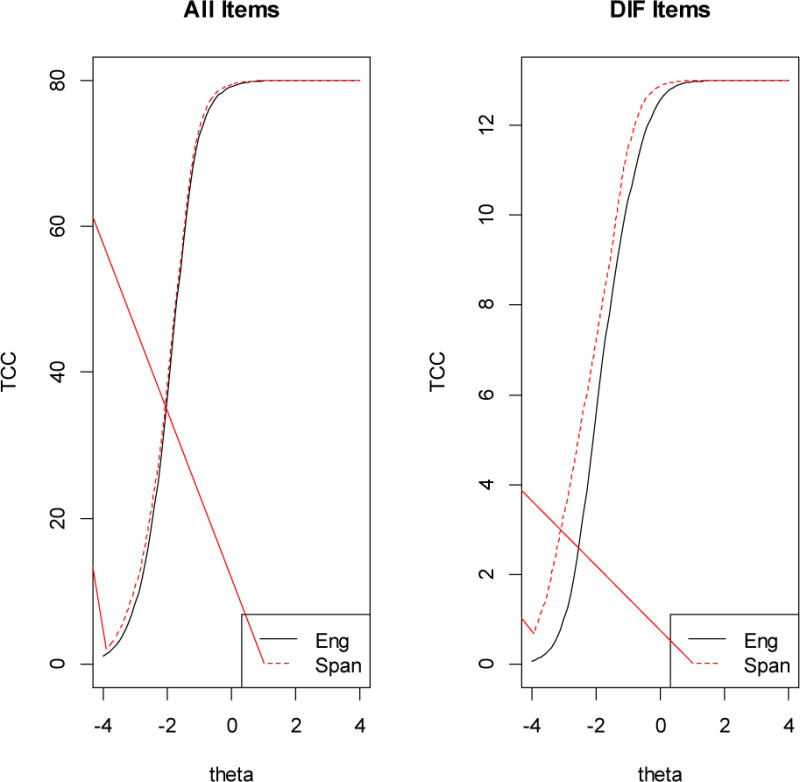
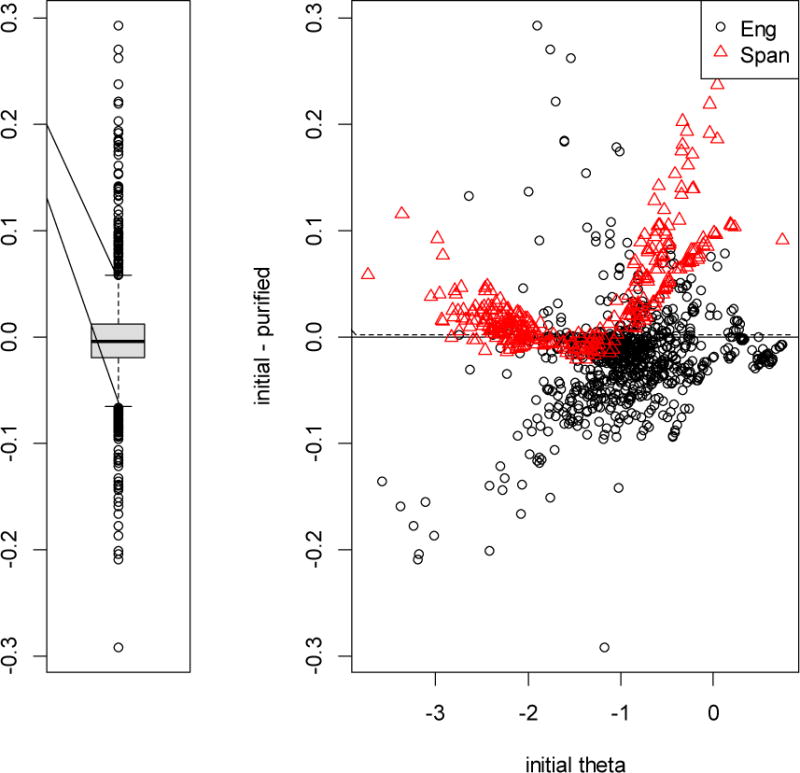
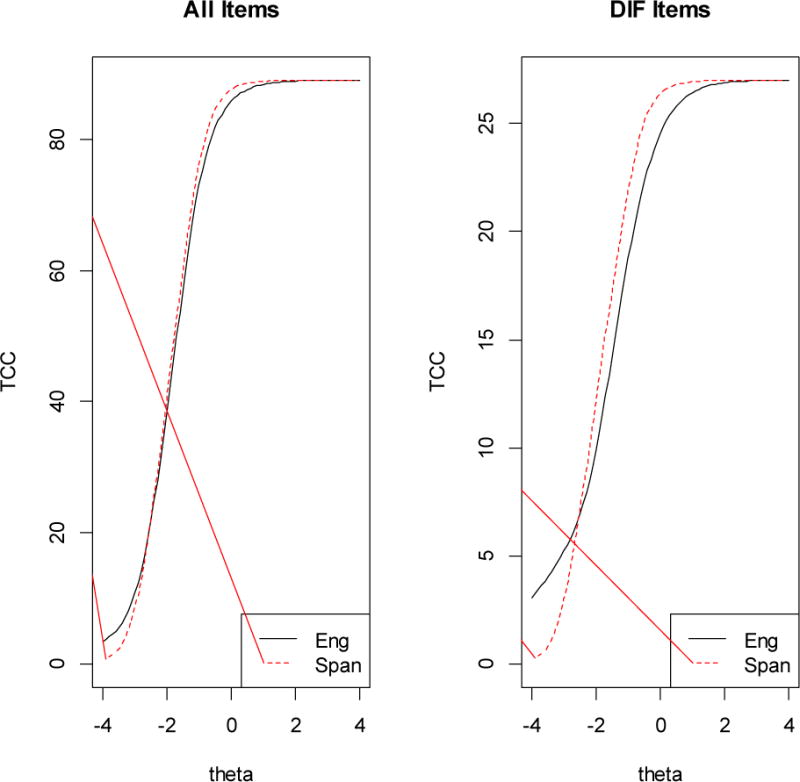
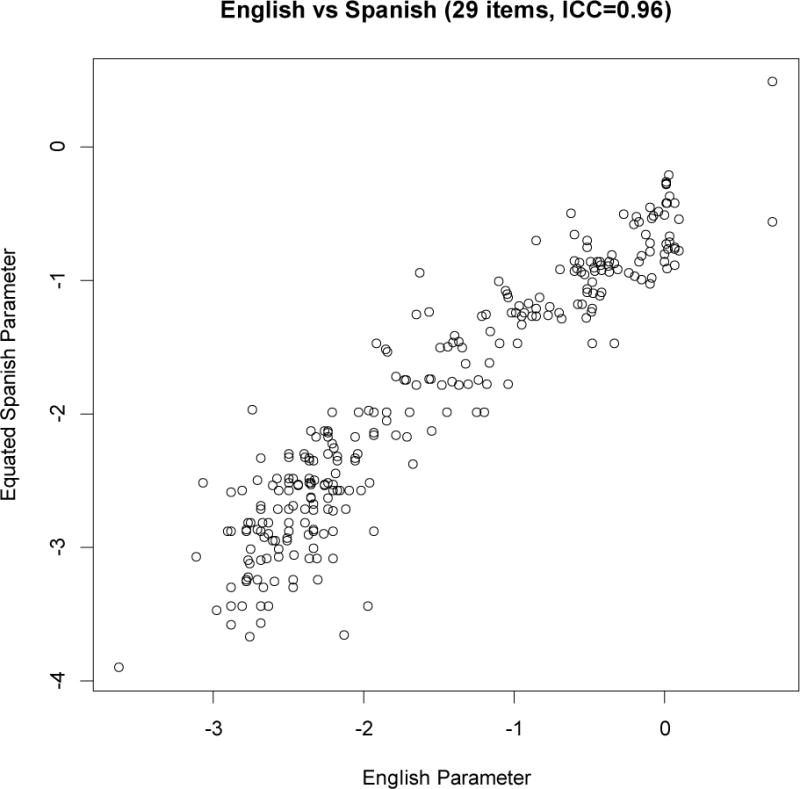
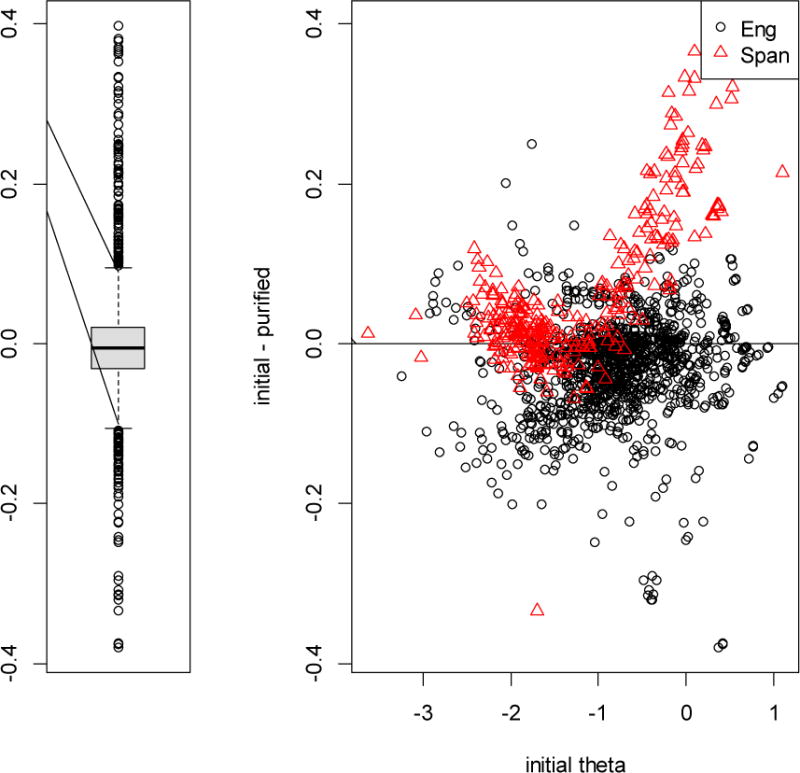
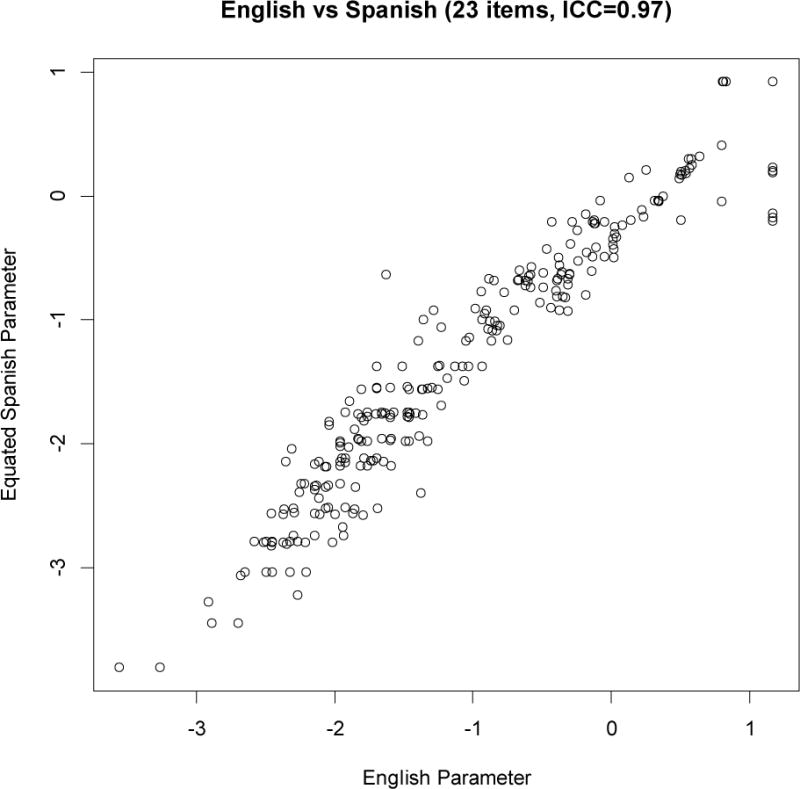
Results: We found language (English versus Spanish) differential item functioning (DIF) for 4 upper extremity items and 7 mobility items. Product-moment correlations between estimated upper extremity and mobility scores using the English versus the equated Spanish item parameters for Spanish-language respondents were 0.98 and 0.99, respectively. After excluding cases with significant person misfit, we found DIF for the same 4 upper extremity items that had DIF in the full sample and for 12 mobility items (including the same 7 mobility items that had DIF in the full sample). The identification of DIF items between English- and Spanish-language respondents was affected slightly by excluding respondents displaying person misfit.
Conclusions: The results of this study provide support for measurement equivalence of self-reports of physical functioning by children and adolescents who completed the English- and Spanish-language surveys. Future analyses are needed to replicate the results of this study in other samples.
Keywords: Children and adolescent health; Differential item functioning; Person fit; Physical functioning.
Conflict of interest statement
Figures
References
-
- DeWitt EM, Stucky BD, Thissen D, Irwin DE, Langer M, Varni JW, Lai JS, Yeatts KB, DeWalt DA. Construction of the eight-item patient-reported outcomes measurement information system pediatric physical function scales: built using item response theory. Journal of Clinical Epidemiology. 2011;64(7):794–804. - PMC - PubMed
-
- Yang FM, Heslin KC, Mehta KM, Yang C-W, Oceptek-Welikson K, Kleinman M, Morales LS, Hays RD, Stewart AL, Mungas D, Jones RN, Teresi JA. A comparison of item response theory-based methods for examining differential item functioning in object naming test by language of assessment among older Latinos. Psychological Test and Assessment Modeling. 2011;53:440–460. - PMC - PubMed
-
- Hays RD. Response 1 to Reeve’s chapter: Applying Item response theory for questionnaire evaluation. In: Madans J, Miller K, Maitland A, Willis G, editors. Question Evaluation Methods: Contributing to the Science of Data Quality. Hoboken, New Jersey: Wiley & Sons Inc; 2011. pp. 125–135.
Publication types
MeSH terms
Grants and funding
LinkOut - more resources
Full Text Sources
Other Literature Sources
