. 2017 Sep 5;26(3):539-546.e5.
doi: 10.1016/j.cmet.2017.08.005.

A Ketogenic Diet Extends Longevity and Healthspan in Adult Mice

Affiliations

A Ketogenic Diet Extends Longevity and Healthspan in Adult Mice

Megan N Roberts et al. Cell Metab. .

Erratum in

  • A Ketogenic Diet Extends Longevity and Healthspan in Adult Mice.
    Roberts MN, Wallace MA, Tomilov AA, Zhou Z, Marcotte GR, Tran D, Perez G, Gutierrez-Casado E, Koike S, Knotts TA, Imai DM, Griffey SM, Kim K, Hagopian K, McMackin MZ, Haj FG, Baar K, Cortopassi GA, Ramsey JJ, Lopez-Dominguez JA. Roberts MN, et al. Cell Metab. 2018 May 1;27(5):1156. doi: 10.1016/j.cmet.2018.04.005. Cell Metab. 2018. PMID: 29719228 Free PMC article. No abstract available.

Abstract

Calorie restriction, without malnutrition, has been shown to increase lifespan and is associated with a shift away from glycolysis toward beta-oxidation. The objective of this study was to mimic this metabolic shift using low-carbohydrate diets and to determine the influence of these diets on longevity and healthspan in mice. C57BL/6 mice were assigned to a ketogenic, low-carbohydrate, or control diet at 12 months of age and were either allowed to live their natural lifespan or tested for physiological function after 1 or 14 months of dietary intervention. The ketogenic diet (KD) significantly increased median lifespan and survival compared to controls. In aged mice, only those consuming a KD displayed preservation of physiological function. The KD increased protein acetylation levels and regulated mTORC1 signaling in a tissue-dependent manner. This study demonstrates that a KD extends longevity and healthspan in mice.

Keywords: aging; beta-hydroxybutyrate; healthspan; ketogenic diet; ketone bodies; ketones; lifespan; longevity; low-carbohydrate diet; memory.


Figures

Figure 1
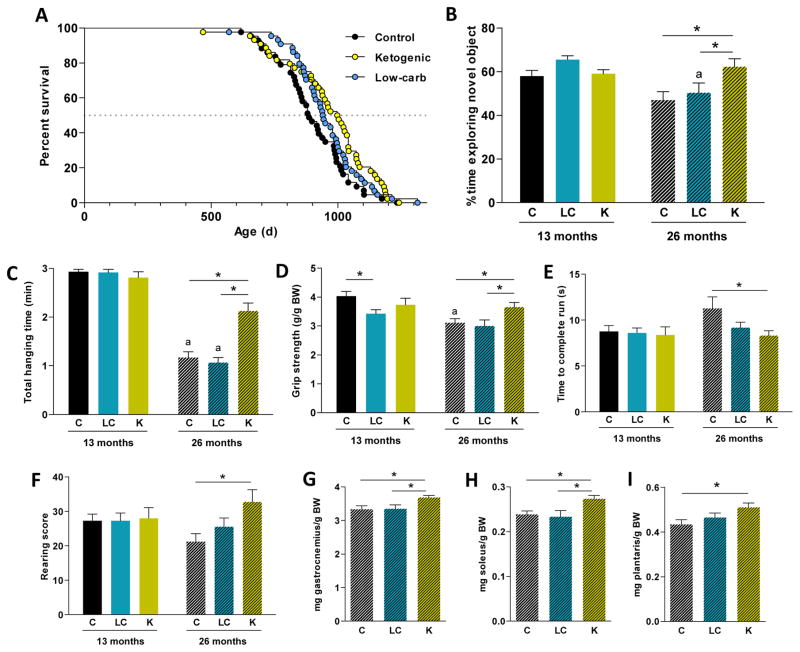
Figure 1. Effect of low-carbohydrate diets on longevity and healthspan in male mice
(A) Survival curves comparing mice fed either a KD, a LCD, or the control diet (n = 43–44). (B) Novel object recognition test: proportion of time spent exploring the novel object. (C) Hanging wire test: total hanging time before falling ten times from the wire. (D) Grip strength test: relative force exerted on the force meter. (E) Locotronic run test: time to complete a run after one round of training. (F) Rearing score: number of rearing behavior events in 5 minutes. n = 14–18. Relative muscle mass of gastrocnemius (G), soleus (H) and plantaris (I) after 14 months of diet. Diets: C = control, LC = low-carbohydrate, K = ketogenic. * p < 0.05 between diets. ap < 0.05 between 13-mo and 26-mo for the same diet. See also Figure S1.
Figure 2
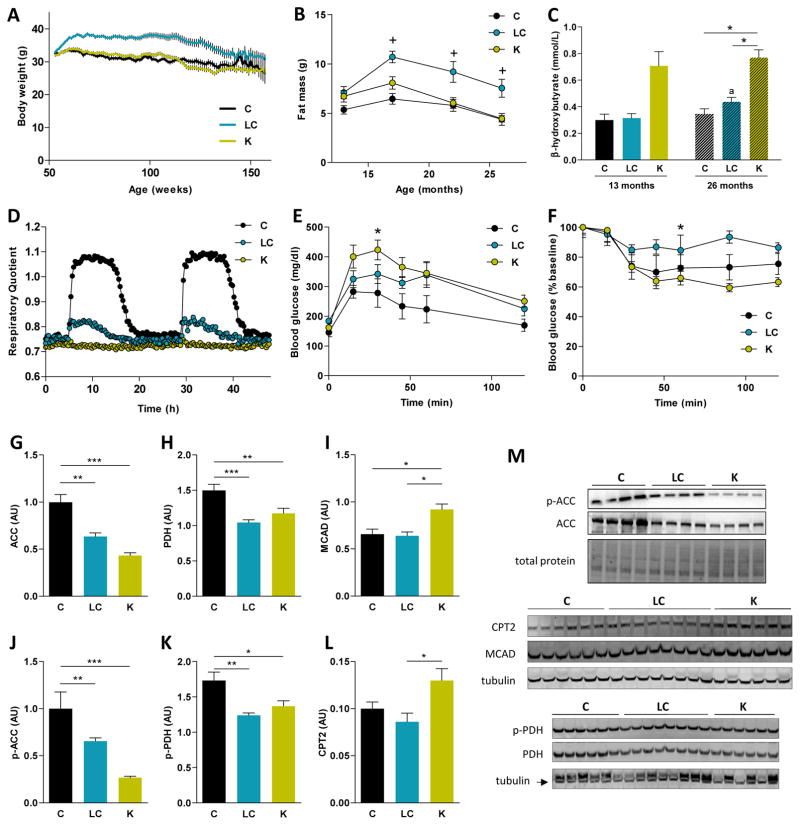
Figure 2. Metabolic adaptations of male mice to low-carbohydrate diets
(A) Body weights along the longevity study (n = 43–44). (B) Fat mass from 1 to 14 months of dietary interventions (n = 15); + = fat mass is greater (p < 0.05) for the LCD versus the other groups. (C) Circulating levels of β-hydroxybutyrate, 3 hours postprandrial. For the physiological tests (D–F) and protein levels in liver (G–K), animals were on the diets for 1 month. (D) RER during two 24 hour cycles for each dietary group (n = 7). (E) GTT after a 16-hour fast, the areas under the curve (AUC) differ between the KD and the control (n = 6). (F) ITT after a 4-hour fast, AUC differ between the LCD and the KD (n = 6). Quantification of (G) ACC, (H) PDH, (I) MCAD, (J) p-ACC, (K) p-PDH and (L) CPT2 protein levels in liver by western blot. (M) Representative blots are shown for each protein. A representative loading control is shown for each case (n = 4–8). Diets: C = control, LC = low-carbohydrate, K = ketogenic. * p < 0.05 between diets. ap < 0.05 between 13-mo and 26-mo for the same diet. See also Figures S1 and S2.
Figure 3
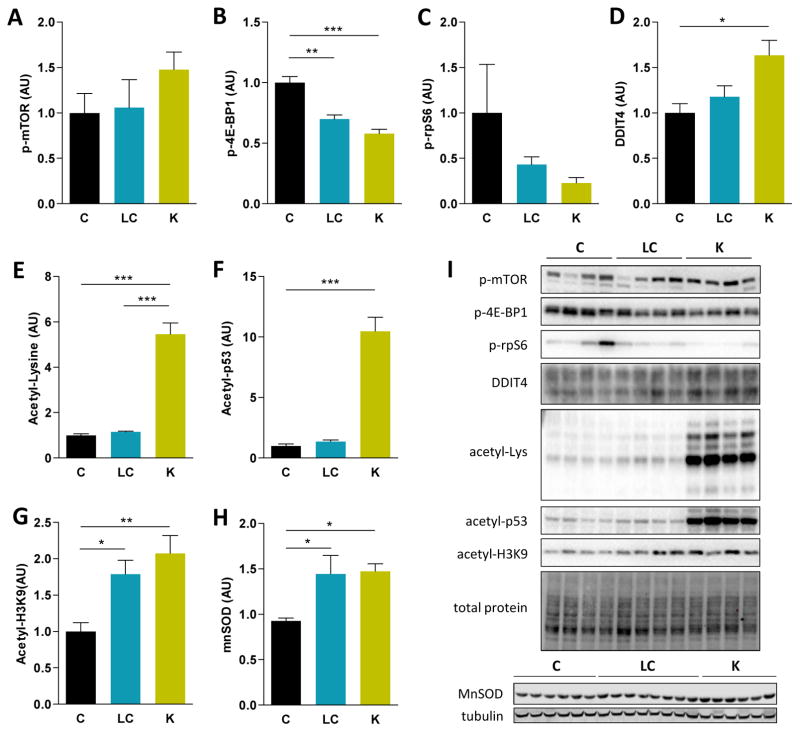
Figure 3. Alterations in protein acetylation and mTOR signaling in the liver of male mice after 1 month of diet
Quantification of (A) p-mTOR, (B) p-4E-BP1, (C) p-rpS6, (D) DDIT4, (E) total acetyl-Lysine, (F) p-53, (G) acetyl-H3K9 and (H) MnSOD protein levels in liver after analysis by western blot (n = 4–8). (I) Representative blots are shown for each of the quantified proteins. For total lysine acetylation, a fraction of the membrane is shown. A representative loading control is shown for those blots with n = 4, corresponding to the acetyl-p53 gel. Diets: C = control, LC = low-carbohydrate, K = ketogenic. * p < 0.05 between diets. See also Figure S2 and S3.

Comment in

References

    1. Ben Sahra I, Regazzetti C, Robert G, Laurent K, Le Marchand-Brustel Y, Auberger P, Tanti JF, Giorgetti-Peraldi S, Bost F. Metformin, independent of AMPK, induces mTOR inhibition and cell-cycle arrest through REDD1. Cancer Res. 2011;71:4366–4372. - PubMed
    1. Brandhorst S, Choi IY, Wei M, Cheng CW, Sedrakyan S, Navarrete G, Dubeau l, Yap LP, Park R, Vinciguerra M, et al. A periodic diet that mimics fasting promotes multi-system regeneration, enhanced cognitive performance, and healthspan. Cell Metab. 2015;22:86–99. - PMC - PubMed
    1. Bruss MD, Khambatta CF, Ruby MA, Aggarwal I, Hellerstein MK. Calorie restriction increases fatty acid synthesis and whole body fat oxidation rates. Am J Physiol Endocrinol Metab. 2010;298:E108–116. - PMC - PubMed
    1. Davis TA, Bales CW, Beauchene RE. Differential effects of dietary caloric and protein restriction in the aging rat. Exp Gerontol. 1983;18:427–435. - PubMed
    1. Douris N, Melman T, Pecherer JM, Pissios P, Flier JS, Cantley LC, Locasale JW, Maratos-Flier E. Adaptive changes in amino acid metabolism permit normal longevity in mice consuming a low-carbohydrate ketogenic diet. Biochim Biophys Acta. 2015;1852:2056–2065. - PMC - PubMed

Substances