


The Optimal Location to Measure Scapholunate Diastasis on Screening Radiographs
- PMID: 28877592
- PMCID: PMC6300175
- DOI: 10.1177/1558944717729219
The Optimal Location to Measure Scapholunate Diastasis on Screening Radiographs
Abstract
Background: Lack of a universally accepted location and normal value limits the utility of measuring scapholunate diastasis. The primary purpose of this study was to define the optimal location to measure the scapholunate gap throughout sequential ligament transections. Secondary purposes were to compare plain radiographs with fluoroscopy and to evaluate interrater reliability in measuring scapholunate diastasis.
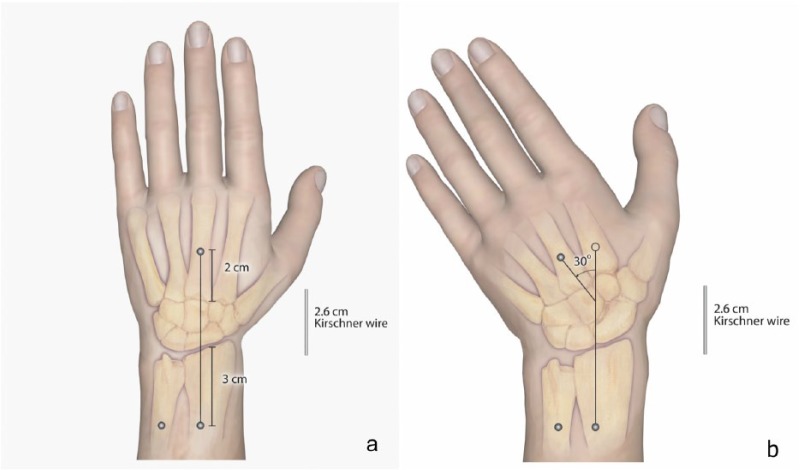
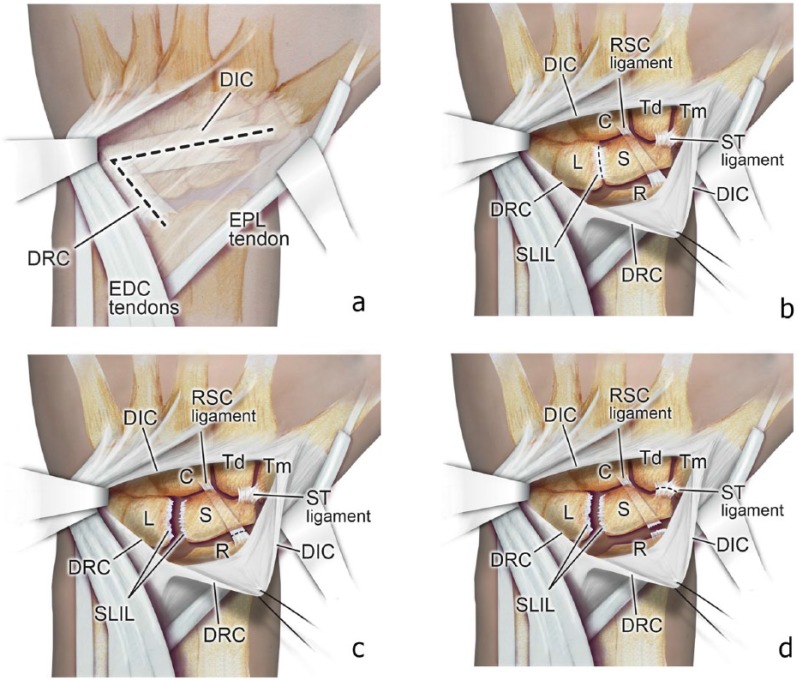
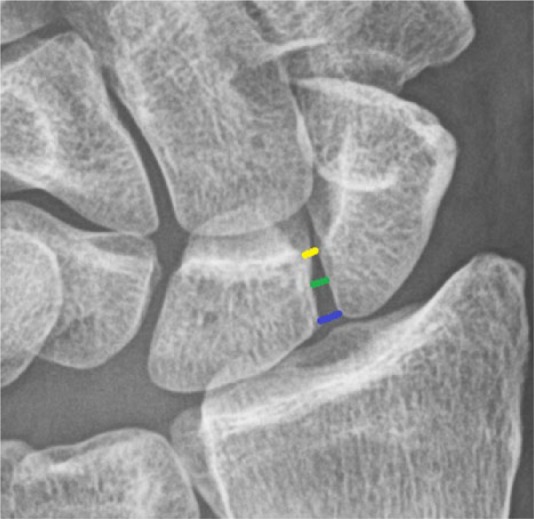
Methods: Five cadaver forearms were imaged with intact carpal ligaments and after sequentially transecting the scapholunate, radioscaphocapitate, and scaphotrapezium-trapezoid ligaments. Plain radiographs and static fluoroscopic images were obtained with wrists in neutral and 30° ulnar deviation for each stage. Multiple reviewers performed measurements of the scapholunate interval at 3 separate locations. Mean distances were calculated and pairwise comparisons between groups were made. Intraclass correlation was calculated to determine interrater reliability.
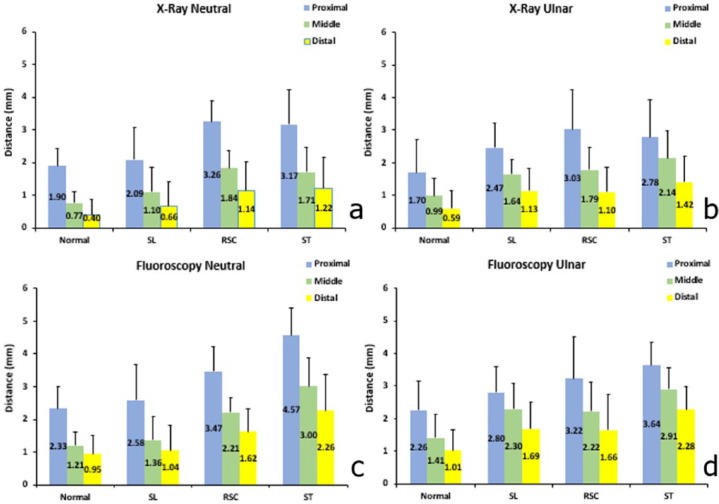
Results: Overall, measurements made in the middle of the scapholunate joint had the smallest margins of error for all imaging modalities, ligament disruptions, and wrist positions. For normal wrists, the mean scapholunate measurements were all less than 2.0 mm at the middle of the joint, regardless of imaging modality or wrist position. Fluoroscopy detected significance between more stages of instability than plain radiographs at the middle of the joint.
Conclusions: Measurements in the middle of the scapholunate joint in neutral and 30° of ulnar deviation under fluoroscopic imaging best capture all stages of ligamentous disruptions. Measurements less than 2.0 mm at the middle of the scapholunate interval may be considered within normal range.
Keywords: carpal instability; dorsal intercarpal; dorsal radiocarpal; radioscaphocapitate; scapholunate; scaphotrapezium-trapezoid.
Conflict of interest statement
Figures
References
-
- Berger RA, Bishop AT, Bettinger PC. New dorsal capsulotomy for the surgical exposure of the wrist. Ann Plast Surg. 1995;35(1):54-59. - PubMed
-
- Cautilli GP, Wehbe MA. Scapho-lunate distance and cortical ring sign. J Hand Surg Am. 1991;16(3):501-503. - PubMed
-
- Elsaidi GA, Ruch DS, Kuzma GR, et al. Dorsal wrist ligament insertions stabilize the scapholunate interval: cadaver study. Clin Orthop Relat Res. 2004;(425):152-157. - PubMed
-
- Kindynis P, Resnick D, Kang H, et al. Demonstration of the scapholunate space with radiography. Radiology. 1990;175(1):278-280. - PubMed
-
- Kuo CE, Wolfe SW. Scapholunate instability: current concepts in diagnosis and management. J Hand Surg Am. 2008;33(6):998-1013. - PubMed
MeSH terms
LinkOut - more resources
Full Text Sources
Other Literature Sources
Miscellaneous
