


Dietary Protein Consumption and the Risk of Type 2 Diabetes: A Systematic Review and Meta-Analysis of Cohort Studies
- PMID: 28878172
- PMCID: PMC5622742
- DOI: 10.3390/nu9090982
Dietary Protein Consumption and the Risk of Type 2 Diabetes: A Systematic Review and Meta-Analysis of Cohort Studies
Abstract
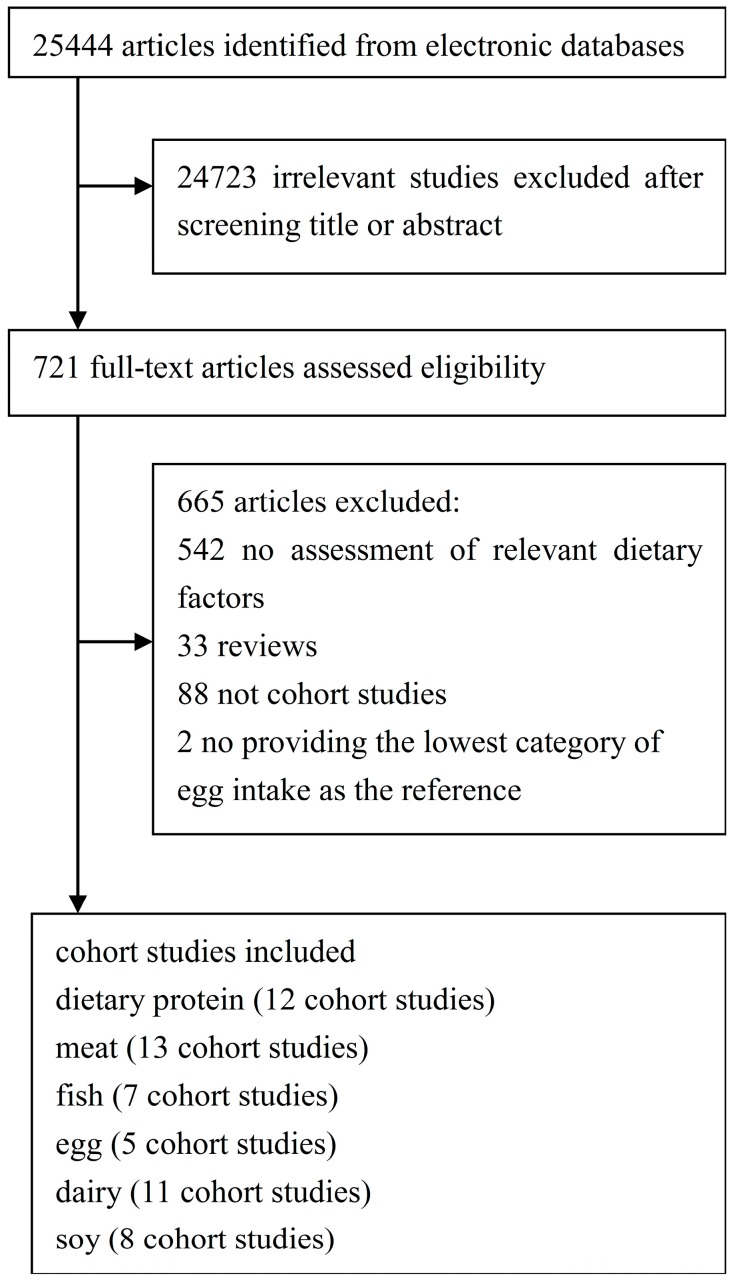
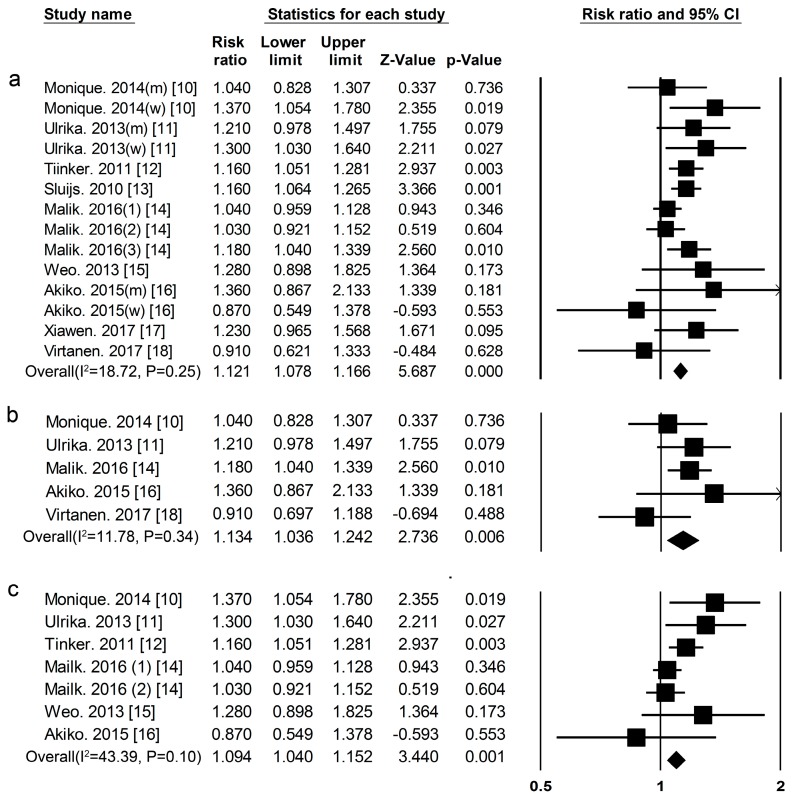
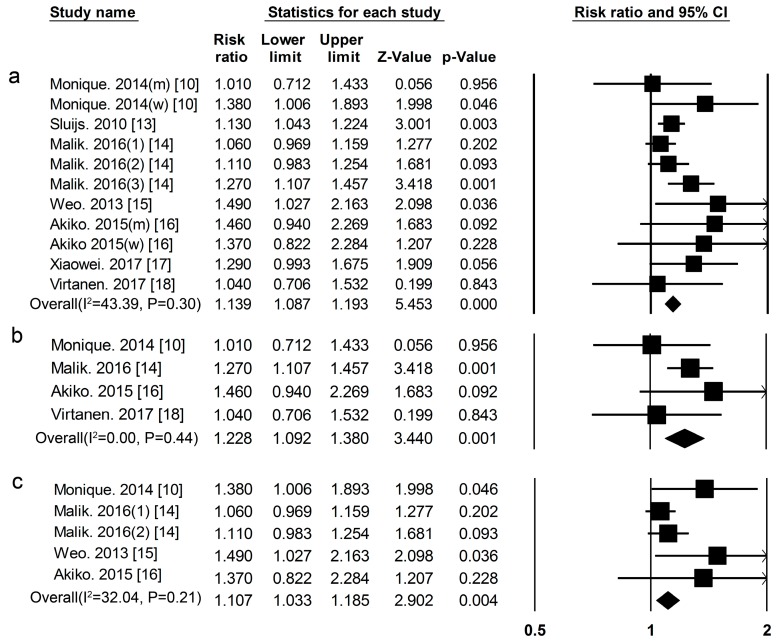
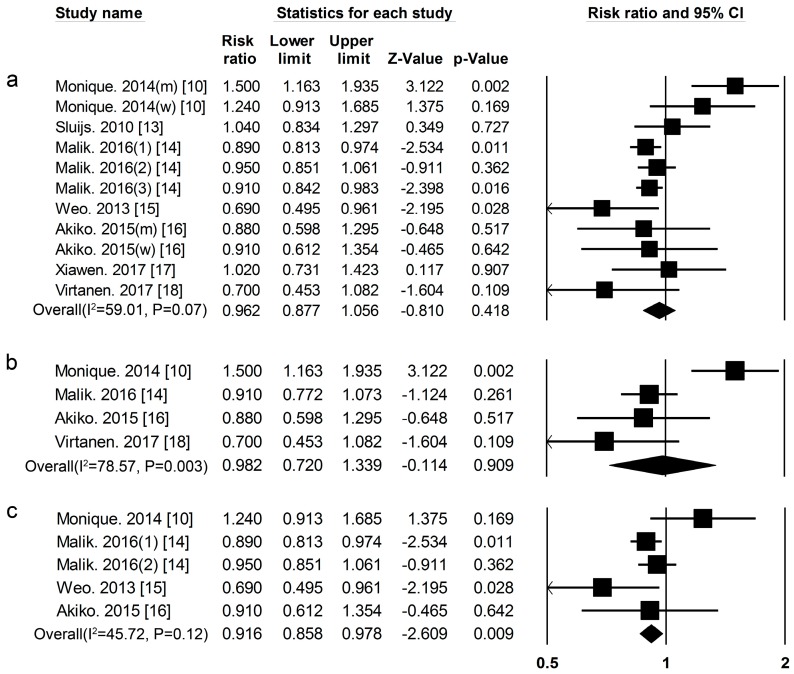
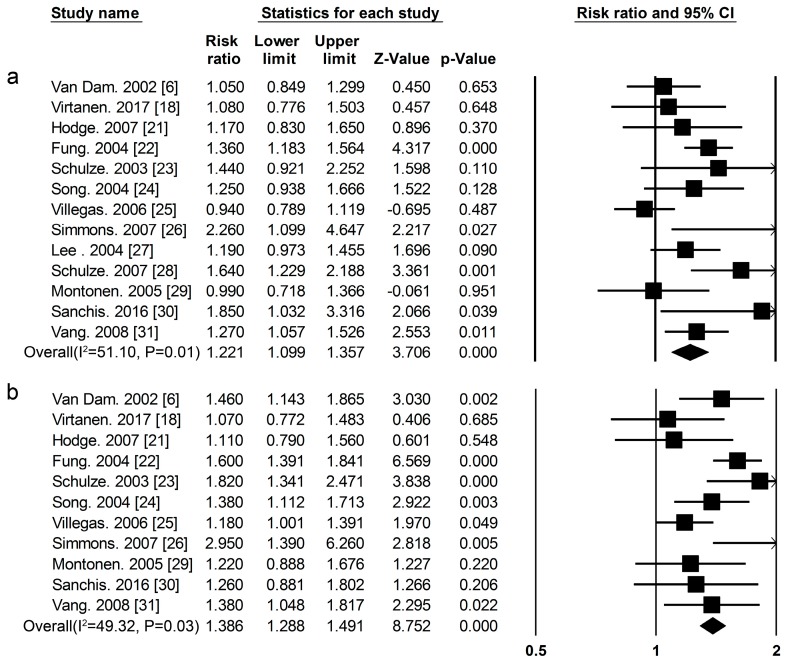
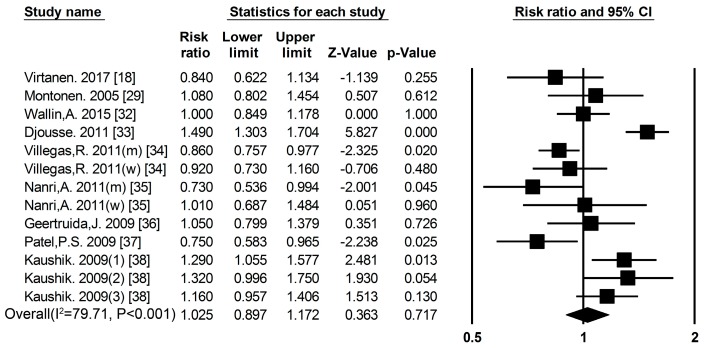
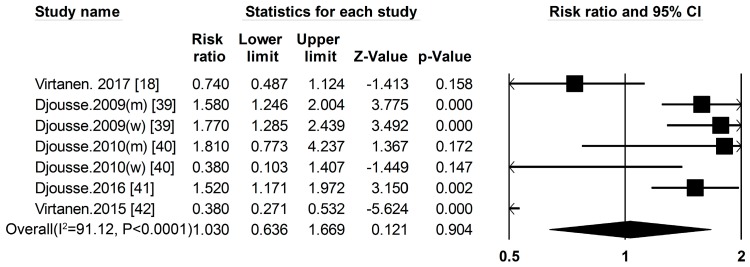
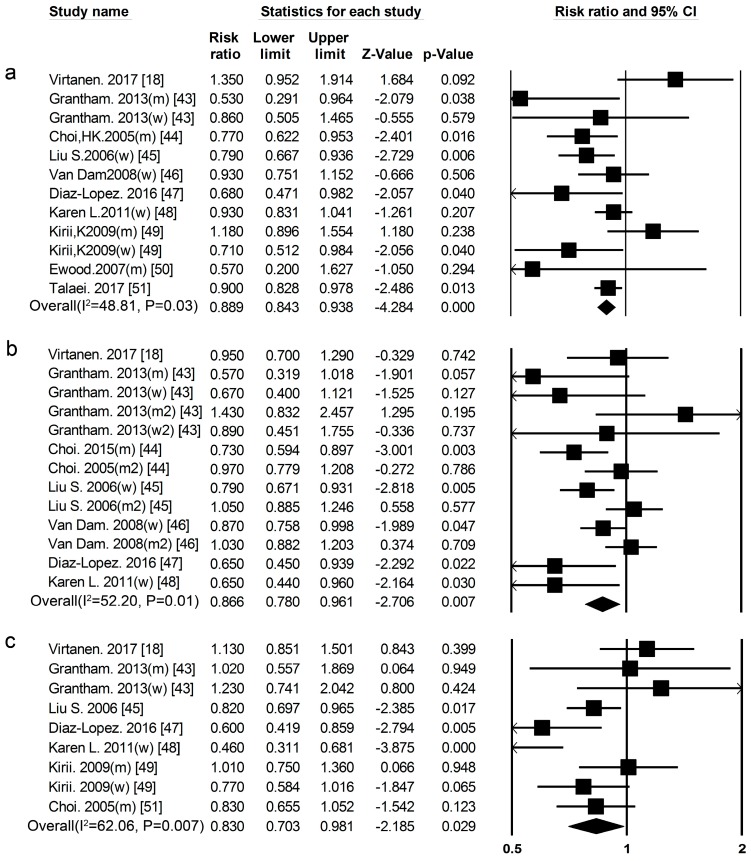
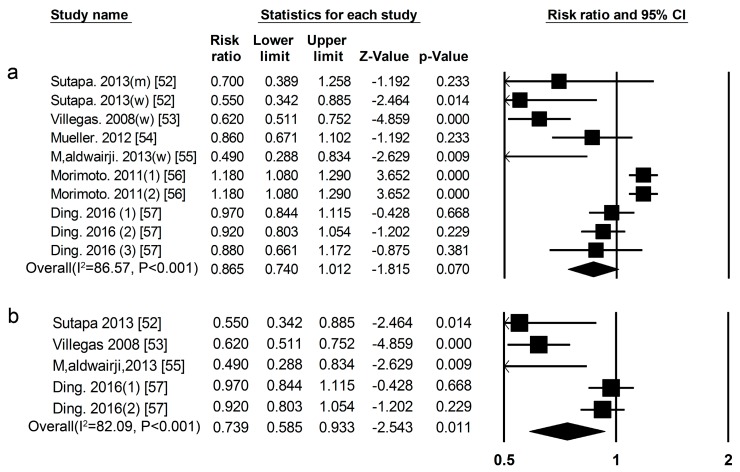
Recently, some studies have focused on the relationship between dietary protein intake and the risk of type 2 diabetes mellitus (T2DM), but the conclusions have been inconsistent. Therefore, in this paper, a systematic review and meta-analysis of cohort studies regarding protein consumption and T2DM risk are conducted in order to present the association between them. We searched the PubMed and Embase databases for cohort studies on dietary protein, high-protein food consumption and risk of T2DM, up to July 2017. A summary of relative risks was compiled by the fixed-effect model or random-effect model. Eleven cohort studies regarded protein intake and T2DM (52,637 cases among 483,174 participants). The summary RR and 95% CI (Confidence Interval) of T2DM was 1.12 (1.08-1.17) in all subjects, 1.13 (1.04-1.24) in men, and 1.09 (1.04-1.15) in women for total protein;1.14 (1.09-1.19) in all subjects, 1.23 (1.09-1.38) in men, and 1.11 (1.03-1.19) in women for animal protein; 0.96 (0.88-1.06) in all subjects, 0.98 (0.72-1.34) in men, and 0.92 (0.86-0.98) in women for plant protein. We also compared the association between different food sources of protein and the risk of T2DM. The summary RR (Relative Risk) and 95% CI of T2DM was 1.22 (1.09-1.36) for red meat, 1.39 (1.29-1.49) for processed meat, 1.03 (0.89-1.17) for fish, 1.03 (0.64-1.67) for egg, 0.89 (0.84-0.94) for total dairy products, 0.87 (0.78-0.96) for whole milk, 0.83 (0.70-0.98) for yogurt, 0.74 (0.59-0.93) in women for soy. This meta-analysis shows that total protein and animal protein could increase the risk of T2DM in both males and females, and plant protein decreases the risk of T2DM in females. The association between high-protein food types and T2DM are also different. Red meat and processed meat are risk factors of T2DM, and soy, dairy and dairy products are the protective factors of T2DM. Egg and fish intake are not associated with a decreased risk of T2DM. This research indicates the type of dietary protein and food sources of protein that should be considered for the prevention of diabetes.
Keywords: diabetes; meta-analysis; protein; systematic review.
Conflict of interest statement
The authors declare no conflicts interest.
Figures
References
-
- American Diabetes Association Standards of medical care in diabetes—2006. Diabetes Care. 2006;29(Suppl. 1):S4–S42. - PubMed
-
- Tuomilehto J., Lindström J., Eriksson J.G., Valle T.T., Hämäläinen H., Ilanne-Parikka P., Keinänen-Kiukaanniemi S., Laakso M., Louheranta A., Rastas M., et al. Prevention of: Type 2 diabetes mellitus by changes in lifestyle among subjects with impaired glucose tolerance. N. Engl. J. Med. 2011;344:1343–1350. doi: 10.1056/NEJM200105033441801. - DOI - PubMed
-
- Schulze M.B., Schulz M., Heidemann C., Schienkiewitz A., Hoffmann K., Boeing H. Carbohydrate intake and incidence of type 2 diabetes in the European Prospective Investigation into Cancer and Nutrition (EPIC)-Potsdam Study. Br. J. Nutr. 2008;99:1107–1116. doi: 10.1017/S0007114507853360. - DOI - PubMed
Publication types
MeSH terms
Substances
LinkOut - more resources
Full Text Sources
Other Literature Sources
Medical
Molecular Biology Databases
Research Materials
