Meta-Analysis
. 2017 Sep 6;7(1):10694.
doi: 10.1038/s41598-017-10892-z.

Effects of Intensive Blood Pressure Reduction on Acute Intracerebral Hemorrhage: A Systematic Review and Meta-analysis

Affiliations
Meta-Analysis

Effects of Intensive Blood Pressure Reduction on Acute Intracerebral Hemorrhage: A Systematic Review and Meta-analysis

Shun Gong et al. Sci Rep. .

Abstract

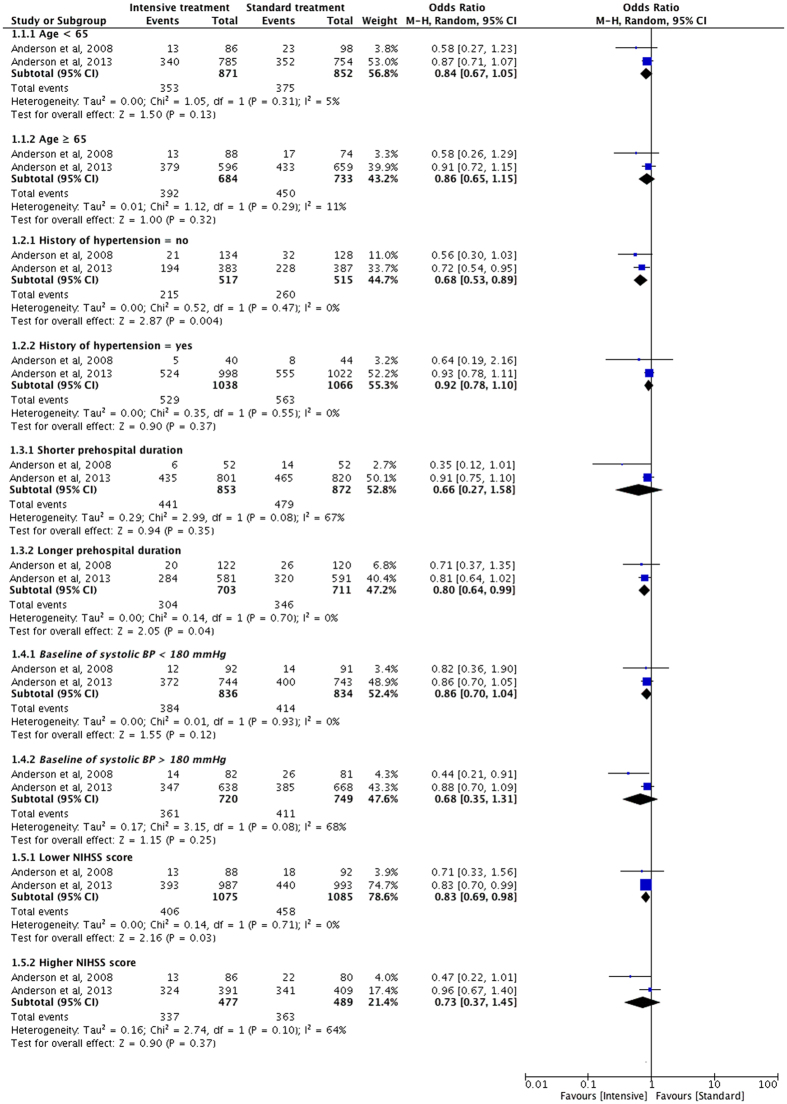
Current opinions about the effect of intensive blood pressure (BP) reduction for acute intracerebral hemorrhage (ICH) are inconsistent. We performed a meta-analysis to evaluate the efficacy and safety of intensive BP reduction for acute ICH by analyzing data from several recent randomized controlled trials (RCTs). There were six eligible studies that met the inclusion criteria, for a total of 4,385 acute ICH patients in this meta-analysis. After analyzing these data, we found differences between intensive and standard BP lowering treatment groups in total mortality rates, unfavorable outcomes, hematoma expansion, neurologic deterioration, and severe hypotension were not significant. Moreover, compared with the standard treatment, the rate of renal adverse event in intensive treatment group was significantly higher. The intensive treatment approach was recommended in the following situations: (1) longer prehospital duration; (2) lower National Institute of Health stroke scale (NIHSS) score; (3) no hypertension history.


Conflict of interest statement

The authors declare that they have no competing interests.

Figures
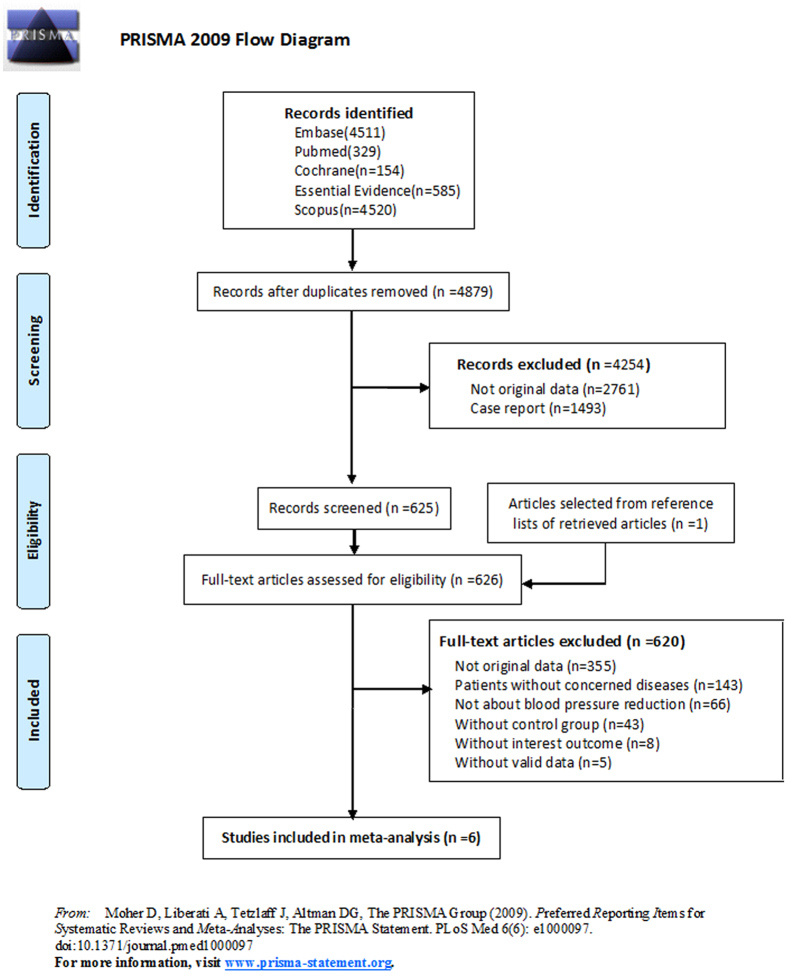
Figure 1
Figure 1
Preferred reporting items for systematic reviews and meta-analyses 2009 flow diagram.
Figure 2
Figure 2
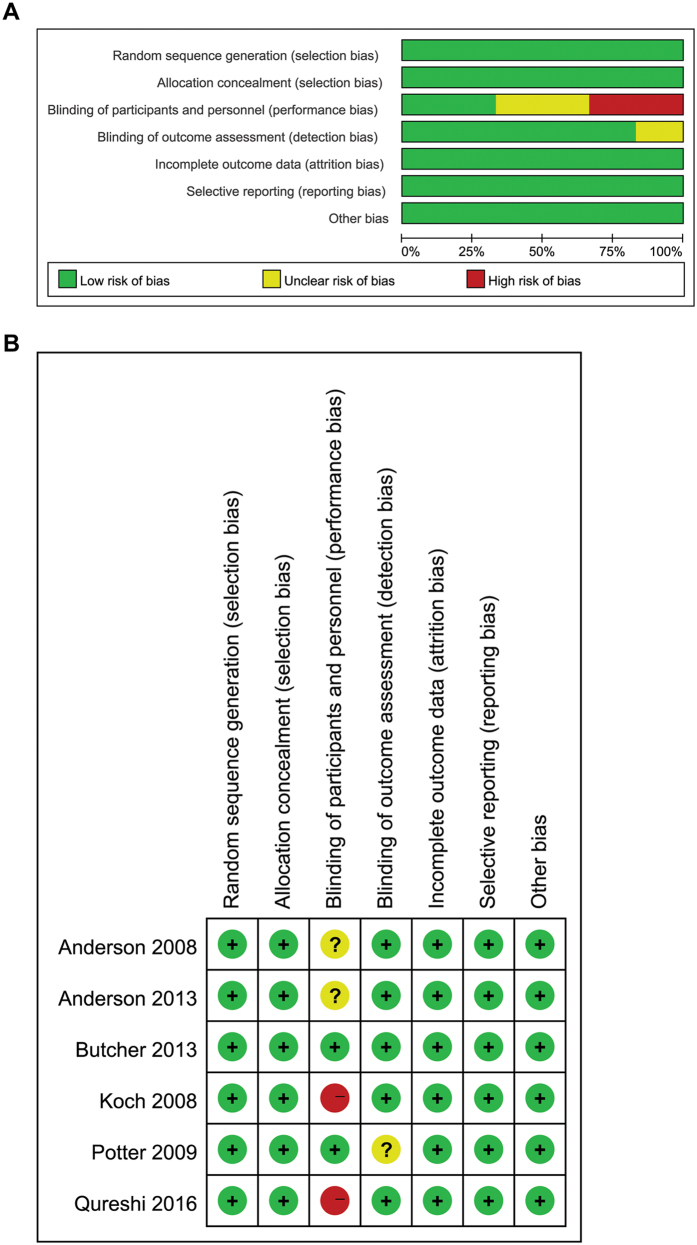
(A) Risk of bias graph; (B) Risk of bias summary.
Figure 3
Figure 3
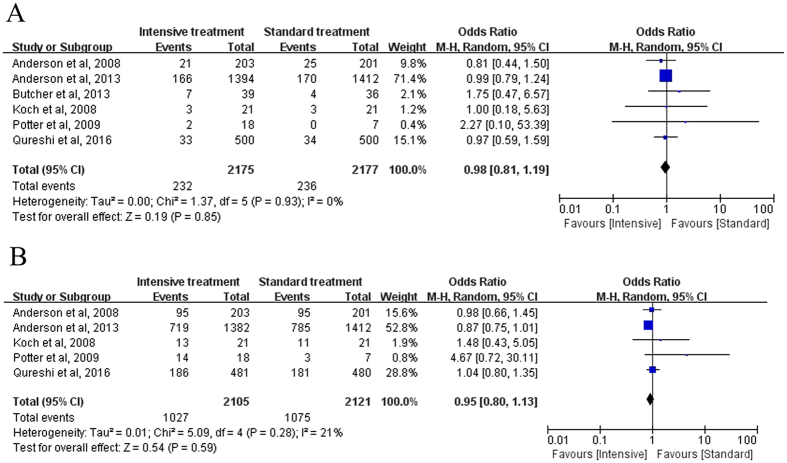
Forest plot of the comparison between intensive treatment and standard treatment: Primary outcomes: (A) Mortality; (B) Unfavorable outcomes.
Figure 4
Figure 4
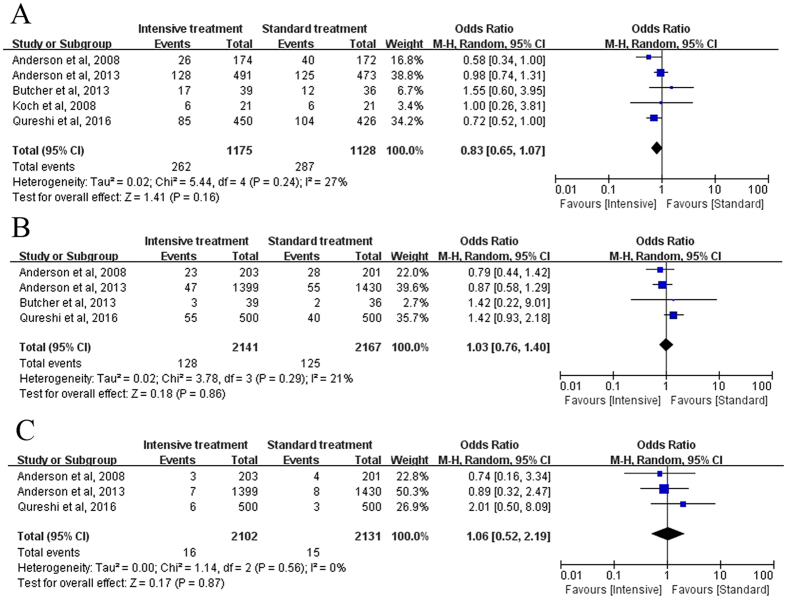
Forest plot of the comparison between intensive treatment and standard treatment: Secondary outcomes: (A) Hematoma expansion; (B) Neurologic deterioration; (C) Severe hypotension.
Figure 5
Figure 5
Forest plot of the subgroup analysis of unfavorable outcomes compared between intensive treatment and standard treatment.

References

    1. Sudlow CL, Warlow CP. Comparable studies of the incidence of stroke and its pathological types: results from an international collaboration. International Stroke Incidence Collaboration. Stroke. 1997;28:491–499. doi: 10.1161/01.STR.28.3.491. - DOI - PubMed
    1. Qureshi AI, Mendelow AD, Hanley DF. Intracerebral haemorrhage. Lancet. 2009;373:1632–1644. doi: 10.1016/S0140-6736(09)60371-8. - DOI - PMC - PubMed
    1. Morgenstern LB, et al. Guidelines for the management of spontaneous intracerebral hemorrhage: a guideline for healthcare professionals from the American Heart Association/American Stroke Association. Stroke. 2010;41:2108–2129. doi: 10.1161/STR.0b013e3181ec611b. - DOI - PMC - PubMed
    1. Qureshi AI. Acute hypertensive response in patients with stroke: pathophysiology and management. Circulation. 2008;118:176–187. doi: 10.1161/CIRCULATIONAHA.107.723874. - DOI - PubMed
    1. Krishnan K, et al. Glyceryl Trinitrate for Acute Intracerebral Hemorrhage: Results From the Efficacy of Nitric Oxide in Stroke (ENOS) Trial, a Subgroup Analysis. Stroke. 2016;47:44–52. doi: 10.1161/STROKEAHA.115.010368. - DOI - PubMed

Publication types

MeSH terms

Substances