


Epidemiological study of Spinal Cord Injury individuals from halfway houses in Shanghai, China
- PMID: 28880133
- PMCID: PMC6055967
- DOI: 10.1080/10790268.2017.1367357
Epidemiological study of Spinal Cord Injury individuals from halfway houses in Shanghai, China
Abstract
Objective: To describe the characteristics of spinal cord injury (SCI) individuals in Shanghai and examine their treatment and rehabilitation for traumatic and complete SCI individuals.
Design: Community-based secondary data analyses.
Setting: Shanghai, China.
Methods: We analyzed gender, age at injury, complications, disturbances of function, treatment, etiology, and severity of injury of SCI individuals that enrolled in "halfway houses", government-supported community co-op centers. Bivariate statistical analyses were conducted to examine the factors associated with complete and traumatic SCI.
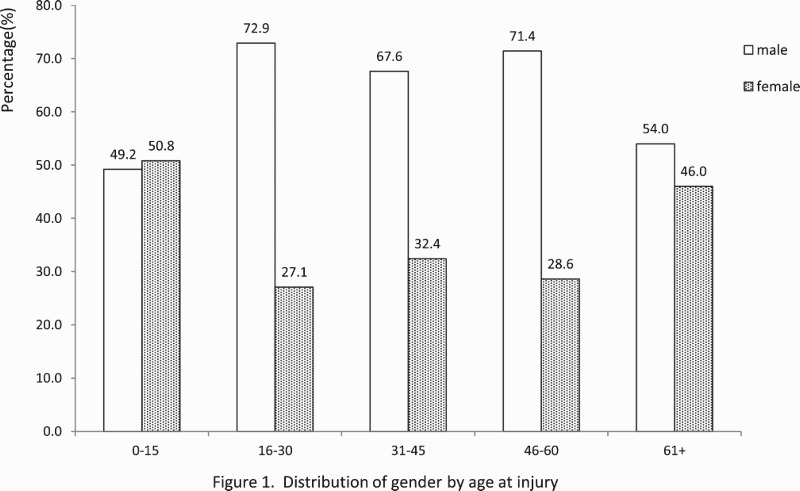
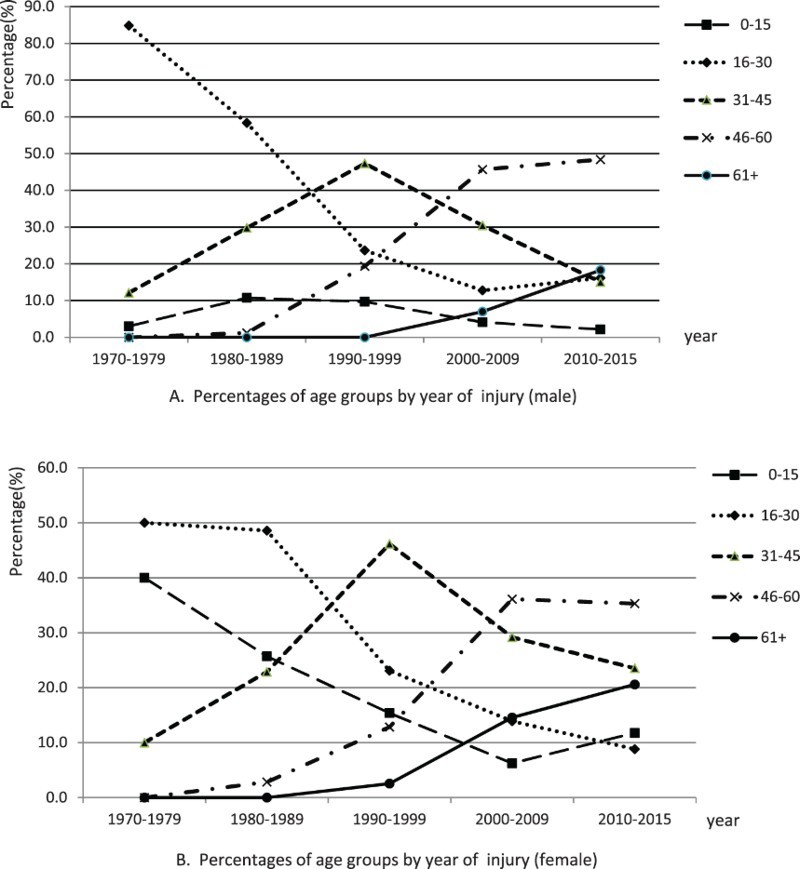
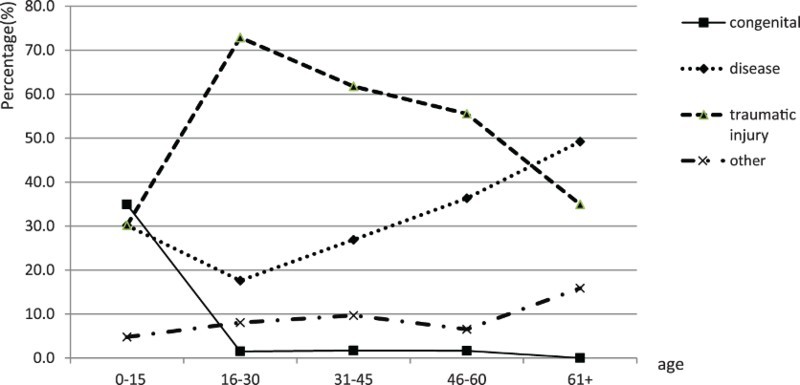
Results: We analyzed 808 SCI individuals who participated in halfway houses in Shanghai during 2009-2015. The male-to-female ratio was 2.1:1. The proportion of middle or elder age groups at injury (age 46 to 60 and age 61 or over) showed a rising trend from 1970 to 2015. The leading causes of SCIs in Shanghai were traumatic injuries (58%), followed by disease (29.5%). The proportion of traumatic injuries decreased over time, while the proportion of non-traumatic injuries rose significantly. A majority of traumatic injury individuals were aged between 16-45.
Conclusion: The middle or elder age groups at injury among SCI individuals increased continuously from 1970 to 2015. The principal causes of injury in Shanghai were traumatic injuries and disease-related injuries. Men had a higher prevalence of traumatic SCI in Shanghai. Preventive measures should focus on male and middle-aged adults. As a fast-aging society in Shanghai, more effective prevention, medical care, and rehabilitation schemes should be implemented for aging SCI individuals.
Keywords: China; Community; Epidemiology; Halfway houses; Spinal cord injury.
Figures
References
-
- Thurman DJ, Sniezek JE, Johnson D, Greenspan A, Smith SM.. Guidelines for surveillance of central nervous system injury. Atlanta, GA: US Department of Health and Human Services, Centers for Disease Control and Prevention, 1995.
-
- Hou CL, Fan ZP, Wang SB.. Guide for spinal cord injury rehabilitation: Shanghai Scientific and Technical Publishers, 2006. (in Chinese).
Publication types
MeSH terms
LinkOut - more resources
Full Text Sources
Other Literature Sources
Medical
Research Materials
Miscellaneous
