


Autobiographical memory: a candidate latent vulnerability mechanism for psychiatric disorder following childhood maltreatment
- PMID: 28882830
- PMCID: PMC5623877
- DOI: 10.1192/bjp.bp.117.201798
Autobiographical memory: a candidate latent vulnerability mechanism for psychiatric disorder following childhood maltreatment
Abstract
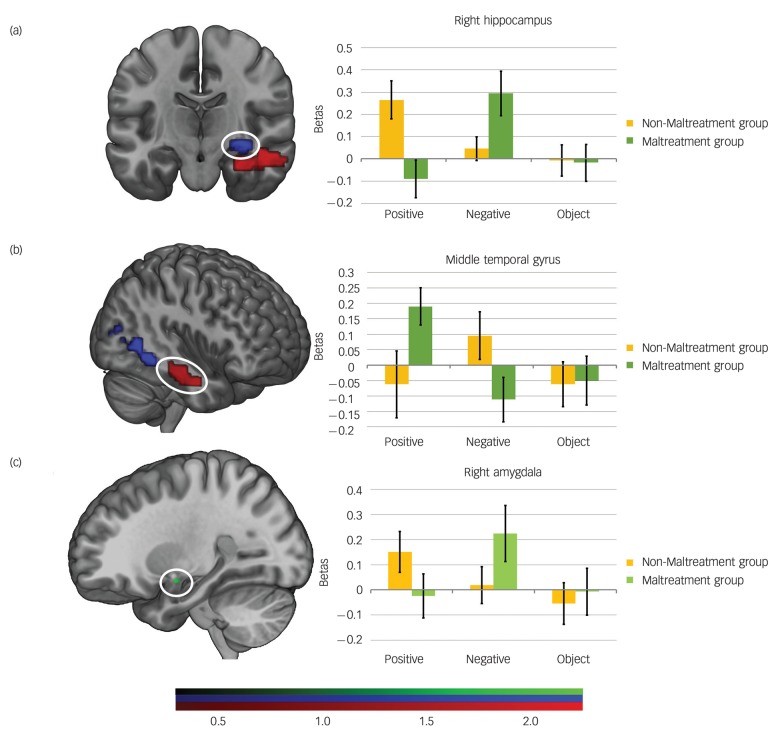
BackgroundAltered autobiographical memory (ABM) functioning has been implicated in the pathogenesis of depression and post-traumatic stress disorder and may represent one mechanism by which childhood maltreatment elevates psychiatric risk.AimsTo investigate the impact of childhood maltreatment on ABM functioning.MethodThirty-four children with documented maltreatment and 33 matched controls recalled specific ABMs in response to emotionally valenced cue words during functional magnetic resonance imaging.ResultsChildren with maltreatment experience showed reduced hippocampal and increased middle temporal and parahippocampal activation during positive ABM recall compared with peers. During negative ABM recall they exhibited increased amygdala activation, and greater amygdala connectivity with the salience network.ConclusionsChildhood maltreatment is associated with altered ABM functioning, specifically reduced activation in areas encoding specification of positive memories, and greater activation of the salience network for negative memories. This pattern may confer latent vulnerability to future depression and post-traumatic stress disorder.
© The Royal College of Psychiatrists 2017.
Conflict of interest statement
Declaration of interestNone.
Figures
References
-
- Gilbert R, Widom CS, Browne K, Fergusson D, Webb E, Janson S. Burden and consequences of child maltreatment in high-income countries. Lancet 2009; 373: 68–81. - PubMed
-
- McCrory EJ, Viding E. The theory of latent vulnerability: reconceptualizing the link between childhood maltreatment and psychiatric disorder. Dev Psychopathol 2015; 27: 493–505. - PubMed
-
- McCrory EJ, De Brito SA, Sebastian CL, Mechelli A, Bird G, Kelly PA, et al. Heightened neural reactivity to threat in child victims of family violence. Curr Biol 2011; 21: 947–8. - PubMed
-
- McCrory EJ, De Brito SA, Kelly PA, Bird G, Sebastian CL, Mechelli A, et al. Amygdala activation in maltreated children during pre-attentive emotional processing. Br J Psychiatry 2013; 202: 269–76. - PubMed
MeSH terms
Grants and funding
LinkOut - more resources
Full Text Sources
Other Literature Sources
Medical
