


Nurse Practitioners, Physician Assistants, and Physicians Are Comparable in Managing the First Five Years of Diabetes
- PMID: 28893514
- PMCID: PMC5817031
- DOI: 10.1016/j.amjmed.2017.08.026
Nurse Practitioners, Physician Assistants, and Physicians Are Comparable in Managing the First Five Years of Diabetes
Abstract
Background: Increasing use of nurse practitioners and physician assistants is a possible solution to the shortage of primary care providers in the United States, but the quality of care they provide is not well understood.
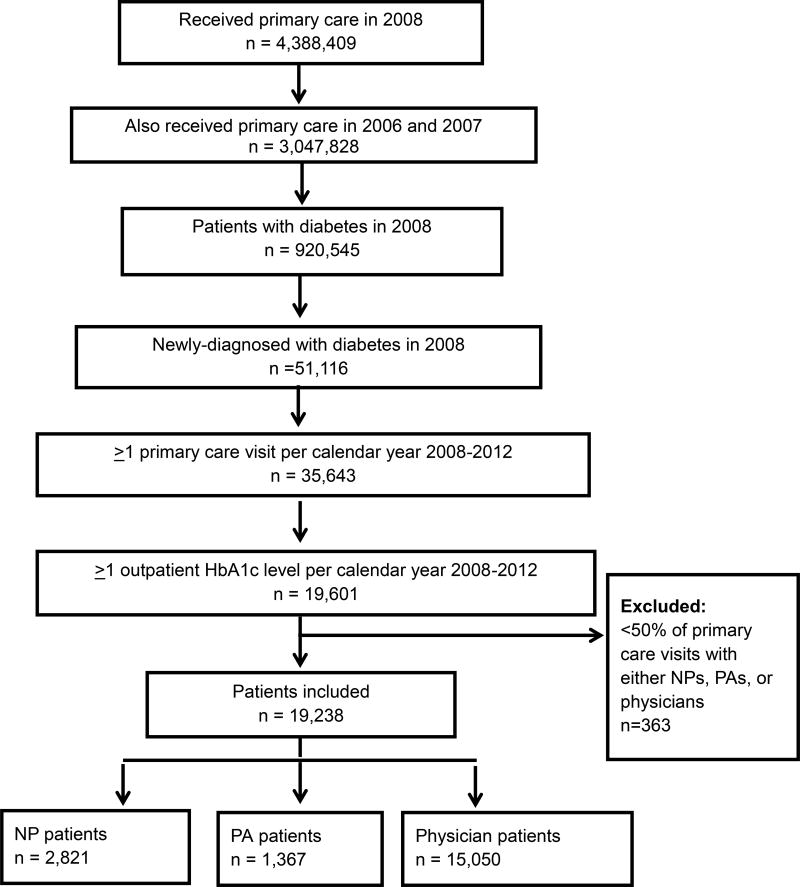
Methods: Because the scope of practice of the 3 provider types is similar in the Veterans Health Administration, we determined whether patients managed by primary care nurse practitioners, physician assistants, or physicians had similar hemoglobin A1c levels at comparable times in the natural history of diabetes. Our retrospective cohort study examined veterans with newly diagnosed diabetes in 2008, continuous primary care from 2008 to 2012, and more than 75% of primary care visits with nurse practitioner, physician assistant, or physician.
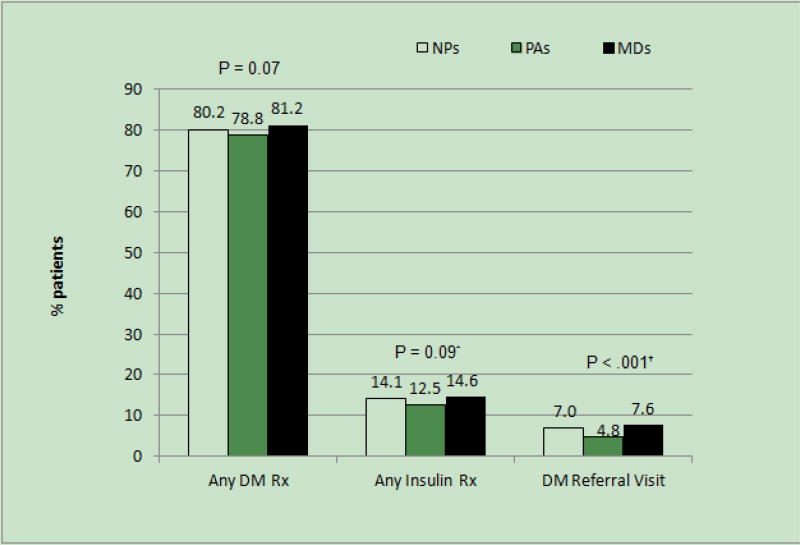
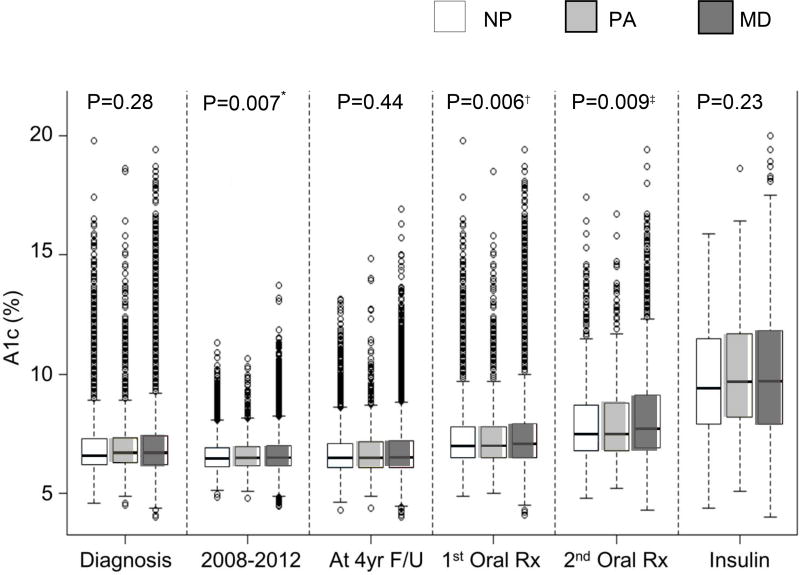
Results: Of the 19,238 patients, 95.3% were male, 77.7% were white, and they had a mean age 68.5 years; 14.7%, 7.1%, and 78.2% of patients were managed by nurse practitioners, physician assistants, and physicians, respectively. Median hemoglobin A1c was comparable at diagnosis (6.6%, 6.7%, 6.7%, P > .05) and after 4 years (all 6.5%, P > .5). Hemoglobin A1c levels at initiation of the first (7.5%-7.6%) and second (8.0%-8.2%) oral medications for patients of nurse practitioners and physician assistants compared with that of physicians was also similar after adjusting for patient characteristics (all P > .05). Nurse practitioners started insulin at a lower hemoglobin A1c (9.4%) than physicians (9.7%), which remained significant after adjustment (P < .05).
Conclusions: At diagnosis and during 4 years of follow-up, diabetes management by nurse practitioners and physician assistants was comparable to management by physicians. The Veterans Health Administration model for roles of nurse practitioners and physician assistants may be broadly useful to help meet the demand for primary care providers in the United States.
Keywords: Diabetes; Midlevel providers; Nurse practitioner; Physician assistant; Primary care.
Published by Elsevier Inc.
Conflict of interest statement
Other authors have no potential conflicts of interest to declare.
Figures
Comment in
-
Role of Paramedical Staff in a Health Service.Am J Med. 2018 Sep;131(9):e399. doi: 10.1016/j.amjmed.2018.02.028. Am J Med. 2018. PMID: 30266277 No abstract available.
References
-
- Centers for Disease Control and Prevention. National Diabetes Statistics Report: Estimates of diabetes and its burden in the United States. Atlanta, GA: 2014. 2014.
-
- Iglehart JK. Expanding the role of advanced nurse practitioners--risks and rewards. The New England journal of medicine. 2013;368:1935–41. - PubMed
-
- Physician Compensation and Production Survey 2012 Report Based on 2011 Data. Englewood, CO: Medical Group Management Association; 2012.
Publication types
MeSH terms
Substances
Grants and funding
LinkOut - more resources
Full Text Sources
Other Literature Sources
Medical
