


Epstein-Barr virus-associated lymphomas
- PMID: 28893938
- PMCID: PMC5597738
- DOI: 10.1098/rstb.2016.0271
Epstein-Barr virus-associated lymphomas
Abstract
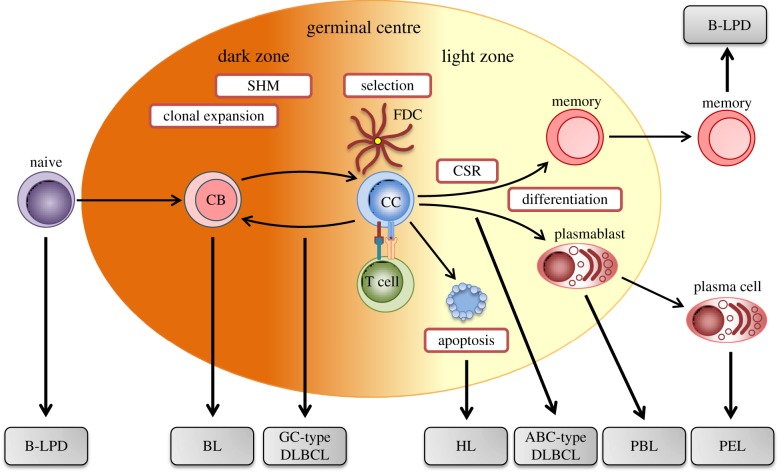
Epstein-Barr virus (EBV), originally discovered through its association with Burkitt lymphoma, is now aetiologically linked to a remarkably wide range of lymphoproliferative lesions and malignant lymphomas of B-, T- and NK-cell origin. Some occur as rare accidents of virus persistence in the B lymphoid system, while others arise as a result of viral entry into unnatural target cells. The early finding that EBV is a potent B-cell growth transforming agent hinted at a simple oncogenic mechanism by which this virus could promote lymphomagenesis. In reality, the pathogenesis of EBV-associated lymphomas involves a complex interplay between different patterns of viral gene expression and cellular genetic changes. Here we review recent developments in our understanding of EBV-associated lymphomagenesis in both the immunocompetent and immunocompromised host.This article is part of the themed issue 'Human oncogenic viruses'.
Keywords: Burkitt lymphoma; Epstein–Barr virus; Hodgkin lymphoma; T/NK lymphoma; diffuse large B cell lymphoma; post-transplant lymphoproliferative disease.
© 2017 The Authors.
Conflict of interest statement
We declare that we have no competing interests.
Figures
References
Publication types
MeSH terms
Grants and funding
LinkOut - more resources
Full Text Sources
Other Literature Sources
Medical
