


Omega-3 fatty acids correlate with gut microbiome diversity and production of N-carbamylglutamate in middle aged and elderly women
- PMID: 28894110
- PMCID: PMC5593975
- DOI: 10.1038/s41598-017-10382-2
Omega-3 fatty acids correlate with gut microbiome diversity and production of N-carbamylglutamate in middle aged and elderly women
Abstract
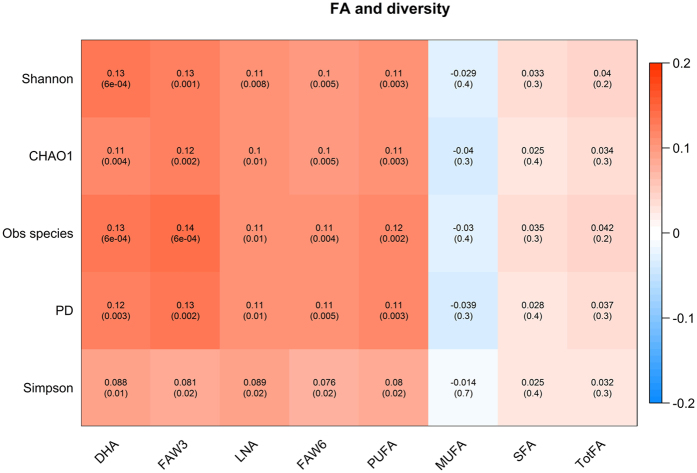
Omega-3 fatty acids may influence human physiological parameters in part by affecting the gut microbiome. The aim of this study was to investigate the links between omega-3 fatty acids, gut microbiome diversity and composition and faecal metabolomic profiles in middle aged and elderly women. We analysed data from 876 twins with 16S microbiome data and DHA, total omega-3, and other circulating fatty acids. Estimated food intake of omega-3 fatty acids were obtained from food frequency questionnaires. Both total omega-3and DHA serum levels were significantly correlated with microbiome alpha diversity (Shannon index) after adjusting for confounders (DHA Beta(SE) = 0.13(0.04), P = 0.0006 total omega-3: 0.13(0.04), P = 0.001). These associations remained significant after adjusting for dietary fibre intake. We found even stronger associations between DHA and 38 operational taxonomic units (OTUs), the strongest ones being with OTUs from the Lachnospiraceae family (Beta(SE) = 0.13(0.03), P = 8 × 10⁻⁷). Some of the associations with gut bacterial OTUs appear to be mediated by the abundance of the faecal metabolite N-carbamylglutamate. Our data indicate a link between omega-3 circulating levels/intake and microbiome composition independent of dietary fibre intake, particularly with bacteria of the Lachnospiraceae family. These data suggest the potential use of omega-3 supplementation to improve the microbiome composition.
Conflict of interest statement
RPM is employee of Metabolon, Inc. TDS is co-founder of MapMygut Ltd. The other authors declare that they have no competing interests
Figures
References
Publication types
MeSH terms
Substances
Grants and funding
LinkOut - more resources
Full Text Sources
Other Literature Sources
