. 2017 Sep 11;7(1):11198.
doi: 10.1038/s41598-017-10580-y.

Evidence for biochemical barrier restoration: Topical solenopsin analogs improve inflammation and acanthosis in the KC-Tie2 mouse model of psoriasis

Affiliations

Evidence for biochemical barrier restoration: Topical solenopsin analogs improve inflammation and acanthosis in the KC-Tie2 mouse model of psoriasis

Jack L Arbiser et al. Sci Rep. .

Abstract

Psoriasis is a chronic inflammatory skin disease affecting 2.5-6 million patients in the United States. The cause of psoriasis remains unknown. Previous human and animal studies suggest that patients with a susceptible genetic background and some stimulus, such as barrier disruption, leads to a coordinated signaling events involving cytokines between keratinocytes, endothelial cells, T cells, macrophages and dendritic cells. Ceramides are endogenous skin lipids essential for maintaining skin barrier function and loss of ceramides may underlie inflammatory and premalignant skin. Ceramides act as a double-edged sword, promoting normal skin homeostasis in the native state, but can be metabolized to sphingosine-1-phosphate (S1P), linked to inflammation and tumorigenesis. To overcome this difficulty, we synthesized solenopsin analogs which biochemically act as ceramides, but cannot be metabolized to S1P. We assess their in vivo bioactivity in a well-established mouse model of psoriasis, the KC-Tie2 mouse. Topical solenopsin derivatives normalized cutaneous hyperplasia in this model, decreased T cell infiltration, interleukin (IL)-22 transcription, and reversed the upregulation of calprotectin and Toll-like receptor (TLR) 4 in inflamed skin. Finally, they stimulated interleukin (IL)-12 production in skin dendritic cells. Thus suggesting barrier restoration has both a biochemical and physical component, and both are necessary for optimal barrier restoration.


Conflict of interest statement

Emory and Mercer University have applied for patents for solenopsin derivatives.

Figures
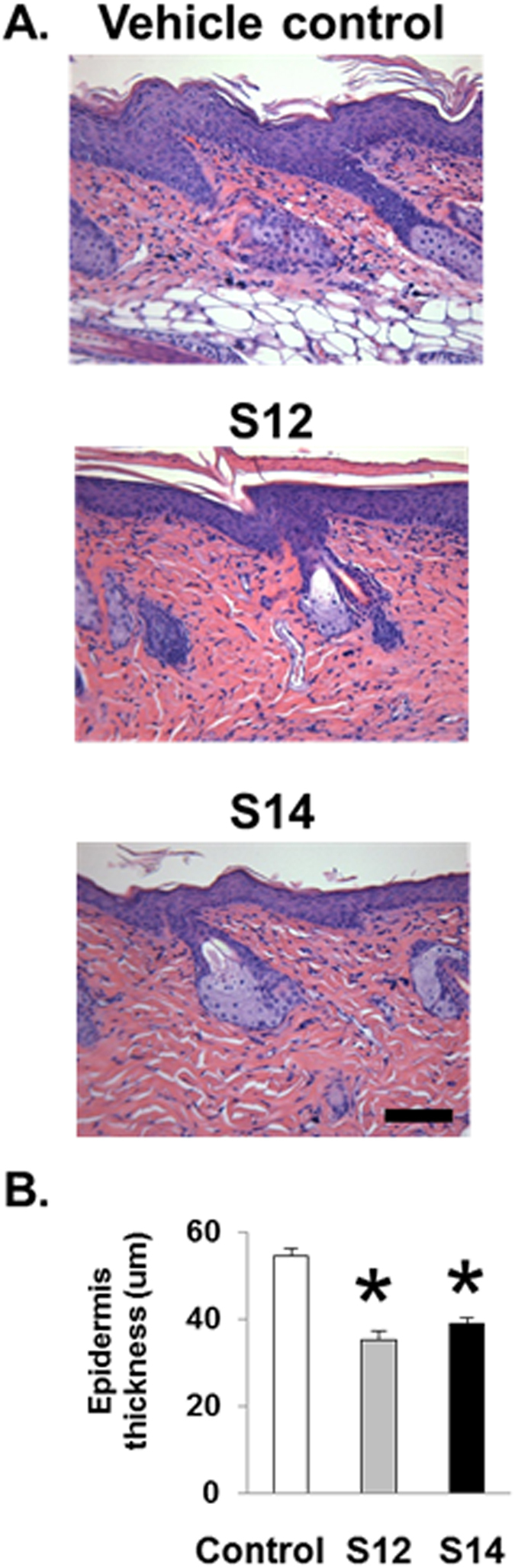
Figure 1
Figure 1
Treatment of inKC-Tie2 mice with S12 and S14 results in decreased epidermal thickness (acanthosis). (A) Representative images of H&E-stained dorsal skin sections from KC-Tie2 mice following treatment with S12, S14 or vehicle cream. (B) Quantification of epidermal thickness (μm) of H&E-stained dorsal skin sections of vehicle treated (n = 8), S12 (n = 9) and S14 (n = 9) KC-Tie2 mice. Values shown represent the mean ± SEM. Data were analyzed using a Student’s t-test. P values are as indicated. Scale bar = 50 μm.
Figure 2
Figure 2
Treatment of CD4+ T cells decrease in KC-Tie2 mice with topical S12 and S14 analogs results in decreased CD4+ infiltration. (A) Representative images of CD4+ stained dorsal skin sections from KC-Tie2 mice following treatment with S12, S14 or vehicle cream. (B) Quantification of CD4+ T cell numbers in KC-Tie2 mice treated with vehicle (n = 8), S12 (n = 9) and S14 (n = 9). Values shown represent the mean # of cells/FOV (field of view) ± SEM. Data were analyzed using a Student’s t-test. P values are as indicated. Scale bar = 50 μm.
Figure 3
Figure 3
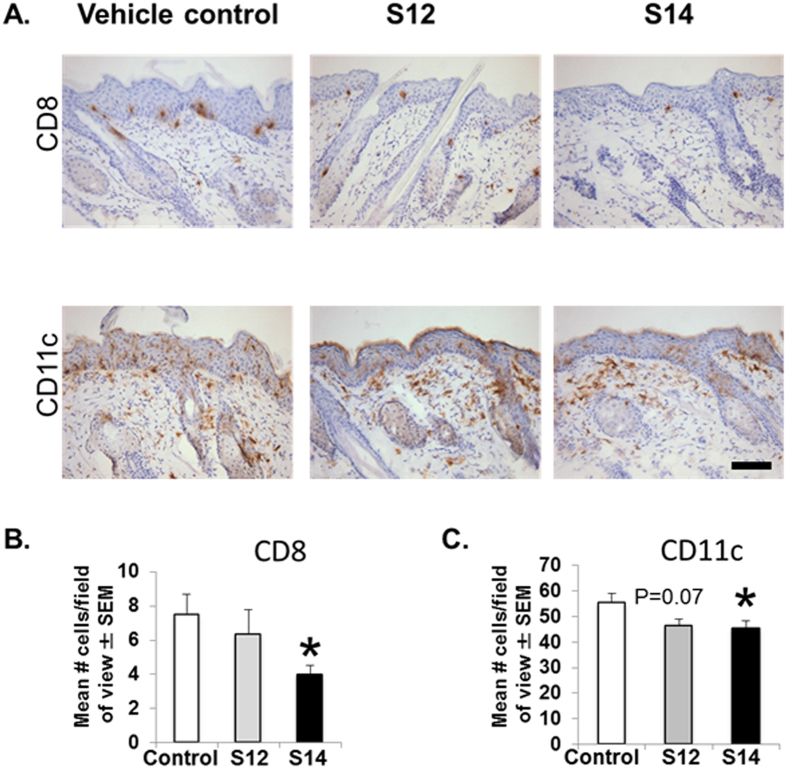
S14 causes decreased infiltration of CD8+ and CD11c+ cells compared with S12. (A) Representative images of CD8+ stained and CD11c+ stained dorsal skin sections from KC-Tie2 mice following treatment with S12, S14 or vehicle cream. (B) Quantification of CD8+ T cell and (C). Cd11c+ cell numbers in KC-Tie2 mice treated with vehicle (n = 8), S12 (n = 9) or S14 (n = 9). Values shown represent the mean # of cells/FOV (field of view) ± SEM. Data were analyzed using a Student’s t-test. P values are as indicated. Scale bar = 50 μm.
Figure 4
Figure 4
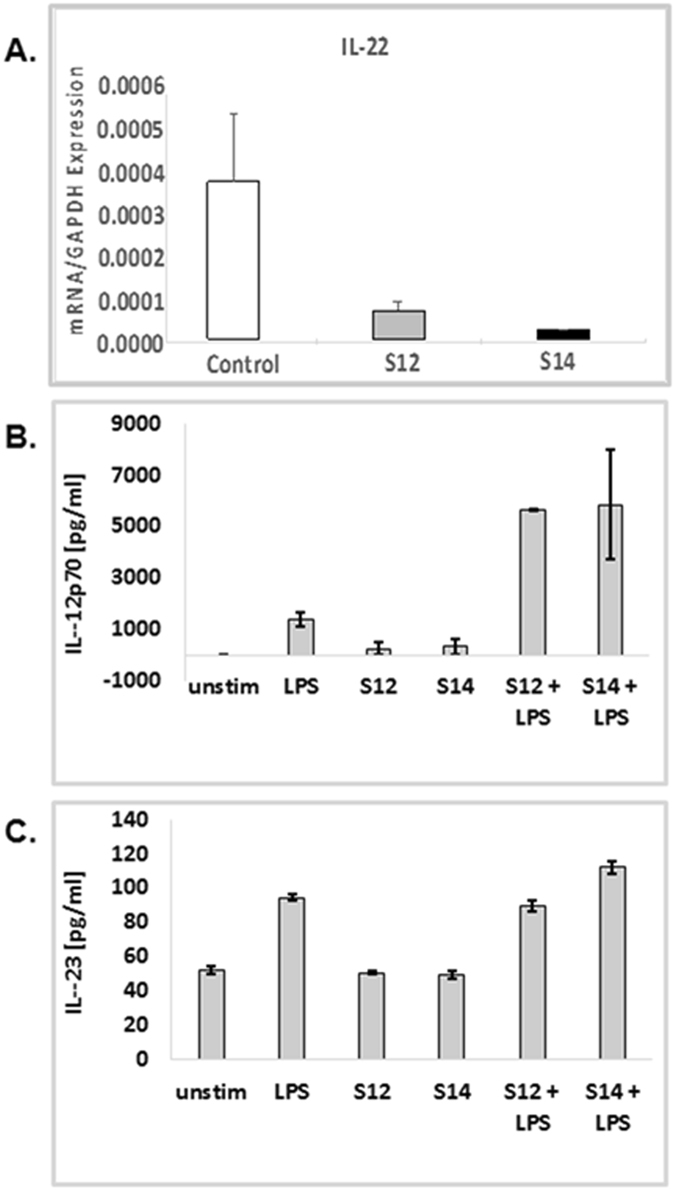
Solenopsin analogs S12 and S14 inhibit IL-22 expression. Compounds cause a significant decrease in IL-22 mRNA expression. The compounds also increase levels of IL-12 but no changes in IL-23 production by DC. Mouse DC were pre-incubated for 12 h with 10 µM compounds and then stimulated with LPS. IL-22 mRNA expression was measured by qRT-PCR. (A) Concentrations of IL-12 (B) and IL-23 (C) in the culture supernatants were determined by ELISA. Results are expressed as mean ± SD.
Figure 5
Figure 5
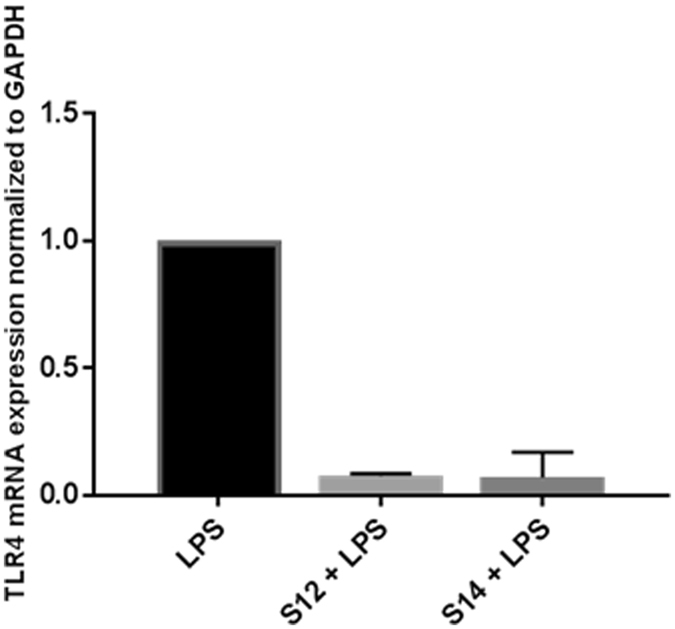
TLR4 in human HaCat keratinocytes treated with LPS, a canonical activator of TLR4. Treatment with the solenopsin derivatives S12 and S14 led to a significant decrease in TLR4 expression. Cells were treated with solenopsin analogs (in DMSO) and/or primed with LPS (10 µg/ml) for 24 h.

References

    1. Guttman-Yassky E, et al. Low expression of the IL-23/Th17 pathway in atopic dermatitis compared to psoriasis. Journal of immunology. 2008;181:7420–7427. doi: 10.4049/jimmunol.181.10.7420. - DOI - PMC - PubMed
    1. Kryczek I, et al. Induction of IL-17+ T cell trafficking and development by IFN-gamma: mechanism and pathological relevance in psoriasis. Journal of immunology. 2008;181:4733–4741. doi: 10.4049/jimmunol.181.7.4733. - DOI - PMC - PubMed
    1. Pariser DM, et al. National Psoriasis Foundation clinical consensus on disease severity. Archives of dermatology. 2007;143:239–242. doi: 10.1001/archderm.143.2.239. - DOI - PubMed
    1. Chen YJ, et al. Psoriasis independently associated with hyperleptinemia contributing to metabolic syndrome. Archives of dermatology. 2008;144:1571–1575. - PubMed
    1. Love TJ, Qureshi AA, Karlson EW, Gelfand JM, Choi HK. Prevalence of the metabolic syndrome in psoriasis: results from the National Health and Nutrition Examination Survey, 2003–2006. Arch Dermatol. 2011;147:419–424. doi: 10.1001/archdermatol.2010.370. - DOI - PMC - PubMed

Publication types