


Analysis of Wearable and Smartphone-Based Technologies for the Measurement of Barbell Velocity in Different Resistance Training Exercises
- PMID: 28894425
- PMCID: PMC5581394
- DOI: 10.3389/fphys.2017.00649
Analysis of Wearable and Smartphone-Based Technologies for the Measurement of Barbell Velocity in Different Resistance Training Exercises
Abstract
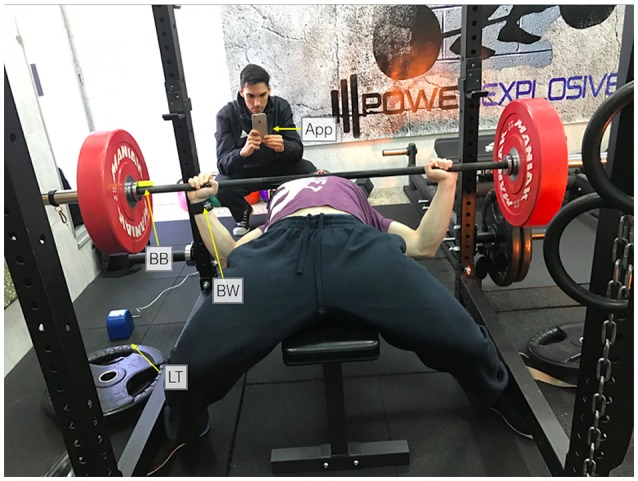
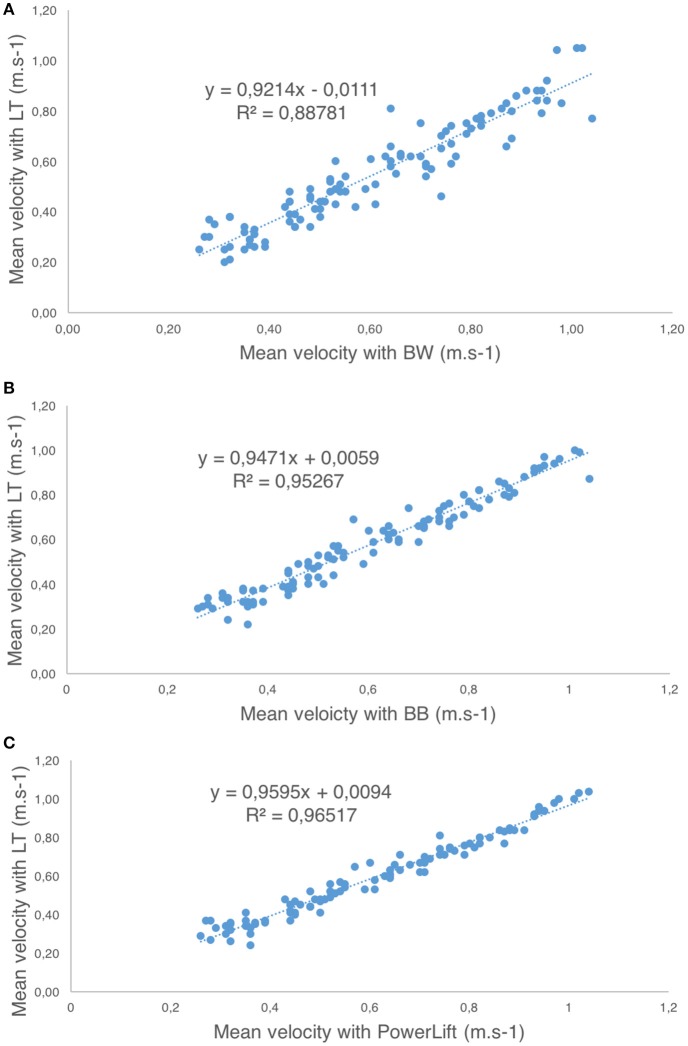
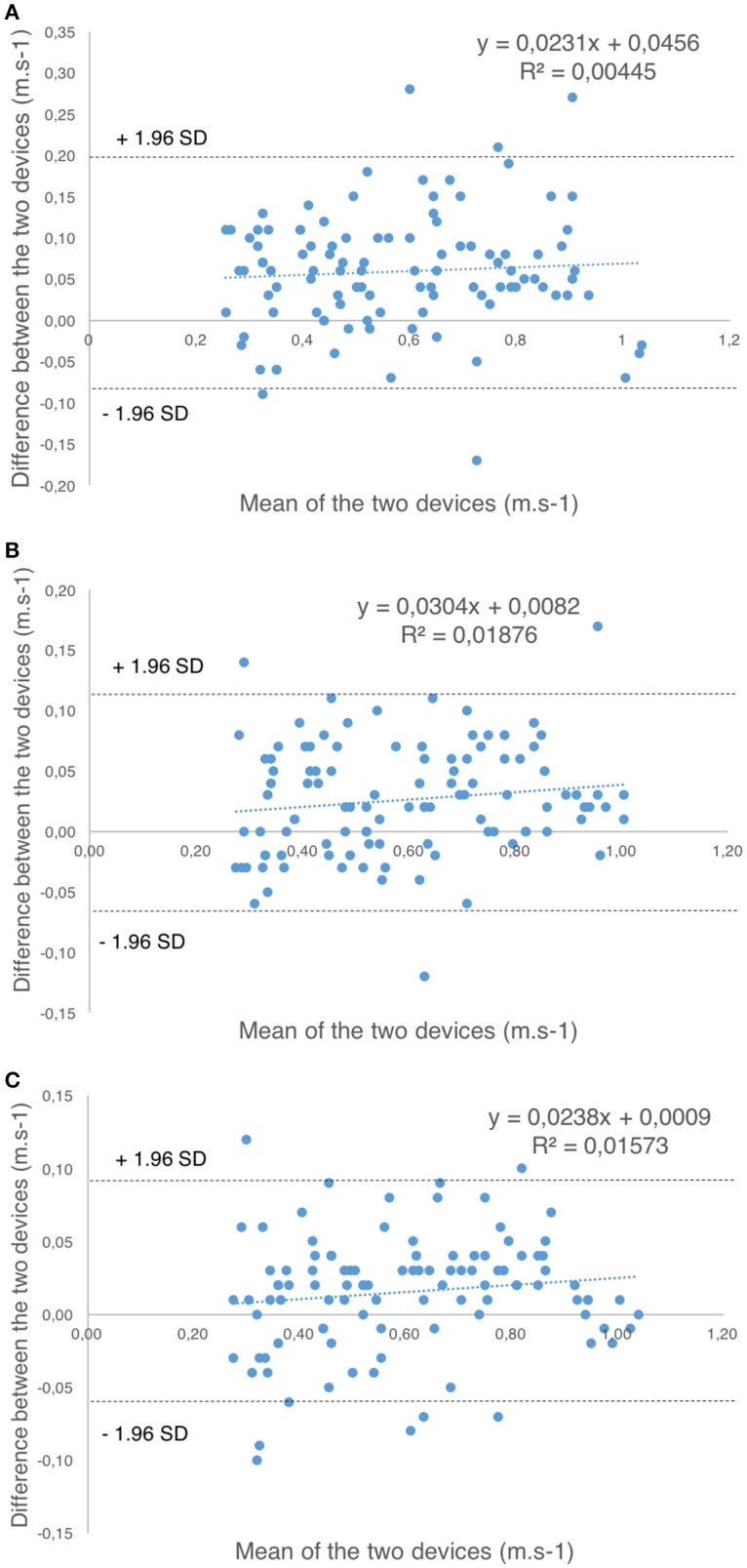
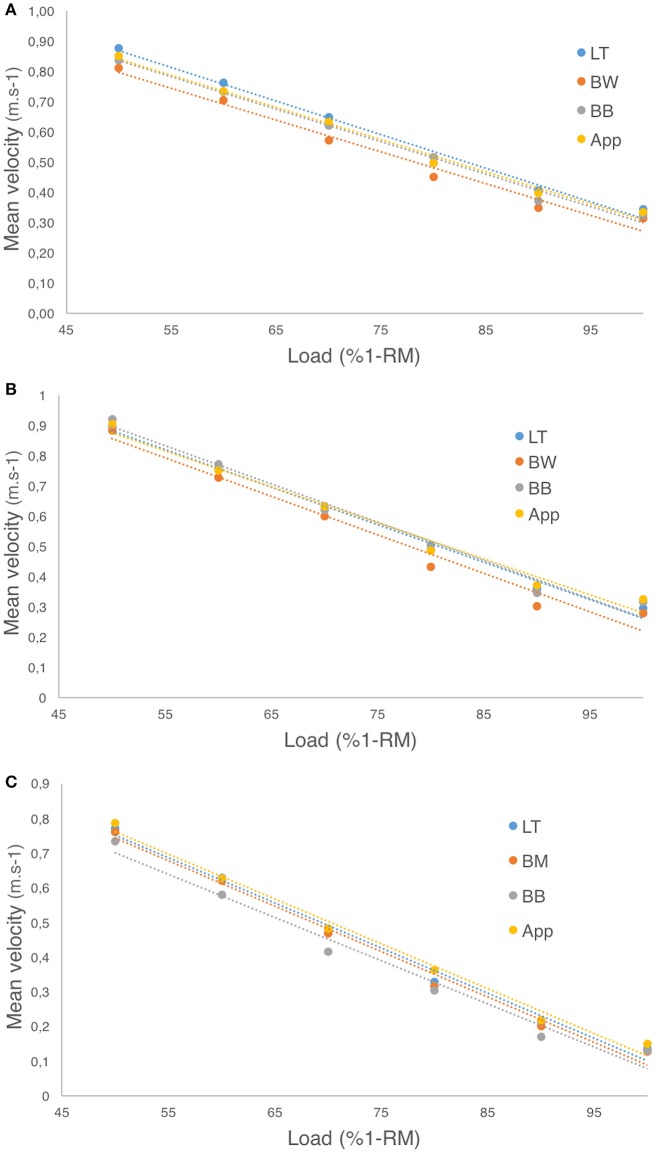
The purpose of this study was to analyze the validity, reliability, and accuracy of new wearable and smartphone-based technology for the measurement of barbell velocity in resistance training exercises. To do this, 10 highly trained powerlifters (age = 26.1 ± 3.9 years) performed 11 repetitions with loads ranging 50-100% of the 1-Repetition maximum in the bench-press, full-squat, and hip-thrust exercises while barbell velocity was simultaneously measured using a linear transducer (LT), two Beast wearable devices (one placed on the subjects' wrist -BW-, and the other one directly attached to the barbell -BB-) and the iOS PowerLift app. Results showed a high correlation between the LT and BW (r = 0.94-0.98, SEE = 0.04-0.07 m•s-1), BB (r = 0.97-0.98, SEE = 0.04-0.05 m•s-1), and the PowerLift app (r = 0.97-0.98, SEE = 0.03-0.05 m•s-1) for the measurement of barbell velocity in the three exercises. Paired samples T-test revealed systematic biases between the LT and BW, BB and the app in the hip-thrust, between the LT and BW in the full-squat and between the LT and BB in the bench-press exercise (p < 0.001). Moreover, the analysis of the linear regression on the Bland-Altman plots showed that the differences between the LT and BW (R2 = 0.004-0.03), BB (R2 = 0.007-0.01), and the app (R2 = 0.001-0.03) were similar across the whole range of velocities analyzed. Finally, the reliability of the BW (ICC = 0.910-0.988), BB (ICC = 0.922-0.990), and the app (ICC = 0.928-0.989) for the measurement of the two repetitions performed with each load were almost the same than that observed with the LT (ICC = 0.937-0.990). Both the Beast wearable device and the PowerLift app were highly valid, reliable, and accurate for the measurement of barbell velocity in the bench-press, full-squat, and hip-thrust exercises. These results could have potential practical applications for strength and conditioning coaches who wish to measure barbell velocity during resistance training.
Keywords: biomechanics; monitoring; strength; technology; validation.
Figures
References
LinkOut - more resources
Full Text Sources
Other Literature Sources
