Hematological Characteristics of Yemeni Adults and Children with Visceral Leishmaniasis. Could Eosinopenia be a Suspicion Index?
- PMID: 28894565
- PMCID: PMC5584771
- DOI: 10.4084/MJHID.2017.056
Hematological Characteristics of Yemeni Adults and Children with Visceral Leishmaniasis. Could Eosinopenia be a Suspicion Index?
Abstract
Background and objectives: Delay in the diagnosis of visceral leishmaniasis (VL) particularly in non-endemic areas is associated with higher mortality. In our experience, we found that marked bone marrow eosinopenia was a very frequent accompaniment of VL and might be a useful clue for the diagnosis, which indicates the opportunity for further morphological assessment. The aim of this study was to describe the hematological characteristics including peripheral blood and bone marrow findings of Yemeni adults and children with VL.
Methods: We conducted a descriptive analytic study to evaluate systematically peripheral blood and bone marrow findings of Yemeni adults and children with VL. Peripheral blood and bone marrow aspiration of patients with bone marrow aspirate confirmed VL were examined. Forty-seven patients with the main age (±SD) of 17.34±11.37 years (Range: 1-60) were included in the study. Fifty-one non-VL subjects with splenomegaly and pancytopenia or bicytopenia served as control group.
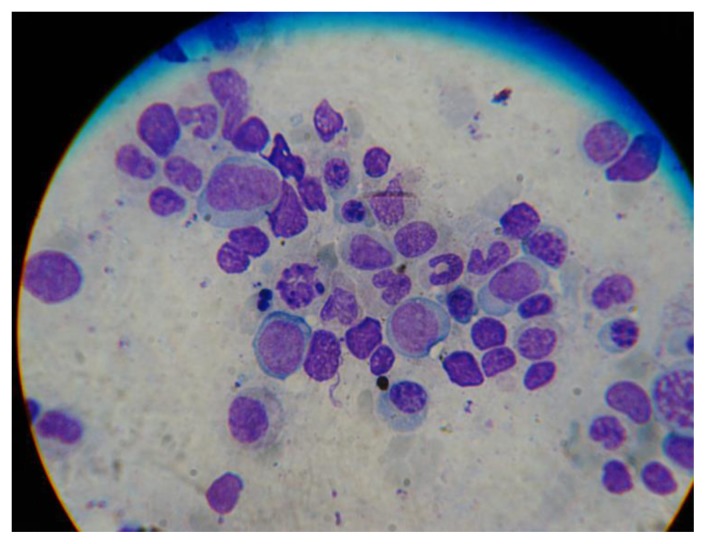
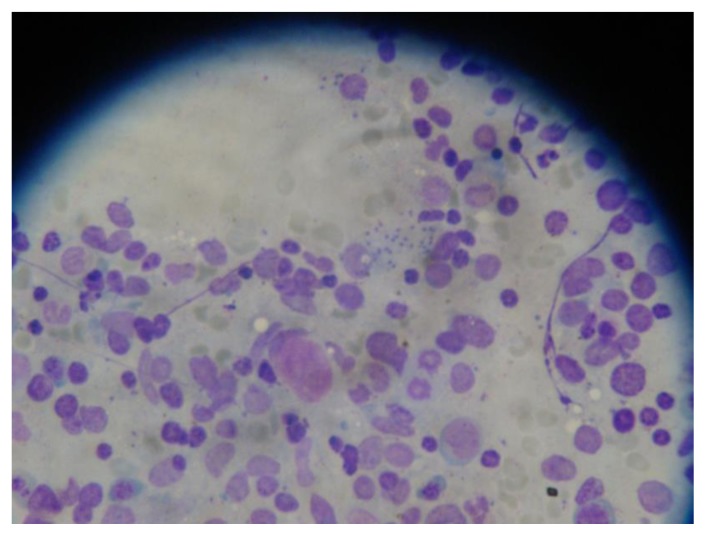
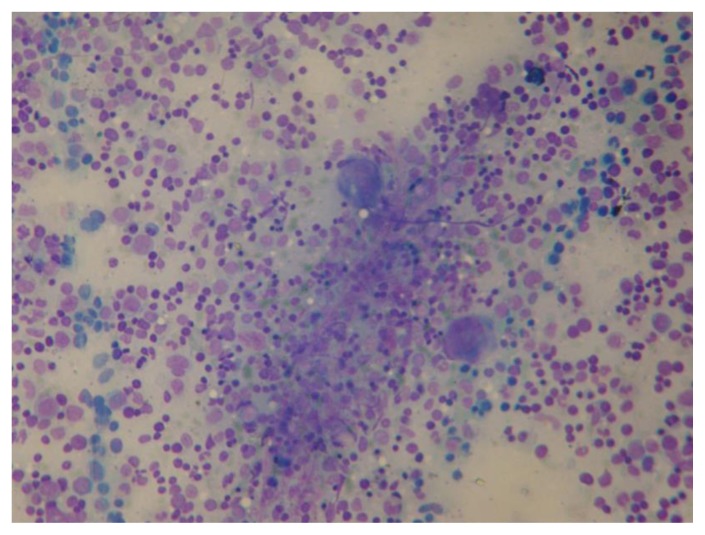
Results: All patients with VL had anemia, 41 (87%) leukopenia, 42 (89%) neutropenia, 44 (94%) thrombocytopenia, 42 (89%) eosinopenia, 34 (72%) pancytopenia and 13 (28%) had bicytopenia. In bone marrow examination 40 (85%) showed hypercellularity, 44 (94%) eosinopenia, 24 (51%) dyserythropoiesis, 22 (47%) lymphocytosis, 8 (17%) plasmacytosis, 27 (57%) decreased iron stores and 20 (43%) showed decreased sideroblasts. Comparison of VL patients with the control group showed significantly more frequent peripheral blood eosinopenia and lymphopenia and marrow eosinopenia. There was no significant difference between adults and children in any of the hematological features.
Conclusion: Anemia, leukopenia, neutropenia, thrombocytopenia, eosinopenia, pancytopenia and marked bone marrow eosinopenia were the most common findings. The finding of marked bone marrow eosinopenia is a significant clue for the diagnosis of visceral leishmaniasis in patients who present with splenomegaly associated with cytopenias. This finding is particularly valuable in non-endemic areas.
Keywords: Bone Marrow Eosinopenia; Early Diagnosis; Hematological Features; Visceral Leishmaniasis; Yemen.
Conflict of interest statement
Competing interests: The authors have declared that no competing interests exist.
Figures
References
-
- Pace D. Leishmaniasis. J Infect. 2014;69:S10–18. https://doi.org/10.1016/j.jinf.2014.07.016. - DOI - PubMed
-
- Ready PD. Epidemiolgy of Visceral Leishmaniasis. Clin Epidemiol. 2014;6:147–154. https://doi.org/10.2147/CLEP.S44267. - DOI - PMC - PubMed
-
- Abdul Hamid G, Gobah GA. Clinical and hematological manifestations of visceral leishmaniasis in Yemeni children. Turk J Hematol. 2009;26:25–28. - PubMed
-
- Sarkari B, Naraki T, Ghatee MA, Abdolahi KS, Davami MH. Visceral Leishmaniasis in Southwestern Iran: A Retrospective Clinico-Hematological Analysis of 380 Consecutive Hospitalized Cases (1999–2014) PLOS ONE. 2016;11(3):e0150406. https://doi.org/10.1371/journal.pone.0150406. - DOI - PMC - PubMed
-
- Agrawal Y, Sinha AK, Upadhyaya P, Kafle SU, Rijal S, Khanal B. Hematological profile in visceral leishmaniasis. Int J Infect Microbiol. 2013;2(2):39–44. https://doi.org/10.3126/ijim.v2i2.8320. - DOI
LinkOut - more resources
Full Text Sources
Other Literature Sources