


The effect of tinnitus retraining therapy on chronic tinnitus: A controlled trial
- PMID: 28894836
- PMCID: PMC5562945
- DOI: 10.1002/lio2.76
The effect of tinnitus retraining therapy on chronic tinnitus: A controlled trial
Abstract
Objectives: The goal of this study was to compare treatment outcomes for chronic bothersome tinnitus after Tinnitus Retraining Therapy (TRT) versus standard of care treatment (SC) and to determine the longevity of the effect over an 18-month period.
Study design: A randomized controlled trial comparing TRT to SC for chronic tinnitus.
Methods: Adults with subjective, stable, bothersome chronic tinnitus associated with hearing loss amenable to aural rehabilitation with hearing aids were recruited. The Tinnitus Handicap Inventory (THI) was the primary outcome measure and the Tinnitus Functional Index (TFI) the secondary outcome measure of tinnitus severity and impact. Data were collected at screening, entry (0 months), and 6, 12, and 18 months after the beginning of treatment, using an integrated digitized suite of evaluation modules. TRT consisted of directive counseling and acoustic enrichment using combination hearing aids and sound generators; SC consisted of general aural rehabilitation counseling and hearing aids.
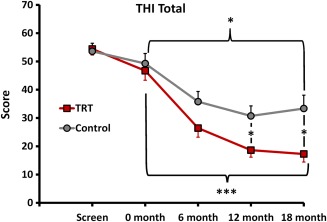
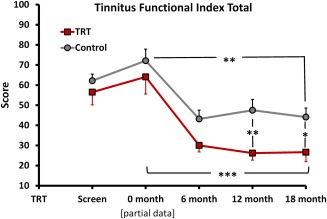
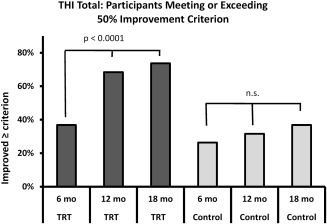
Results: Significant improvement in tinnitus impact occurred after both TRT and SC therapy, with a larger treatment effect obtained in the TRT group. Lasting therapeutic benefit was evident at 18 months in both groups. THI initial scores were unstable in 10% of enrolled participants, showing moderate bidirectional fluctuation between screening and baseline (0 month) assessment.
Conclusion: Adults with moderate to severe tinnitus and hearing loss amenable to amplification, benefit from either TRT or SC treatment when combined with hearing aid use. TRT benefit may exceed that of SC. The global improvement in tinnitus severity that accrued over an 18-month period appeared to be robust and clinically significant.
Level of evidence: I.
Keywords: chronic; hearing aids; randomized controlled trial; retraining therapy; tinnitus.
Figures
References
-
- Nondahl DM, Cruickshanks KJ, Wiley TL, Klein R, Klein BE, Tweed TS. Prevalence and 5‐year incidence of tinnitus among older adults: the epidemiology of hearing loss study. J Am Acad Audiol 2002;13:323–331. - PubMed
-
- Shargorodsky J, Curhan GC, Farwell WR. Prevalence and characteristics of tinnitus among US adults. Am J Med 2010;123:711–718. - PubMed
-
- Sindhusake D, Mitchell P, Newall P, Golding M, Rochtchina E, Rubin G. Prevalence and characteristics of tinnitus in older adults: the Blue Mountains Hearing Study. Int J Audiol 2003;42:289–94. - PubMed
-
- Seydel C, Haupt H, Szczepek AJ, Klapp BF, Mazurek B. Long‐term improvement in tinnitus after modified tinnitus retraining therapy enhanced by a variety of psychological approaches . Audiol Neurootol 2010;15:69–80. - PubMed
LinkOut - more resources
Full Text Sources
Other Literature Sources
Research Materials