


Smoking cessation and survival in lung, upper aero-digestive tract and bladder cancer: cohort study
- PMID: 28898236
- PMCID: PMC5674091
- DOI: 10.1038/bjc.2017.179
Smoking cessation and survival in lung, upper aero-digestive tract and bladder cancer: cohort study
Abstract
Background: The aim was to examine the association between smoking cessation and prognosis in smoking-related cancer as it is unclear that cessation reduces mortality.
Methods: In this retrospective cohort study from 1999 to 2013, we assessed the association between cessation during the first year after diagnosis and all-cause and cancer-specific mortality.
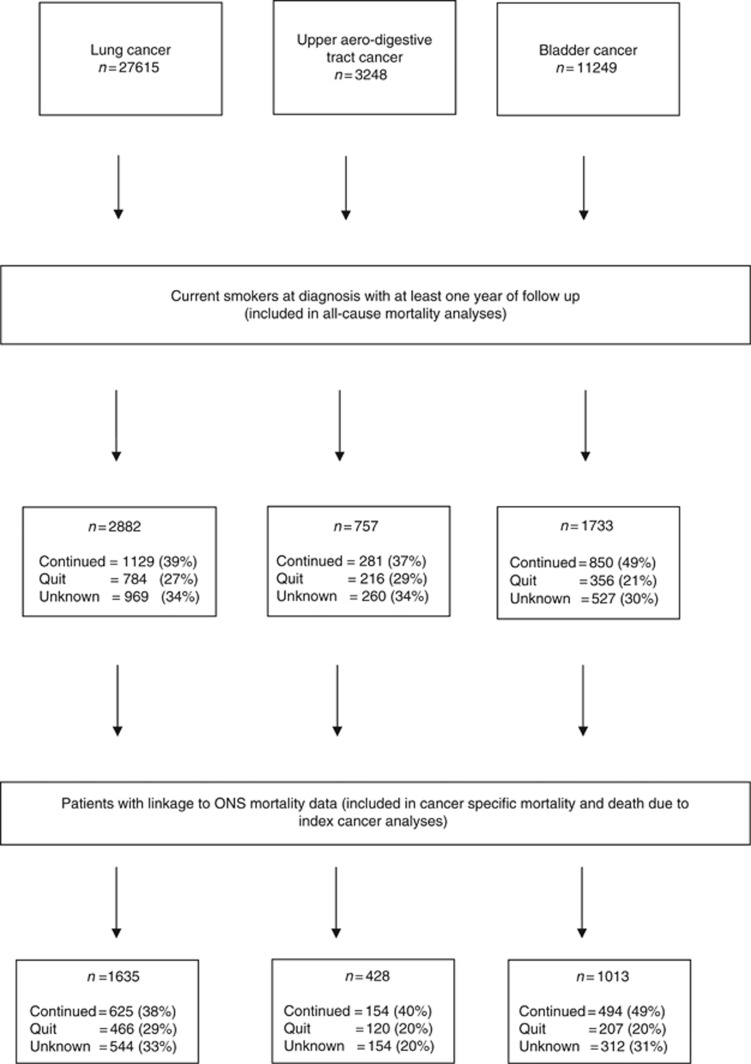
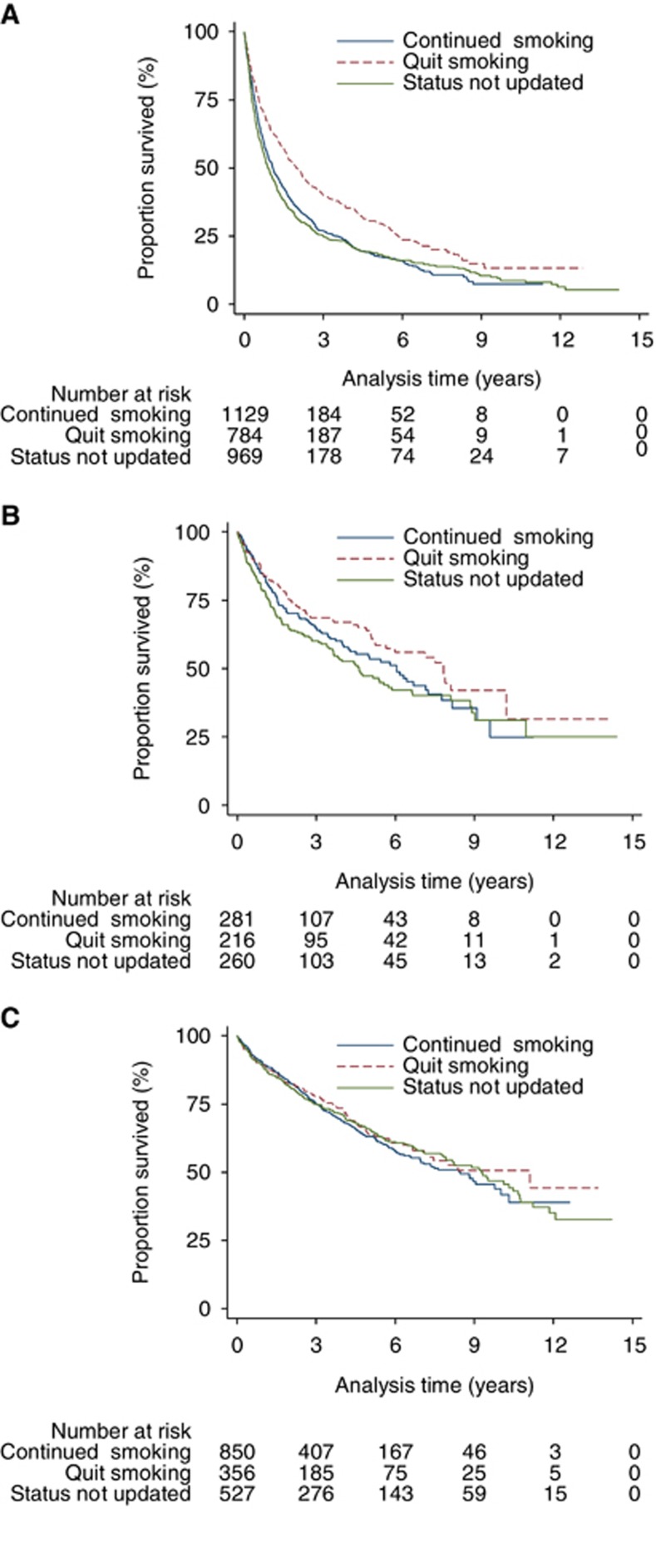
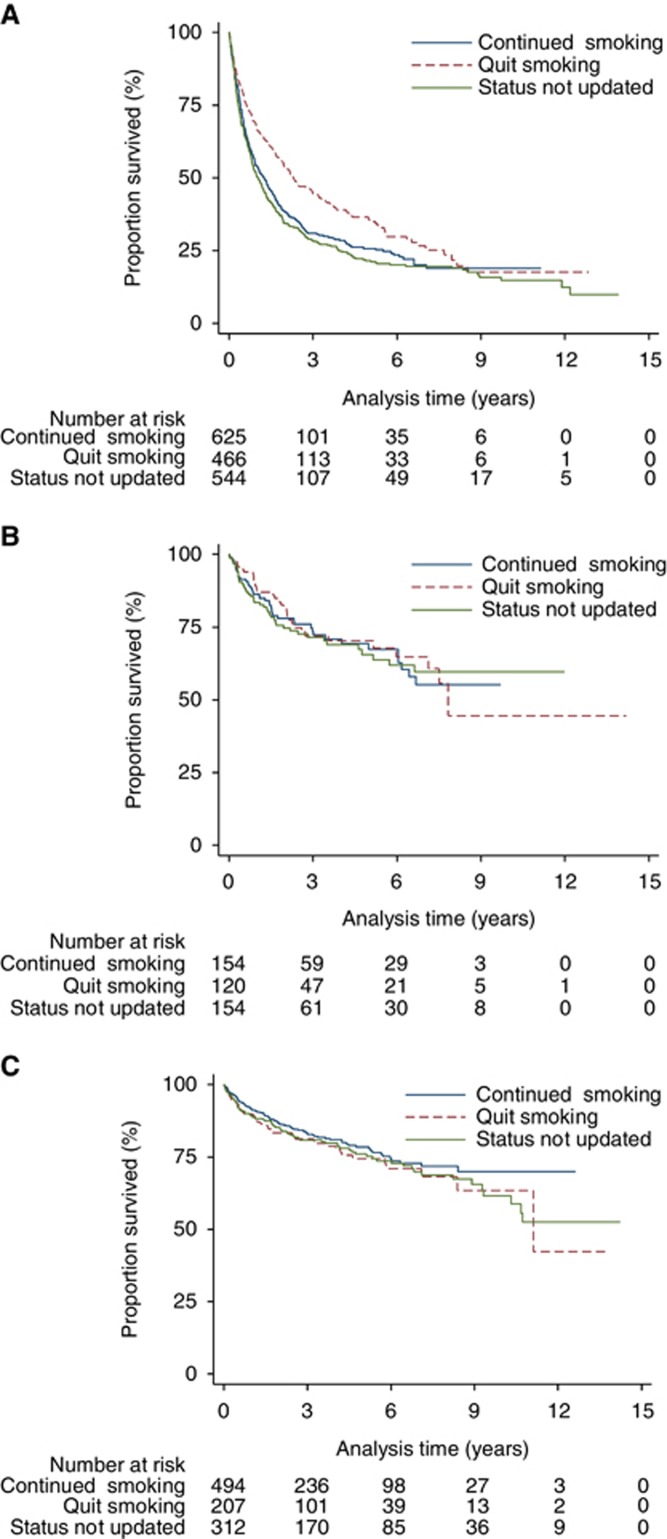
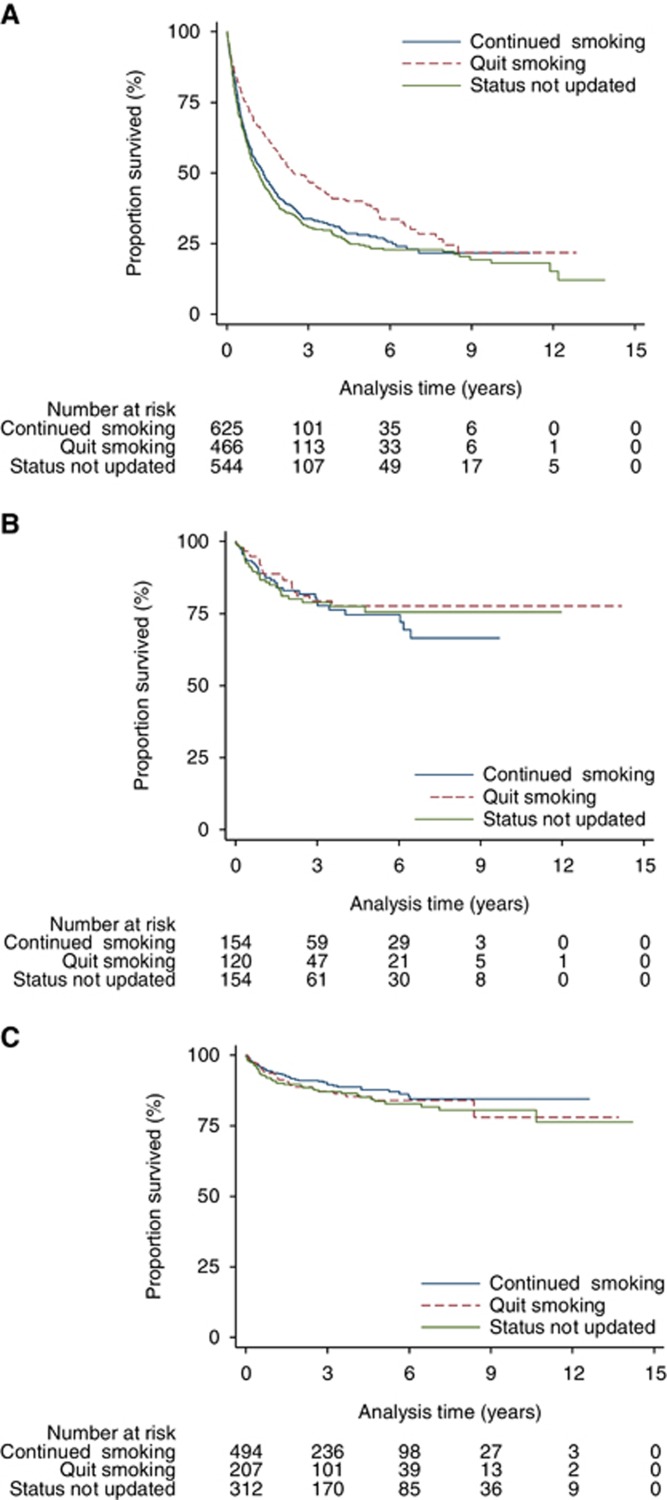
Results: Of 2882 lung, 757 upper aero-digestive tract (UAT) and 1733 bladder cancer patients 27%, 29% and 21% of lung, UAT and bladder cancer patients quit smoking. In lung cancer patients that quit, all-cause mortality was significantly lower (HR: 0.82 (0.74-0.92), while cancer-specific mortality (HR: 0.89 (0.76-1.04) and death due to index cancer (HR: 0.90 (0.77-1.05) were non-significantly lower. In UAT cancer, all-cause mortality (HR: 0.81 (0.58-1.14), cancer-specific mortality (HR: 0.84 (0.48-1.45), and death due to index cancer (HR: 0.75 (0.42-1.34) were non-significantly lower. There was no evidence of an association between quitting and mortality in bladder cancer. The HRs were 1.02 (0.81-1.30) for all-cause, 1.23 (0.81-1.86) for cancer specific, and 1.25 (0.71-2.20) for death due to index cancer. These showed a non-significantly lower risk in sensitivity analyses.
Conclusions: People with lung and possibly UAT cancer who quit smoking have a lower risk of mortality than people who continue smoking.
Conflict of interest statement
Three of our authors report potential conflicts of interest, and the remaining four do not have any to report. The potential conflicts are as follows: Paul Aveyard reports grants from MRC, NIHR, CRUK, ESRC, and UK Centre for Tobacco and Alcohol Studies during the conduct of this study; Amanda Farley reports grants from the NIHR and CRUK during the conduct of this study; Ronan Ryan reports that he was part-funded by the National Health Service (Heart of England NHS Foundation Trust) during the conduct of this study.
The funder was not involved in the design and conduct of the study; collection, management, analysis, and interpretation of the data; or preparation, review, or approval of the manuscript. The views expressed are those of the authors and not necessarily those of the NIHR, the NHS or the Department of Health.
Figures
References
-
- Aggarwal B, Shishodia S, Sandur SK, Pandey MK, Sethi G (2006) Inflammation and cancer: How hot is the link? Biochem Pharmacol 72: 1605–1621. - PubMed
-
- Anthonisen N, Connett JE, Enright PL, Manfreda J for the Lung Health Study Research Group (2002) Hospitalizations and mortality in the Lung Health Study. Am J Respir Crit Care Med 166(3): 333–339. - PubMed
-
- Aveyard P, Adab P, Cheng KK, Wallace DM, Hey K, Murphy MF (2002) Does smoking status influence the prognosis of bladder cancer? A systematic review. BJU Int 90(3): 228–239. - PubMed
-
- Balkwill F, Mantovani A (2001) Inflammation and cancer: back to Virchow? Lancet 357: 539–545. - PubMed
MeSH terms
Grants and funding
LinkOut - more resources
Full Text Sources
Other Literature Sources
Medical
