


Distinct genetic clades of enterovirus D68 detected in 2010, 2013, and 2015 in Osaka City, Japan
- PMID: 28902862
- PMCID: PMC5597212
- DOI: 10.1371/journal.pone.0184335
Distinct genetic clades of enterovirus D68 detected in 2010, 2013, and 2015 in Osaka City, Japan
Abstract
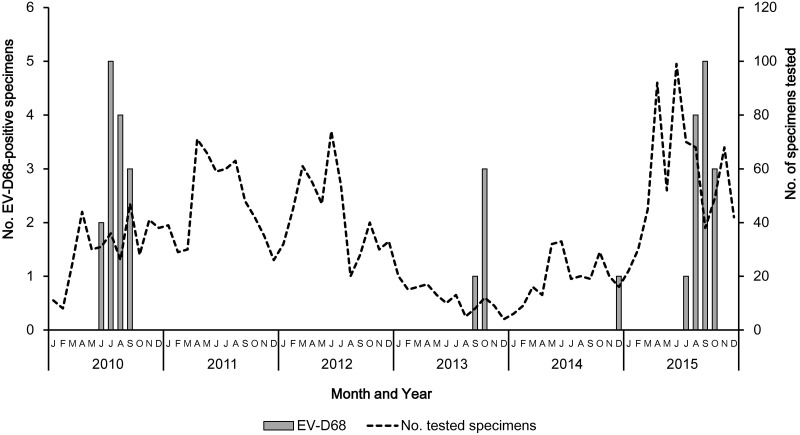
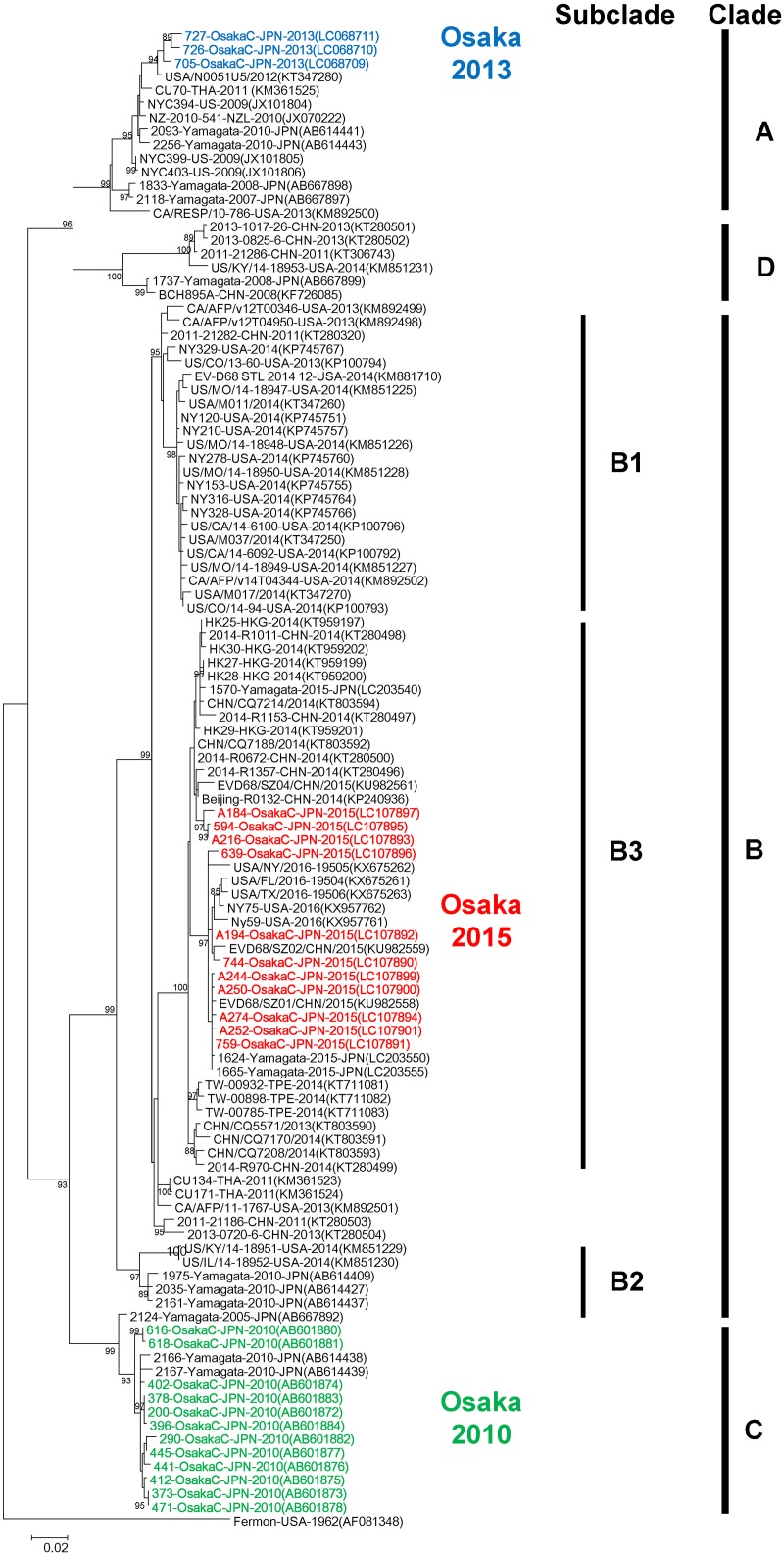
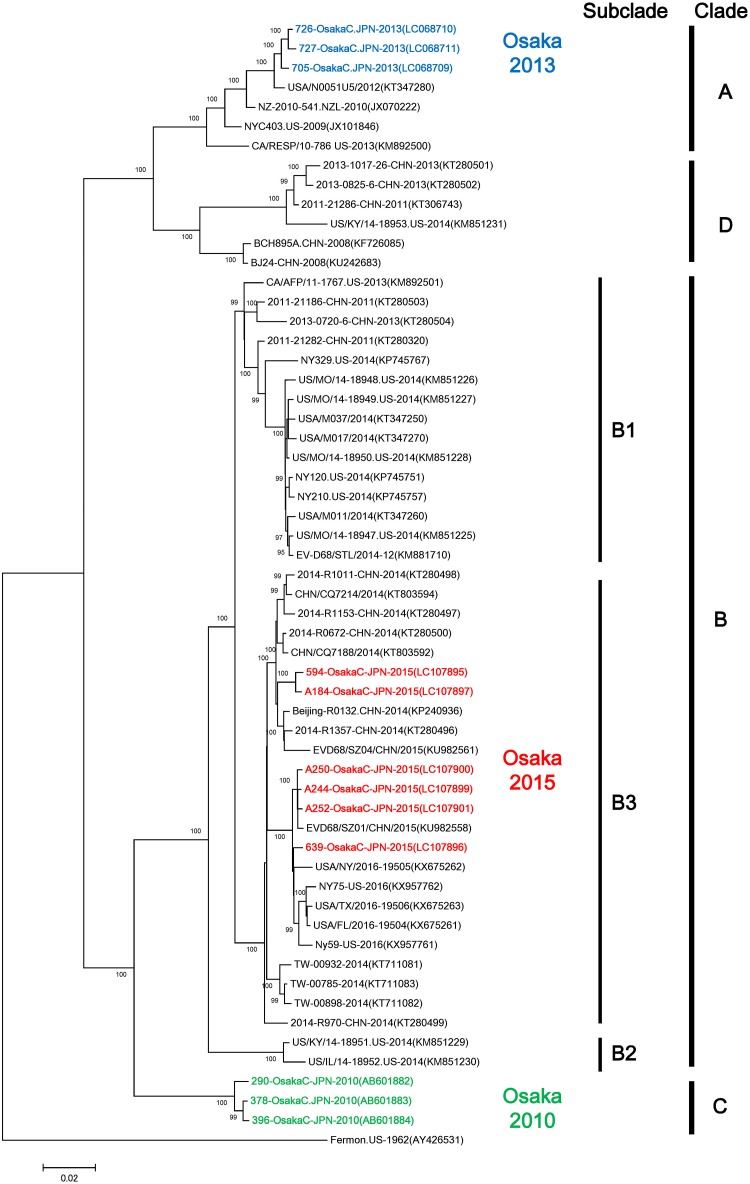
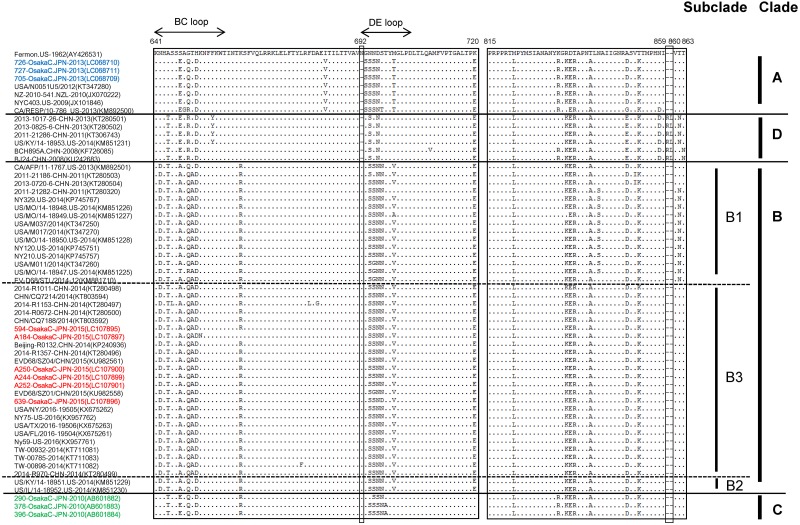
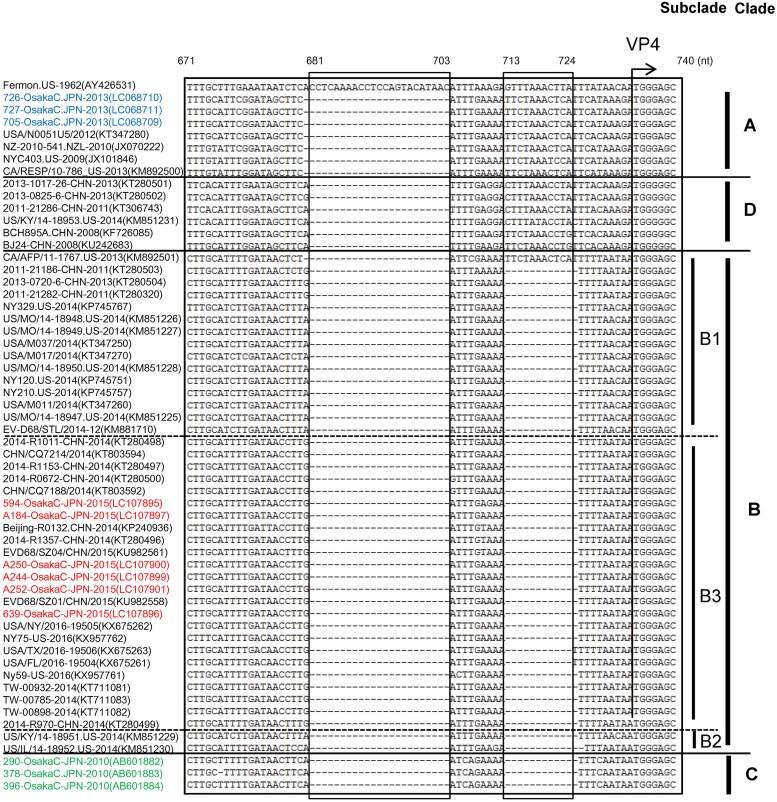
The first upsurge of enterovirus D68 (EV-D68), a causative agent of acute respiratory infections (ARIs), in Japan was reported in Osaka City in 2010. In this study, which began in 2010, we surveyed EV-D68 in children with ARIs and analyzed sequences of EV-D68 strains detected. Real-time PCR of 19 respiratory viruses or subtypes of viruses, including enterovirus, was performed on 2,215 specimens from ARI patients (<10 years of age) collected between November 2010 and December 2015 in Osaka City, Japan. EV-D68 was identified in 18 enterovirus-positive specimens (n = 4 in 2013, n = 1 in 2014, and n = 13 in 2015) by analysis of viral protein 1 (VP1) or VP4 sequences, followed by a BLAST search for similar sequences. All EV-D68 strains were detected between June and October (summer to autumn), except for one strain detected in 2014. A phylogenetic analysis of available VP1 sequences revealed that the Osaka strains detected in 2010, 2013, and 2015 belonged to distinct clusters (Clades C, A, and B [Subclade B3], respectively). Comparison of the 5' untranslated regions of these viruses showed that Osaka strains in Clades A, B (Subclade B3), and C commonly had deletions at nucleotide positions 681-703 corresponding to the prototype Fermon strain. Clades B and C had deletions from nucleotide positions 713-724. Since the EV-D68 epidemic in 2010, EV-D68 re-emerged in Osaka City, Japan, in 2013 and 2015. Results of this study indicate that distinct clades of EV-D68 contributed to re-emergences of this virus in 2010, 2013, and 2015 in this limited region.
Conflict of interest statement
Figures
References
-
- Pallansch MA, Oberste MS, Whitton JL. Enteroviruses: Polioviruses, Coxsackieviruses, Echoviruses, and Newer Enteroviruses. Sixth ed Philadelphia: Wolters Kluwer Health/Lippincott Williams & Wilkins; 2013. 490–530.
-
- Schieble JH, Fox VL, Lennette EH. A probable new human picornavirus associated with respiratory diseases. Am J Epidemiol. 1967;85:297–310. . - PubMed
-
- Khetsuriani N, Lamonte-Fowlkes A, Oberst S, Pallansch MA, Centers for Disease C, Prevention. Enterovirus surveillance—United States, 1970–2005. MMWR Surveill Summ. 2006;55:1–20. . - PubMed
-
- Imamura T, Oshitani H. Global reemergence of enterovirus D68 as an important pathogen for acute respiratory infections. Rev Med Virol. 2015;25:102–114. doi: 10.1002/rmv.1820 . - DOI - PMC - PubMed
-
- Greninger AL, Naccache SN, Messacar K, Clayton A, Yu G, Somasekar S, et al. A novel outbreak enterovirus D68 strain associated with acute flaccid myelitis cases in the USA (2012–14): a retrospective cohort study. Lancet Infect Dis. 2015;15:671–682. doi: 10.1016/S1473-3099(15)70093-9 . - DOI - PMC - PubMed
MeSH terms
Substances
LinkOut - more resources
Full Text Sources
Other Literature Sources
Research Materials
