


Phytochemical-rich foods inhibit the growth of pathogenic trichomonads
- PMID: 28903731
- PMCID: PMC5598040
- DOI: 10.1186/s12906-017-1967-x
Phytochemical-rich foods inhibit the growth of pathogenic trichomonads
Abstract
Background: Plants produce secondary metabolites that often possess widespread bioactivity, and are then known as phytochemicals. We previously determined that several phytochemical-rich food-derived preparations were active against pathogenic foodborne bacteria. Trichomonads produce disease (trichomoniasis) in humans and in certain animals. Trichomonads are increasingly becoming resistant to conventional modes of treatment. It is of interest to test bioactive, natural compounds for efficacy against these pathogens.
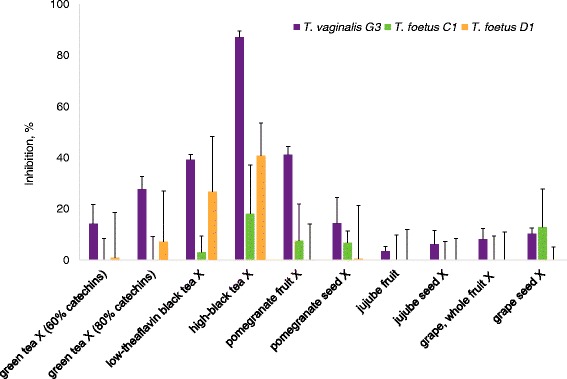
Methods: Using a cell assay, black tea, green tea, grape, pomegranate, and jujube extracts, as well as whole dried jujube were tested against three trichomonads: Trichomonas vaginalis strain G3 (found in humans), Tritrichomonas foetus strain D1 (found in cattle), and Tritrichomonas foetus-like organism strain C1 (found in cats). The most effective of the test substances was subsequently tested against two metronidazole-resistant Trichomonas vaginalis strains, and on normal mucosal flora.
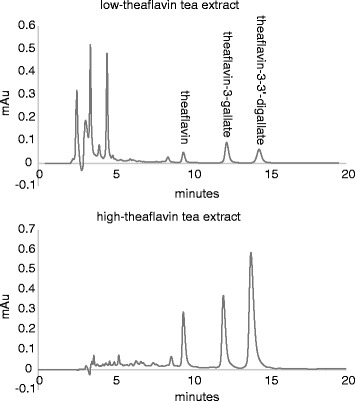
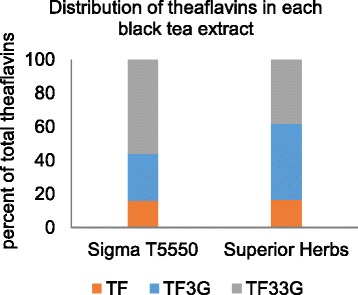
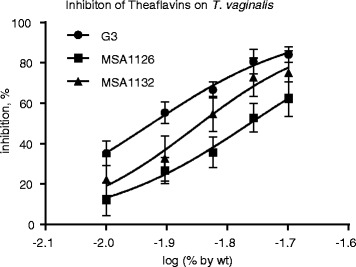
Results: Black tea extract inhibited all the tested trichomonads, but was most effective against the T. vaginalis organisms. Inhibition by black tea was correlated with the total and individual theaflavin content of the two tea extracts determined by HPLC. Metronidazole-resistant Trichomonas vaginalis strains were also inhibited by the black tea extract. The response of the organisms to the remaining preparations was variable and unique. We observed no effect of the black tea extract on common normal flora bacteria.
Conclusions: The results suggest that the black tea, and to a lesser degree green tea, grape seed, and pomegranate extracts might present possible natural alternative therapeutic agents to treat Trichomonas vaginalis infections in humans and the related trichomonad infections in animals, without negatively affecting the normal flora.
Keywords: Flavonoid; Polyphenol; Theaflavin; Trichomonas vaginalis; Tritrichomonas foetus.
Conflict of interest statement
Authors’ information
Dr. Kirkwood M. Land is associate professor of biological sciences at University of Pacific. Dr. Mendel Friedman is a senior scientist and Western Regional Research Center.
Ethics approval and consent to participate
Not applicable.
Consent for publication
Not applicable.
Competing interests
The authors declare that they have no competing interests.
Publisher’s Note
Springer Nature remains neutral with regard to jurisdictional claims in published maps and institutional affiliations.
Figures
References
MeSH terms
Substances
LinkOut - more resources
Full Text Sources
Other Literature Sources
Miscellaneous
