


Modest heterologous protection after Plasmodium falciparum sporozoite immunization: a double-blind randomized controlled clinical trial
- PMID: 28903777
- PMCID: PMC5598044
- DOI: 10.1186/s12916-017-0923-4
Modest heterologous protection after Plasmodium falciparum sporozoite immunization: a double-blind randomized controlled clinical trial
Abstract
Background: A highly efficacious vaccine is needed for malaria control and eradication. Immunization with Plasmodium falciparum NF54 parasites under chemoprophylaxis (chemoprophylaxis and sporozoite (CPS)-immunization) induces the most efficient long-lasting protection against a homologous parasite. However, parasite genetic diversity is a major hurdle for protection against heterologous strains.
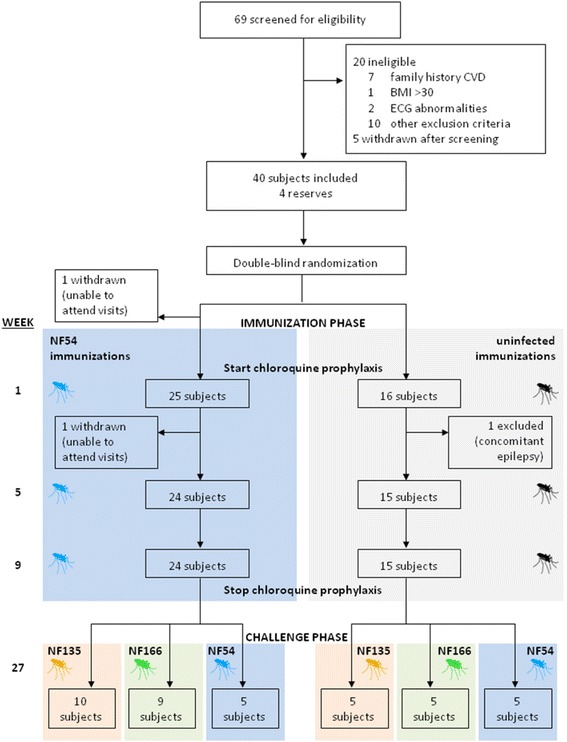
Methods: We conducted a double-blind, randomized controlled trial in 39 healthy participants of NF54-CPS immunization by bites of 45 NF54-infected (n = 24 volunteers) or uninfected mosquitoes (placebo; n = 15 volunteers) against a controlled human malaria infection with the homologous NF54 or the genetically distinct NF135.C10 and NF166.C8 clones. Cellular and humoral immune assays were performed as well as genetic characterization of the parasite clones.
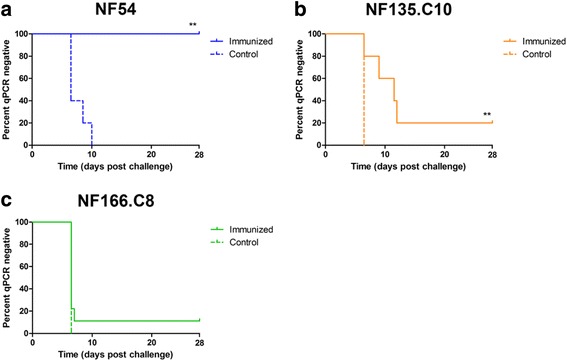
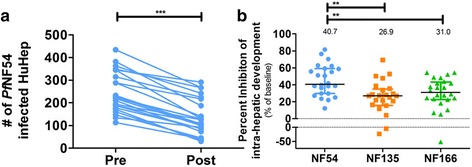
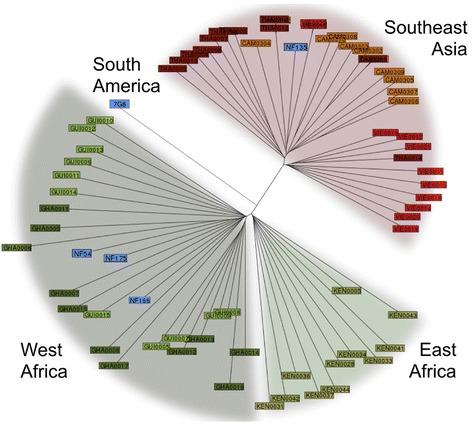
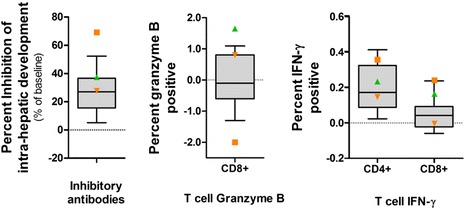
Results: NF54-CPS immunization induced complete protection in 5/5 volunteers against NF54 challenge infection at 14 weeks post-immunization, but sterilely protected only 2/10 and 1/9 volunteers against NF135.C10 and NF166.C8 challenge infection, respectively. Post-immunization plasma showed a significantly lower capacity to block heterologous parasite development in primary human hepatocytes compared to NF54. Whole genome sequencing showed that NF135.C10 and NF166.C8 have amino acid changes in multiple antigens targeted by CPS-induced antibodies. Volunteers protected against heterologous challenge were among the stronger immune responders to in vitro parasite stimulation.
Conclusions: Although highly protective against homologous parasites, NF54-CPS-induced immunity is less effective against heterologous parasite clones both in vivo and in vitro. Our data indicate that whole sporozoite-based vaccine approaches require more potent immune responses for heterologous protection.
Trial registration: This trial is registered in clinicaltrials.gov, under identifier NCT02098590 .
Keywords: Controlled human malaria infection; Heterologous protection; Immune responses; Malaria; Plasmodium falciparum; Sporozoite; Vaccine.
Conflict of interest statement
Ethics approval and consent to participate
The study was approved by the Central Committee for Research Involving Human Subjects of The Netherlands (CCMO NL48732.091.14) and conducted according to the principles outlined in the Declaration of Helsinki and Good Clinical Practice standards. All participants provided written informed consent prior to enrollment in the study.
Consent for publication
Not applicable.
Competing interests
The authors declare that they have no competing interests.
Publisher’s Note
Springer Nature remains neutral with regard to jurisdictional claims in published maps and institutional affiliations.
Figures
References
-
- World Health Organization . World Malaria Report 2015. Geneva: WHO; 2015.
-
- Tran TM, Li S, Doumbo S, Doumtabe D, Huang CY, Dia S, Bathily A, Sangala J, Kone Y, Traore A, et al. An intensive longitudinal cohort study of Malian children and adults reveals no evidence of acquired immunity to Plasmodium falciparum infection. Clin Infect Dis. 2013;57(1):40–7. doi: 10.1093/cid/cit174. - DOI - PMC - PubMed
-
- European Medicines Agency. First malaria vaccine receives positive scientific opinion from EMA. Mosquirix to be used for vaccination of young children, together with established antimalarial interventions. 2015. http://www.ema.europa.eu/ema/index.jsp?curl=pages/news_and_events/news/2.... Accessed 17 Aug 2017.
Publication types
MeSH terms
Substances
Associated data
LinkOut - more resources
Full Text Sources
Other Literature Sources
Medical
