. 2017 Sep 13:358:j3932.
doi: 10.1136/bmj.j3932.

Multivariate and network meta-analysis of multiple outcomes and multiple treatments: rationale, concepts, and examples

Affiliations

Multivariate and network meta-analysis of multiple outcomes and multiple treatments: rationale, concepts, and examples

Richard D Riley et al. BMJ. .

Abstract

Organisations such as the National Institute for Health and Care Excellence require the synthesis of evidence from existing studies to inform their decisions—for example, about the best available treatments with respect to multiple efficacy and safety outcomes. However, relevant studies may not provide direct evidence about all the treatments or outcomes of interest. Multivariate and network meta-analysis methods provide a framework to address this, using correlated or indirect evidence from such studies alongside any direct evidence. In this article, the authors describe the key concepts and assumptions of these methods, outline how correlated and indirect evidence arises, and illustrate the contribution of such evidence in real clinical examples involving multiple outcomes and multiple treatments


Conflict of interest statement

Competing interests: We have read and understood the BMJ policy on declaration of interests and declare: none.

Figures
None
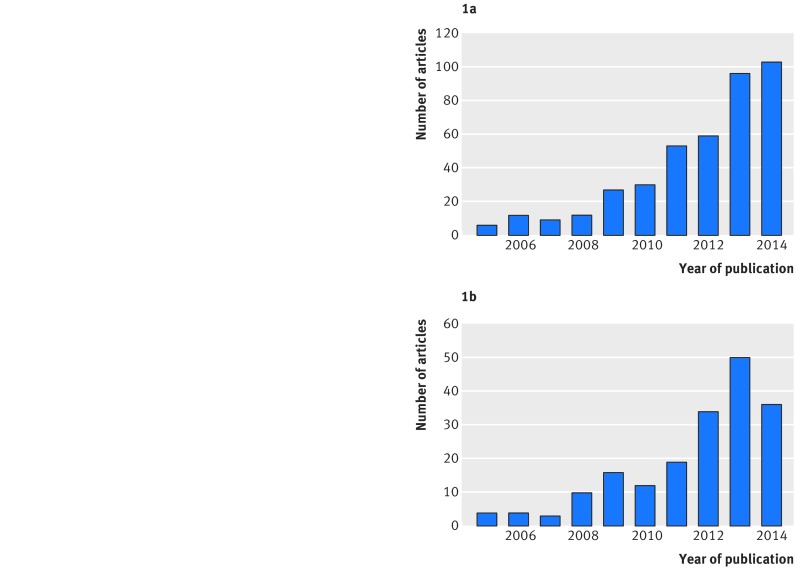
Fig 1 Publication of network meta-analysis articles over time. (a): Applied articles reporting a systematic reviews using network meta-analysis to compare at least four treatments published between 2005 and 2014, as assessed by Petropoulou et al 2017. *Six were also published before 2005, and 43 were published in 2015 up to April. (b): Methodological articles, tutorials, and articles with empirical evaluation of methods for network meta-analysis published between 2005 and 2014, as assessed by Efthimiou et al 2016 and available from www.zotero.org/groups/wp4_-_network_meta-analysis
None
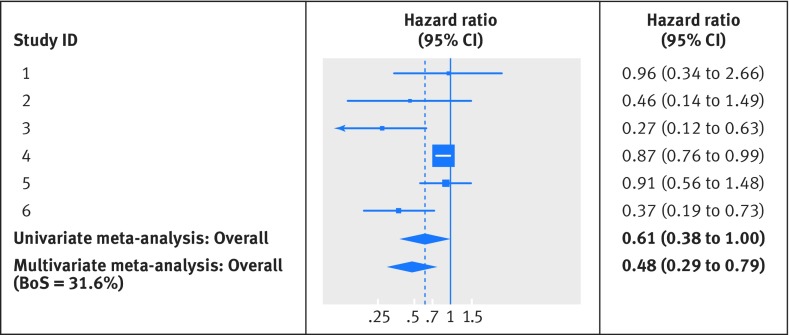
Fig 2 Forest plot for prognostic effect of progesterone on cancer specific survival in endometrial cancer, with summary results for univariate and multivariate meta-analysis. The multivariate meta-analysis of cancer specific survival and progression-free survival used the approach of Riley et al to handle missing within study correlations, through restricted maximum likelihood estimation. Heterogeneity was similar in both univariate and multivariate meta-analyses (I2=70%)
None
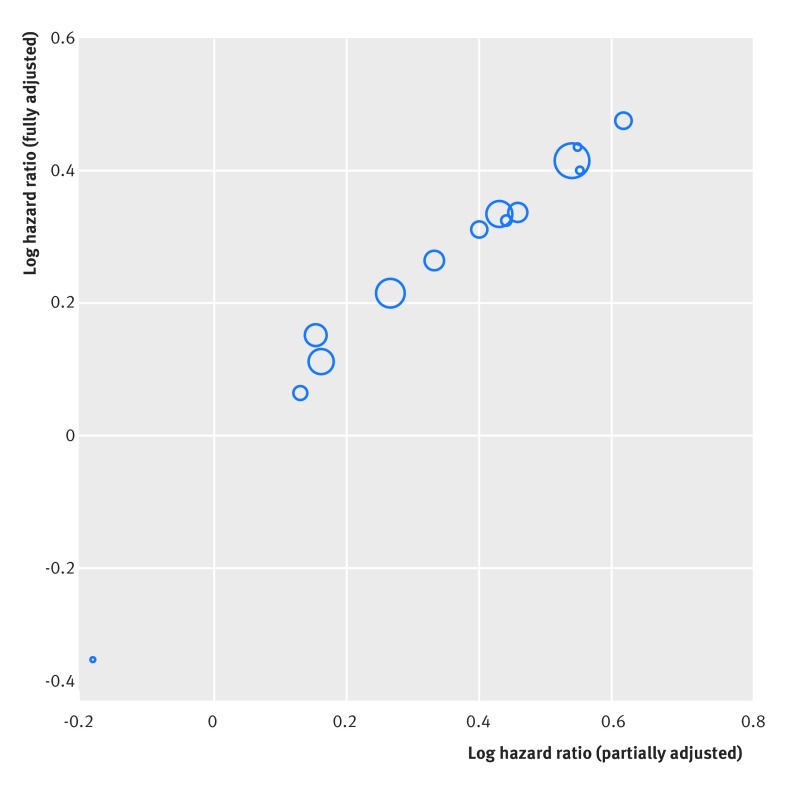
Fig 3 Strong observed correlation (linear association) between the log hazard ratio estimates of the partially and “fully” adjusted effect of fibrinogen on the rate of cardiovascular disease. The size of each circle is proportional to the precision (inverse of the variance) of the fully adjusted log hazard ratio estimate (ie, larger circles indicate more precise study estimates). Hazard ratios were derived in each study separately from a Cox regression, indicating the effect of a 1 g/L increase in fibrinogen levels on the rate of cardiovascular disease
None
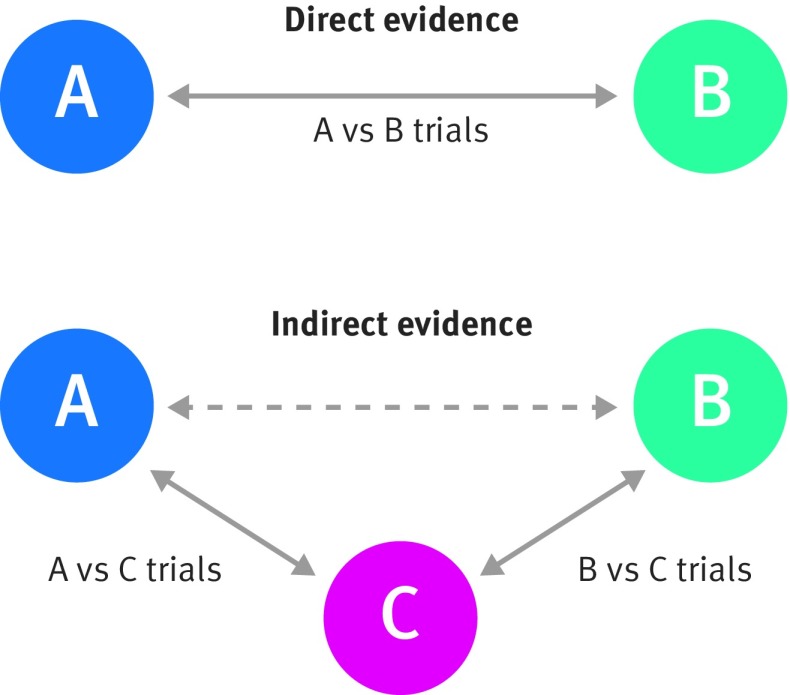
Fig 4 Visual representation of direct and indirect evidence toward the comparison of A versus B (adapted from Song et al 201129)
None
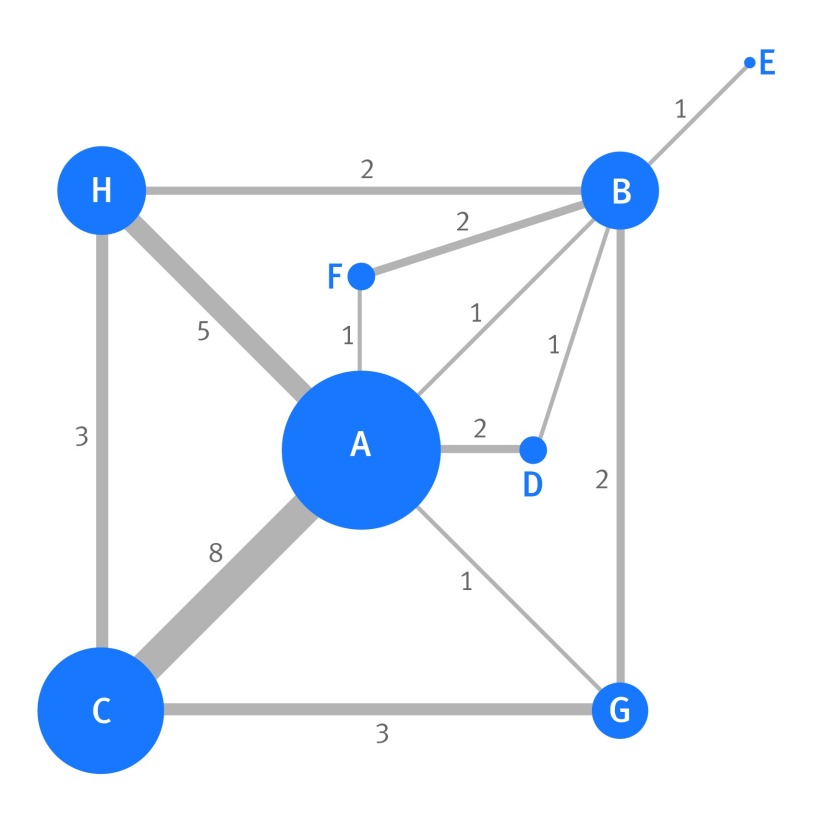
Fig 5 Network map of the direct comparisons available in the 28 trials examining the effect of eight thrombolytics (labelled A to H) on 30-35 day mortality in patients with acute myocardial infarction. Each node (circle) represents a different treatment, and its size is proportional to the number of trials in which it is directly examined. The width of the line joining two nodes is proportional to the number of trials that directly compare the two respective treatments (the number is also shown next to the line). Where no line directly joins two nodes (eg, treatments C and D), this indicates that no trial directly compared the two respective treatments. A=streptokinase; B=accelerated altepase; C=alteplase; D=streptokinase+alteplase; E=tenecteplase; F=reteplase; G=urokinase; H=anti-streptilase
None
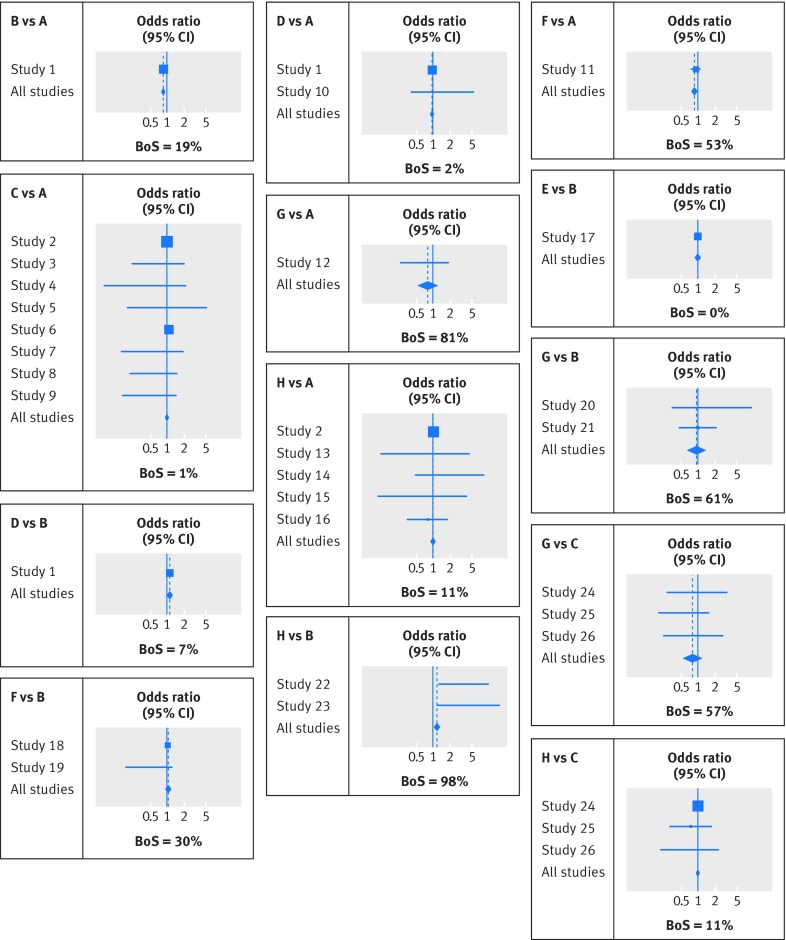
Fig 6 Extended forest plot showing the network meta-analysis results for all comparisons where direct evidence was available in at least one trial. Each square denotes the odds ratio estimate for that study, with the size of the square proportional to the number of patients in that study, and the corresponding horizontal line denotes the confidence interval. The centre of each diamond denotes the summary odds ratio from the network meta-analysis, and the width of the diamond provides its 95% confidence interval. BoS denotes the borrowing of strength statistic, which can range from 0% to 100%
None
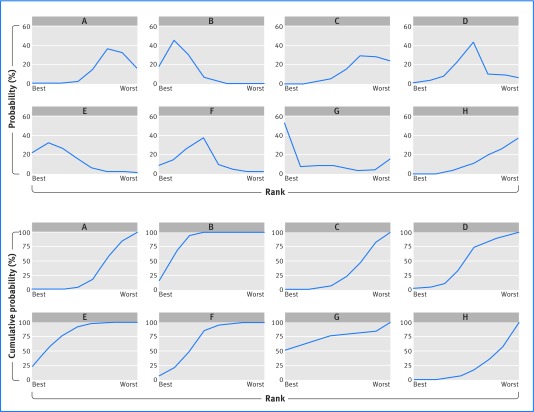
Fig 7 Plots of the ranking probability for each treatment considered in the thrombolytics network meta-analysis. (Top panel) the probability scale; (bottom panel) the cumulative probability scale
None
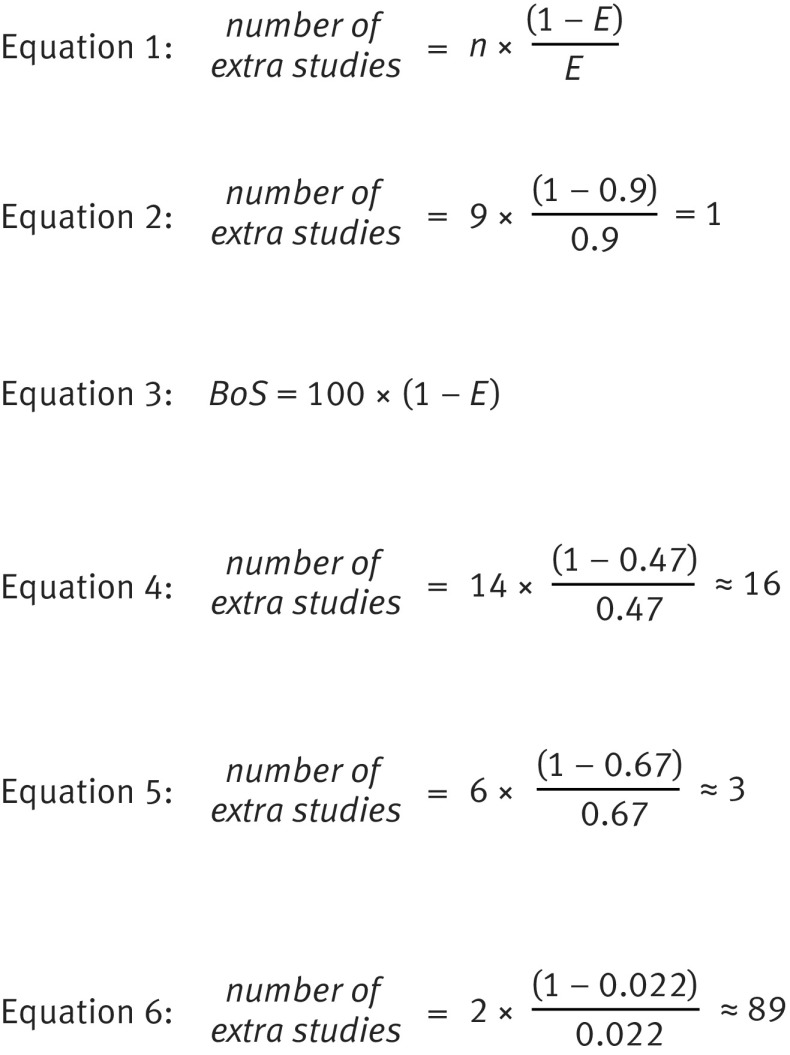
Fig 8 Equations used to produce figures in the text

References

    1. Lu G, Ades AE. Assessing evidence inconsistency in mixed treatment comparisons. J Am Stat Assoc 2006;101:447-59 10.1198/016214505000001302. - DOI
    1. Zhang Y, Zhao D, Gong C, et al. Prognostic role of hormone receptors in endometrial cancer: a systematic review and meta-analysis. World J Surg Oncol 2015;13:208 10.1186/s12957-015-0619-1 pmid:26108802. - DOI - PMC - PubMed
    1. Macleod MR, Michie S, Roberts I, et al. Biomedical research: increasing value, reducing waste. Lancet 2014;383:101-4. 10.1016/S0140-6736(13)62329-6 pmid:24411643. - DOI - PubMed
    1. Glasziou P, Altman DG, Bossuyt P, et al. Reducing waste from incomplete or unusable reports of biomedical research. Lancet 2014;383:267-76. 10.1016/S0140-6736(13)62228-X pmid:24411647. - DOI - PubMed
    1. Chan AW, Song F, Vickers A, et al. Increasing value and reducing waste: addressing inaccessible research. Lancet 2014;383:257-66. 10.1016/S0140-6736(13)62296-5 pmid:24411650. - DOI - PMC - PubMed

MeSH terms