


Impacts of natural factors and farming practices on greenhouse gas emissions in the North China Plain: A meta-analysis
- PMID: 28904752
- PMCID: PMC5587491
- DOI: 10.1002/ece3.3211
Impacts of natural factors and farming practices on greenhouse gas emissions in the North China Plain: A meta-analysis
Abstract
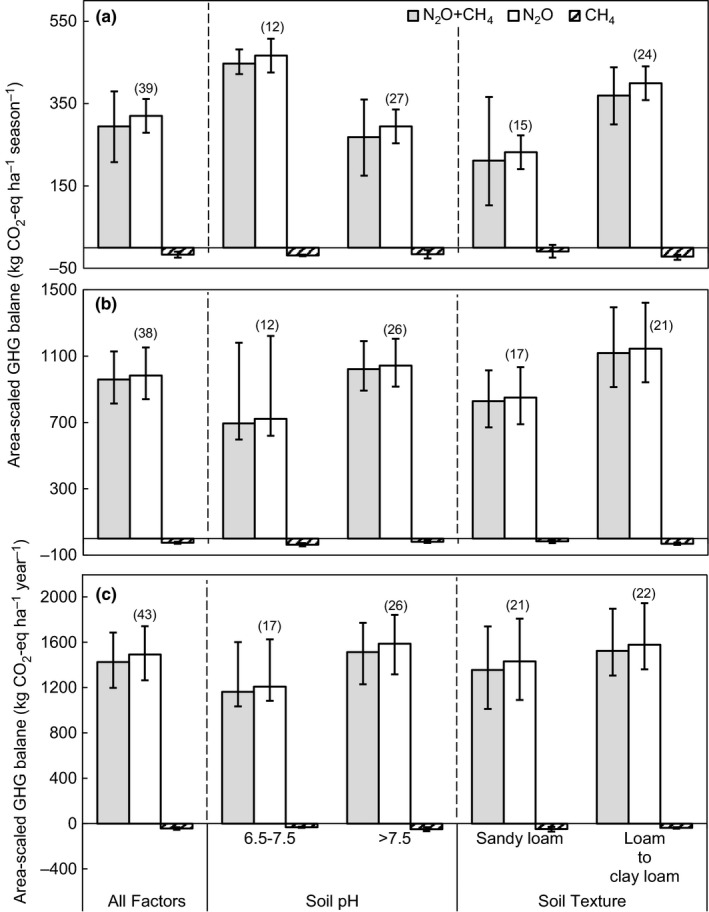
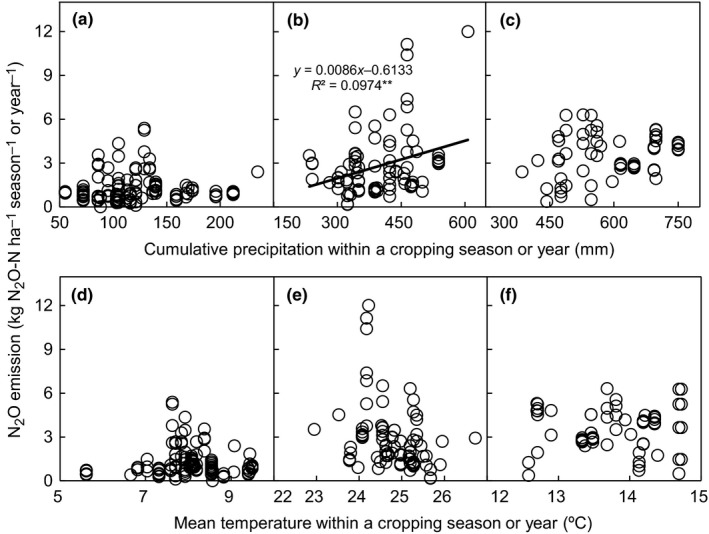
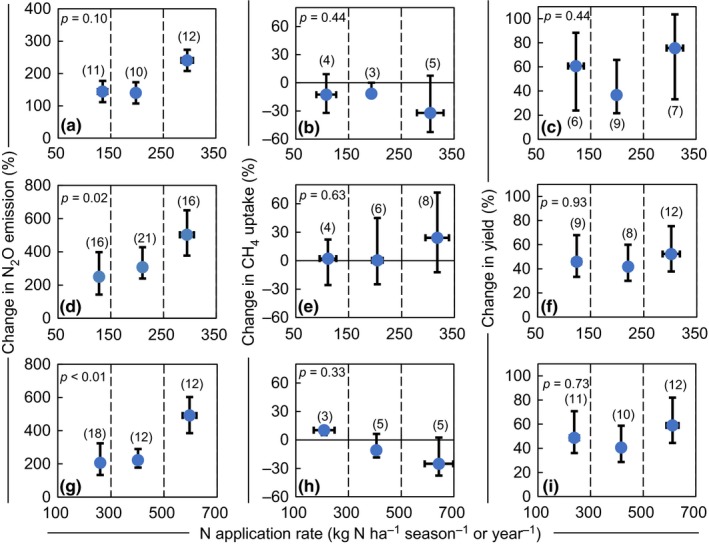
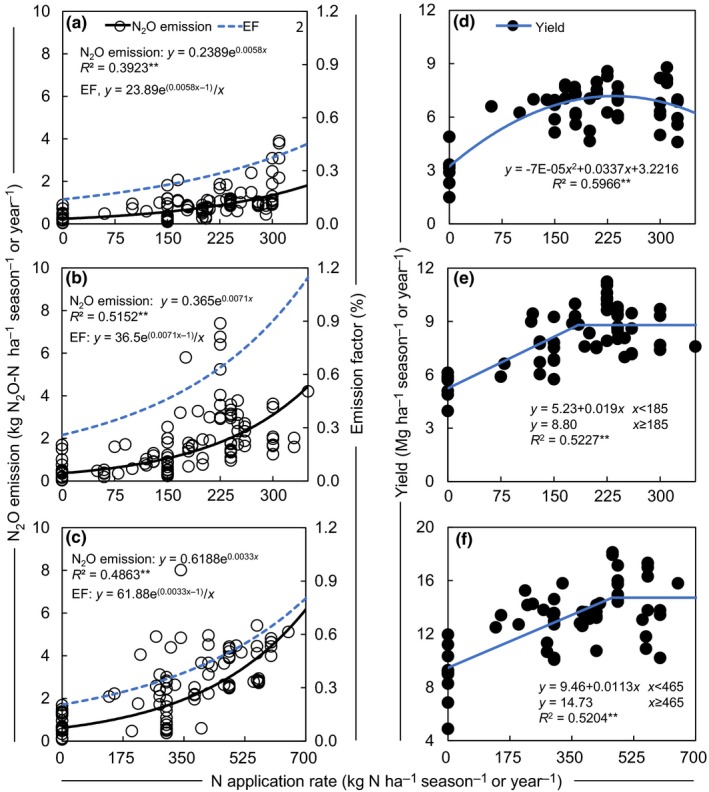
Requirements for mitigation of the continued increase in greenhouse gas (GHG) emissions are much needed for the North China Plain (NCP). We conducted a meta-analysis of 76 published studies of 24 sites in the NCP to examine the effects of natural conditions and farming practices on GHG emissions in that region. We found that N2O was the main component of the area-scaled total GHG balance, and the CH 4 contribution was <5%. Precipitation, temperature, soil pH, and texture had no significant impacts on annual GHG emissions, because of limited variation of these factors in the NCP. The N2O emissions increased exponentially with mineral fertilizer N application rate, with y = 0.2389e0.0058x for wheat season and y = 0.365e0.0071x for maize season. Emission factors were estimated at 0.37% for wheat and 0.90% for maize at conventional fertilizer N application rates. The agronomic optimal N rates (241 and 185 kg N ha-1 for wheat and maize, respectively) exhibited great potential for reducing N2O emissions, by 0.39 (29%) and 1.71 (56%) kg N2O-N ha-1 season-1 for the wheat and maize seasons, respectively. Mixed application of organic manure with reduced mineral fertilizer N could reduce annual N2O emissions by 16% relative to mineral N application alone while maintaining a high crop yield. Compared with conventional tillage, no-tillage significantly reduced N2O emissions by ~30% in the wheat season, whereas it increased those emissions by ~10% in the maize season. This may have resulted from the lower soil temperature in winter and increased soil moisture in summer under no-tillage practice. Straw incorporation significantly increased annual N2O emissions, by 26% relative to straw removal. Our analysis indicates that these farming practices could be further tested to mitigate GHG emission and maintain high crop yields in the NCP.
Keywords: farming practice; fertilizer; meta‐analysis; methane; natural factor; nitrous oxide.
Figures
References
-
- Adviento‐Borbe, M. A. A. , Haddix, M. L. , Binder, D. L. , Walters, D. T. , & Dobermann, A. (2007). Soil greenhouse gas fluxes and global warming potential in four high‐yielding maize systems. Global Change Biology, 13, 1972–1988.
-
- Akiyama, H. , Morimoto, S. , Hayatsu, M. , Hayakawa, A. , Sudo, S. , & Yagi, K. (2013). Nitrification, ammonia‐oxidizing communities, and N2O and CH4 fluxes in an imperfectly drained agricultural field fertilized with coated urea with and without dicyandiamide. Biology and Fertility of Soils, 49, 213–223.
-
- Akiyama, H. , Yan, X. , & Yagi, K. (2010). Evaluation of effectiveness of enhanced‐efficiency fertilizers as mitigation options for N2O and NO emissions from agricultural soils: Meta‐analysis. Global Change Biology, 16, 1837–1846.
-
- Alvarez, R. , & Steinbach, H. (2009). A review of the effects of tillage systems on some soil physical properties, water content, nitrate availability and crops yield in the Argentine Pampas. Soil and Tillage Research, 104, 1–15.
Grants and funding
LinkOut - more resources
Full Text Sources
Other Literature Sources
Research Materials
