Review
. 2017 Sep;36(3):209-223.
doi: 10.23876/j.krcp.2017.36.3.209. Epub 2017 Sep 30.

Treatment of renal anemia: Erythropoiesis stimulating agents and beyond

Affiliations
Review

Treatment of renal anemia: Erythropoiesis stimulating agents and beyond

Patrick Biggar et al. Kidney Res Clin Pract. 2017 Sep.

Abstract

Anemia, complicating the course of chronic kidney disease, is a significant parameter, whether interpreted as subjective impairment or an objective prognostic marker. Renal anemia is predominantly due to relative erythropoietin (EPO) deficiency. EPO inhibits apoptosis of erythrocyte precursors. Studies using EPO substitution have shown that increasing hemoglobin (Hb) levels up to 10-11 g/dL is associated with clinical improvement. However, it has not been unequivocally proven that further intensification of erythropoiesis stimulating agent (ESA) therapy actually leads to a comprehensive benefit for the patient, especially as ESAs are potentially associated with increased cerebro-cardiovascular events. Recently, new developments offer interesting options not only via stimulating erythropoeisis but also by employing additional mechanisms. The inhibition of activin, a member of the transforming growth factor superfamily, has the potential to correct anemia by stimulating liberation of mature erythrocyte forms and also to mitigate disturbed mineral and bone metabolism as well. Hypoxia-inducible factor prolyl hydroxylase inhibitors also show pleiotropic effects, which are at the focus of present research and have the potential of reducing mortality. However, conventional ESAs offer an extensive body of safety evidence, against which the newer substances should be measured. Carbamylated EPO is devoid of Hb augmenting effects whilst exerting promising tissue protective properties. Additionally, the role of hepcidin antagonists is discussed. An innovative new hemodialysis blood tube system, reducing blood contact with air, conveys a totally different and innocuous option to improve renal anemia by reducing mechanical hemolysis.

Keywords: Activin; Anemia; Erythropoiesis stimulating agent; Hepcidin; Hypoxia inducible transcription factor.


Conflict of interest statement

Conflicts of interest All authors have no conflicts of interest to declare.

Figures
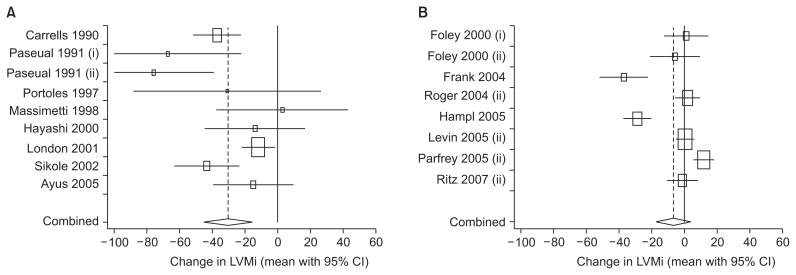
Figure 1
Figure 1. Effects of anemia correction on left ventricular hypertrophy
(A) Significant regression of left ventricular hypertrophy with initial hemoglobin (Hb)-levels of < 10 g/dL and aiming for 10 to 12 g/dL. (B) Non-significant regression of left ventricular hypertrophy with initial Hb levels of 10 to 12 g/dL and aiming for > 12 g/dL. CI, confidence interval. LVMi, left ventricular mass index. Adated from the article of Parfrey et al (Clin J Am Soc Nephrol 4:755–762, 2009) [15] with original copyright holder’s permission.
Figure 2
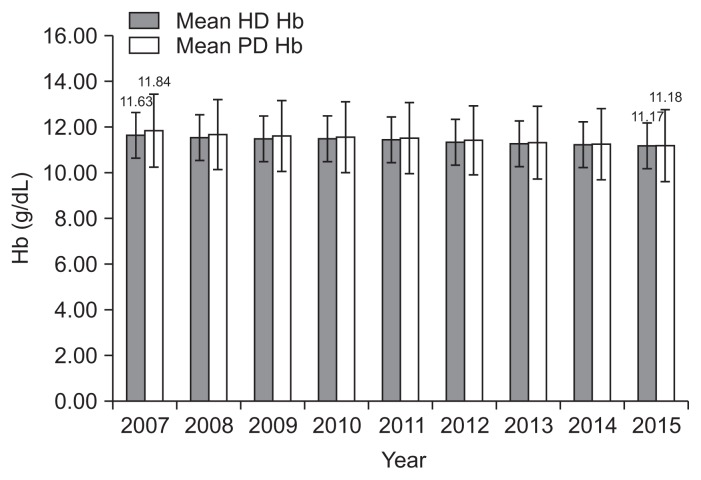
Figure 2
Hemoglobin (Hb) levels in g/dL from 2007 until 2015 (n = approximately 15,000) in KfH-Institution hemodialysis (HD) and peritoneal dialysis (PD) patients in Germany (QIN Data).
Figure 3
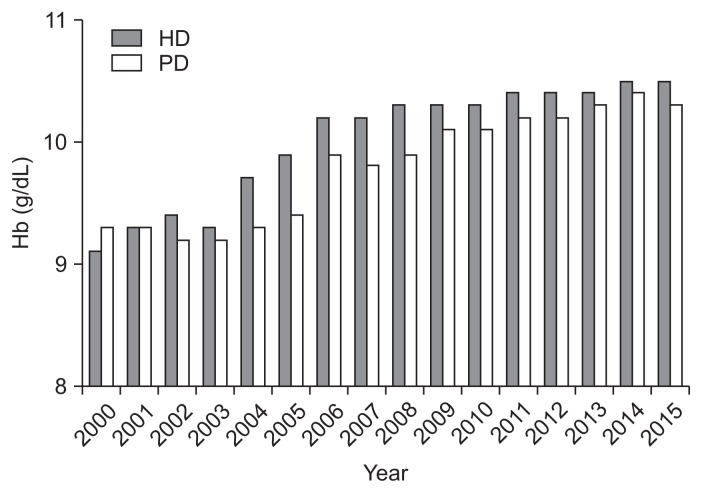
Figure 3
Hemoglobin (Hb) course from 2000 until 2015 in hemodialysis (HD) and peritoneal dialysis (PD) patients in South Korea according to Korean end-stage renal disease registry data.
Figure 4
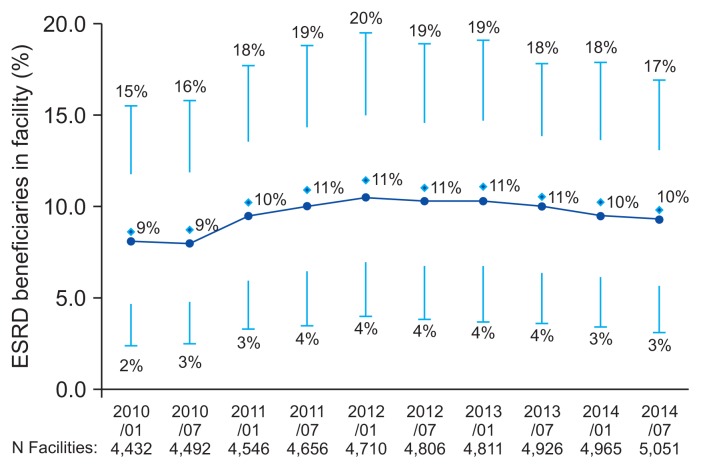
Figure 4
Dialysis Outcomes and Practice Patterns Study Program data showing a plateau in Medicare red cell blood transfusion claims among facilities with at least 20 patients since 2012 following an increase in previous years (http:/www.dopps.org/DPM). ESRD, end-stage renal disease.
Figure 5
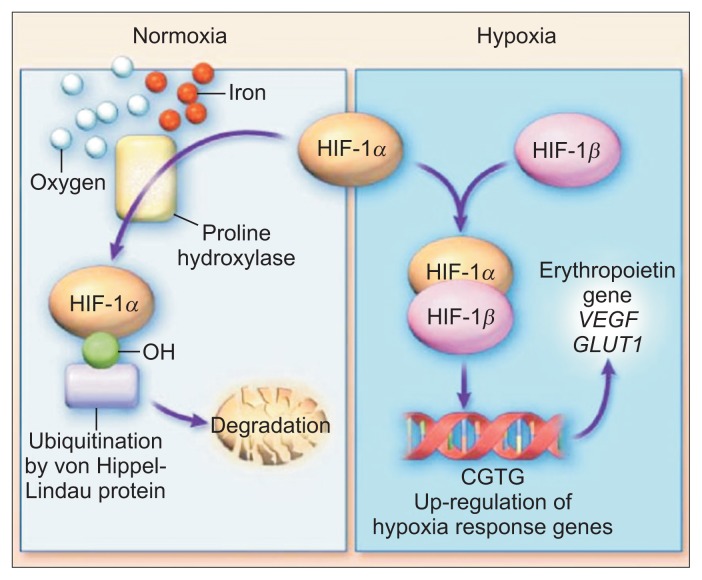
Figure 5. In the presence of oxygen, prolin hydroxylase oxidates hypoxia inducible transcription factors (HIF)-1α, which is then degraded (ubiquination) via the Hippel-Lindau-protein, thus inhibiting conglomeration of the HIF-1α/HIF-1β-complex, which would otherwise up-regulate the hypoxia-response genes
Adapted from the article of Prchal (N Engl J Med 348:1282–1283, 2003) [53] with original copyright holder’s permission.
Figure 6
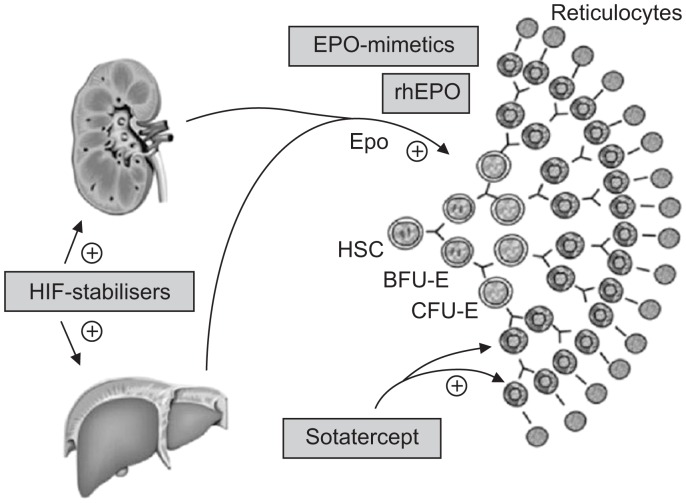
Figure 6. Overview of pharmacological sites of actions in erythropoiesis
In contrast to EPO, which influences the survival of early erythrocyte cells, sotatercept induces the liberation of mature erythrocytes. HIF inhibitors have more mechanisms of action, e.g., augmentation of residual EPO production and reduction of hepcidin. BFU-E, burstforming unit-erythroid; CFU-E, colony-forming unit-erythroid; EPO, erythropoietin; HIF, hypoxia inducible transcription factor; HSC, hematopoietic stem cell; rhEPO, recombinant human EPO. Adapted from the article of Jelkmann (Nephrol Dial Transplant 30:553–559, 2015) [43] with original copyright holder’s permission.
Figure 7
Figure 7
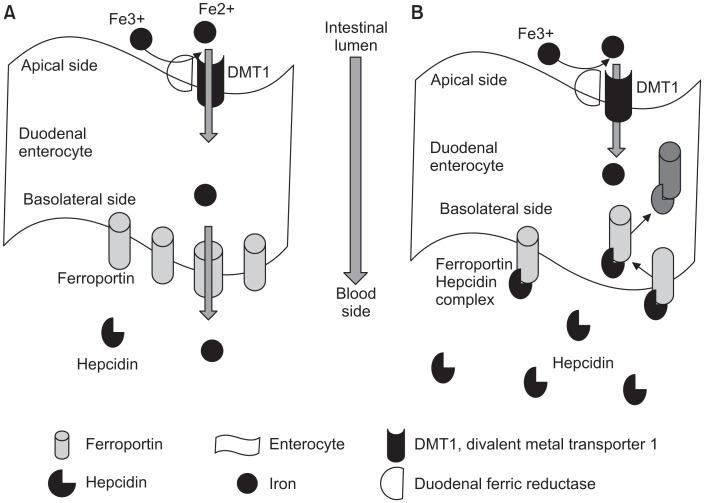
Impact of hepcidin levels on duodenal iron absorption. (A) Normal duodenal iron absorption under conditions of low hepcidin blood levels. (B) Decreased duodenal iron absorption under conditions of high hepcidin levels. Adapted from the article of Larson and Coyne (Kidney Res Clin Pract 32:11–15, 2013) [89] with original copyright holder’s permission.
Figure 8
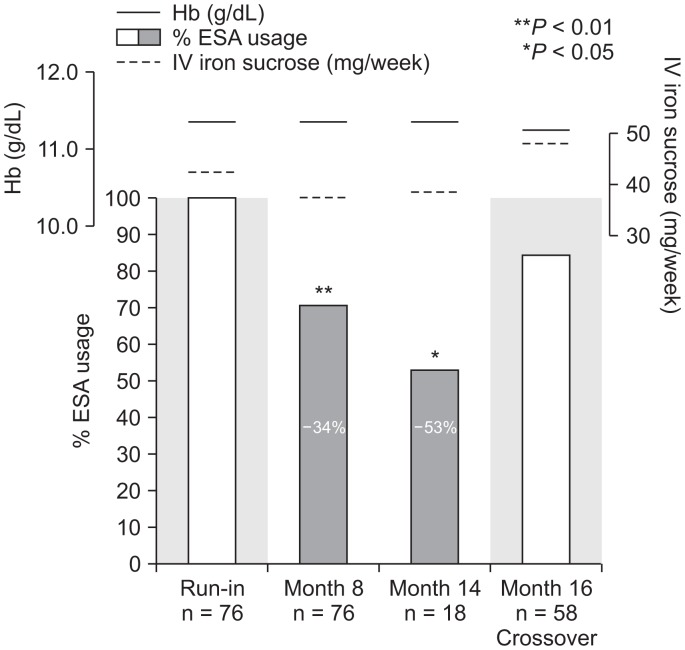
Figure 8. Reduction in ESA- and iron requirement employing specially constructed dialysis tubing to minimize blood-air-contact
Reverting back to standard tubing resulted in an increase in ESA and iron requirements. ESA, erythropoiesis stimulating agent; Hb, hemoglobin; IV, intravenous. Adapted from the abstract of Macdougall et al in American Society of Nephrology (ASN) Kidney Week Abstract Supplement (2016, Chicago) with original copyright holder’s permission.

References

    1. Ibrahim HN, Ishani A, Foley RN, Guo H, Liu J, Collins AJ. Temporal trends in red blood transfusion among US dialysis patients, 1992–2005. Am J Kidney Dis. 2008;52:1115–1121. doi: 10.1053/j.ajkd.2008.07.022. - DOI - PubMed
    1. Lawler EV, Bradbury BD, Fonda JR, Gaziano JM, Gagnon DR. Transfusion burden among patients with chronic kidney disease and anemia. Clin J Am Soc Nephrol. 2010;5:667–672. doi: 10.2215/CJN.06020809. - DOI - PMC - PubMed
    1. Fishbane S. Erythropoiesis-stimulating agent treatment with full anemia correction: a new perspective. Kidney Int. 2009;75:358–365. doi: 10.1038/ki.2008.467. - DOI - PubMed
    1. Katzung BG. Basic & clinical pharmacology. 10th edition. New York: McGraw Hill; 2007. pp. 536–538.
    1. Mulcahy L. The erythropoietin receptor. Semin Oncol. 2001;28(2 Suppl 8):19–23. doi: 10.1016/S0093-7754(01)90208-8. - DOI - PubMed