


Radish (Raphanus sativus) and Diabetes
- PMID: 28906451
- PMCID: PMC5622774
- DOI: 10.3390/nu9091014
Radish (Raphanus sativus) and Diabetes
Abstract
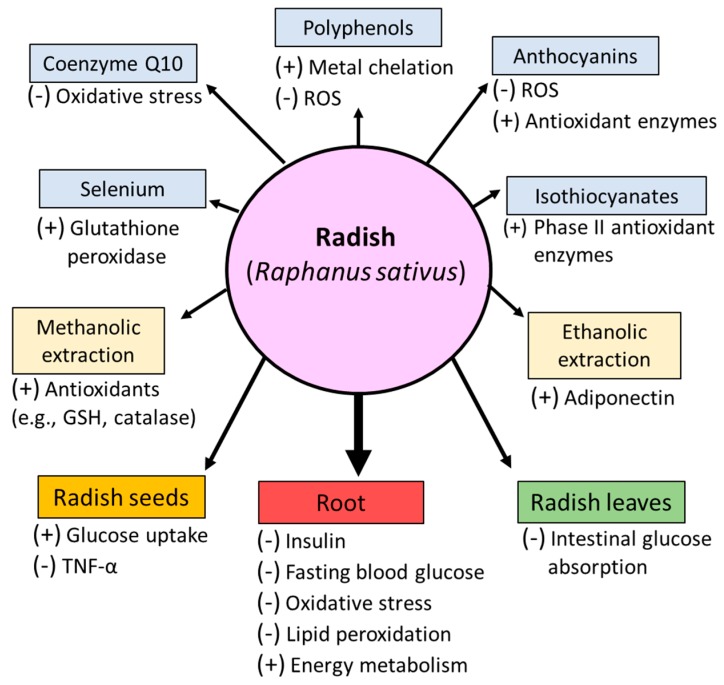
For more than three decades, various in vitro and in vivo studies have linked radishes with diabetes, though this link has not been discussed. This review systematically addresses and summarizes the effect of radishes on diabetes. We searched the Web of Science, PubMed, and EMBASE databases for English language articles from June 1987 through May 2017 using the key words "radish" and "diabetes," and the references from particular reports were also considered if relevant. In summary, radish has been identified as having antidiabetic effects, making it favorable for those with diabetic conditions. This may be due to its ability to enhance the antioxidant defense mechanism and reduce the accumulation of free radicals, affect hormonal-induced glucose hemostasis, promote glucose uptake and energy metabolism, and reduce glucose absorption in the intestine. However, this summary requires further confirmation in research in vivo studies and clinical trials.
Keywords: Raphanus sativus; antioxidants; diabetes; glucose hemostasis; radish.
Conflict of interest statement
The author declares no conflict of interest.
Figures
References
-
- Khattak K.F. Nutrient composition, phenolic content and free radical scavenging activity of some uncommon vegetables of Pakistan. Pak. J. Pharm. Sci. 2011;24:277–283. - PubMed
-
- Ishida M., Kakizaki T., Morimitsu Y., Ohara T., Hatakeyama K., Yoshiaki H., Kohori J., Nishio T. Novel glucosinolate composition lacking 4-methylthio-3-butenyl glucosinolate in japanese white radish (Raphanus sativus L.) Theor. Appl. Genet. 2015;128:2037–2046. doi: 10.1007/s00122-015-2564-3. - DOI - PubMed
Publication types
MeSH terms
Substances
LinkOut - more resources
Full Text Sources
Other Literature Sources
Medical
