


Current and Emerging Technologies for Probing Molecular Signatures of Traumatic Brain Injury
- PMID: 28912750
- PMCID: PMC5582086
- DOI: 10.3389/fneur.2017.00450
Current and Emerging Technologies for Probing Molecular Signatures of Traumatic Brain Injury
Abstract
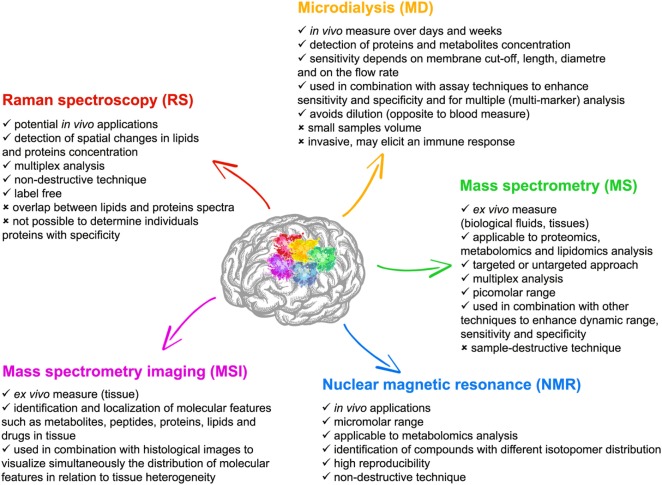
Traumatic brain injury (TBI) is understood as an interplay between the initial injury, subsequent secondary injuries, and a complex host response all of which are highly heterogeneous. An understanding of the underlying biology suggests a number of windows where mechanistically inspired interventions could be targeted. Unfortunately, biologically plausible therapies have to-date failed to translate into clinical practice. While a number of stereotypical pathways are now understood to be involved, current clinical characterization is too crude for it to be possible to characterize the biological phenotype in a truly mechanistically meaningful way. In this review, we examine current and emerging technologies for fuller biochemical characterization by the simultaneous measurement of multiple, diverse biomarkers. We describe how clinically available techniques such as cerebral microdialysis can be leveraged to give mechanistic insights into TBI pathobiology and how multiplex proteomic and metabolomic techniques can give a more complete description of the underlying biology. We also describe spatially resolved label-free multiplex techniques capable of probing structural differences in chemical signatures. Finally, we touch on the bioinformatics challenges that result from the acquisition of such large amounts of chemical data in the search for a more mechanistically complete description of the TBI phenotype.
Keywords: Raman spectroscopy; lipidomics; metabolomics; microdialysis; proteomics; traumatic brain injury.
Figures
References
Publication types
Grants and funding
LinkOut - more resources
Full Text Sources
Other Literature Sources
