


Comparison of mid- to long-term clinical outcomes between anatomical testing and usual care in patients with suspected coronary artery disease: A meta-analysis of randomized trials
- PMID: 28914973
- PMCID: PMC6490612
- DOI: 10.1002/clc.22799
Comparison of mid- to long-term clinical outcomes between anatomical testing and usual care in patients with suspected coronary artery disease: A meta-analysis of randomized trials
Abstract
Background: Controversies remain regarding clinical outcomes following initial strategies of coronary computed tomography angiography (CCTA) vs usual care with functional testing in patients with suspected coronary artery disease (CAD).
Hypothesis: CCTA as initial diagnostic strategy results in better mid- to long-term outcomes than usual care in patients with suspected CAD.
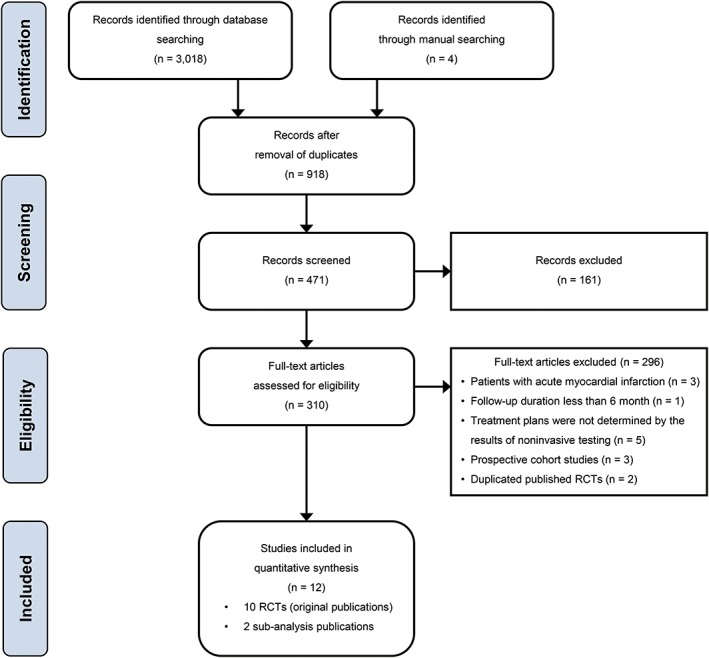
Methods: We searched PubMed, Embase, and Cochrane Library for randomized controlled trials comparing clinical outcomes during ≥6 months' follow-up between initial anatomical testing by CCTA vs usual care with functional testing in patients with suspected CAD. Occurrence of all-cause mortality, nonfatal myocardial infarction (MI), and major adverse cardiovascular events (MACE), and use of invasive coronary angiography and coronary revascularization, were compared between the 2 diagnostic strategies.
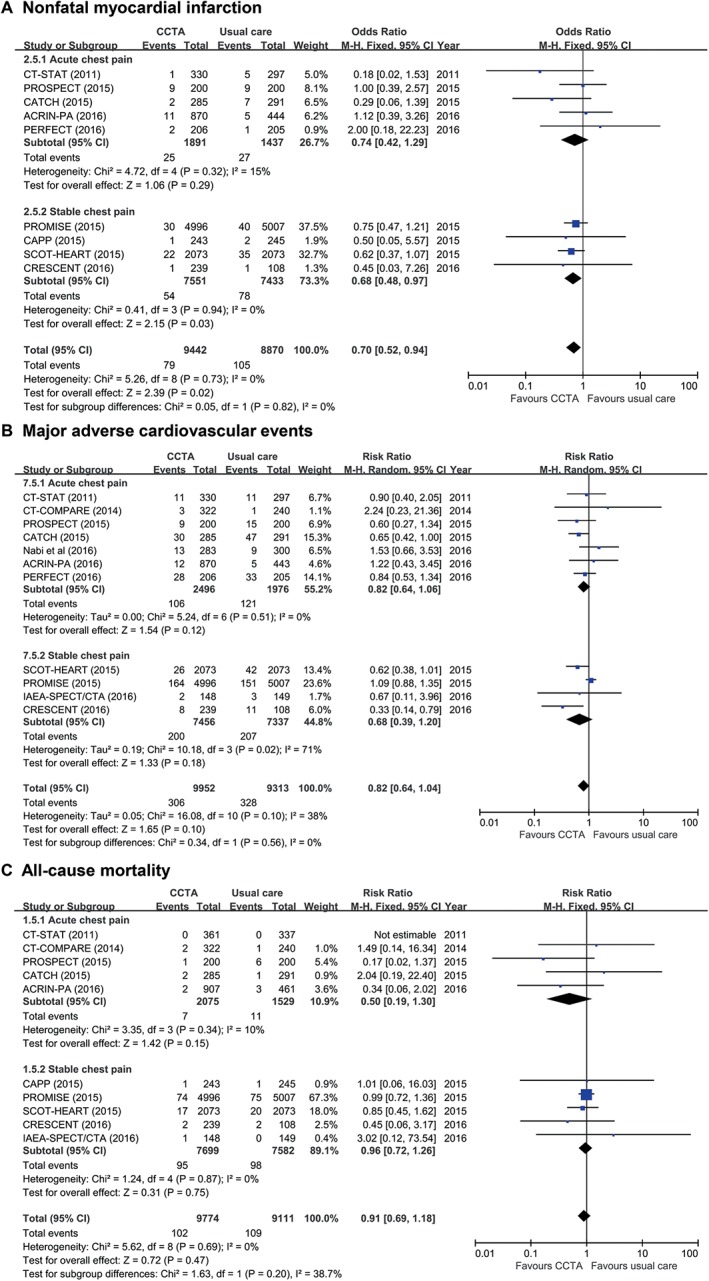
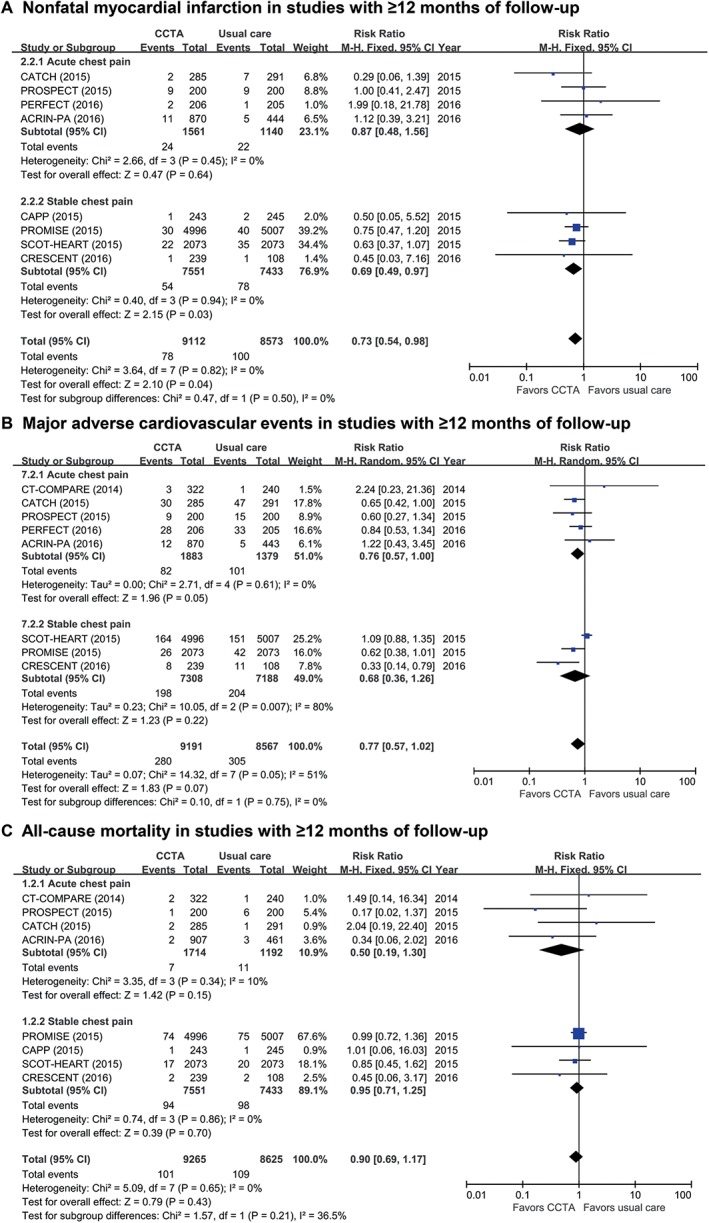
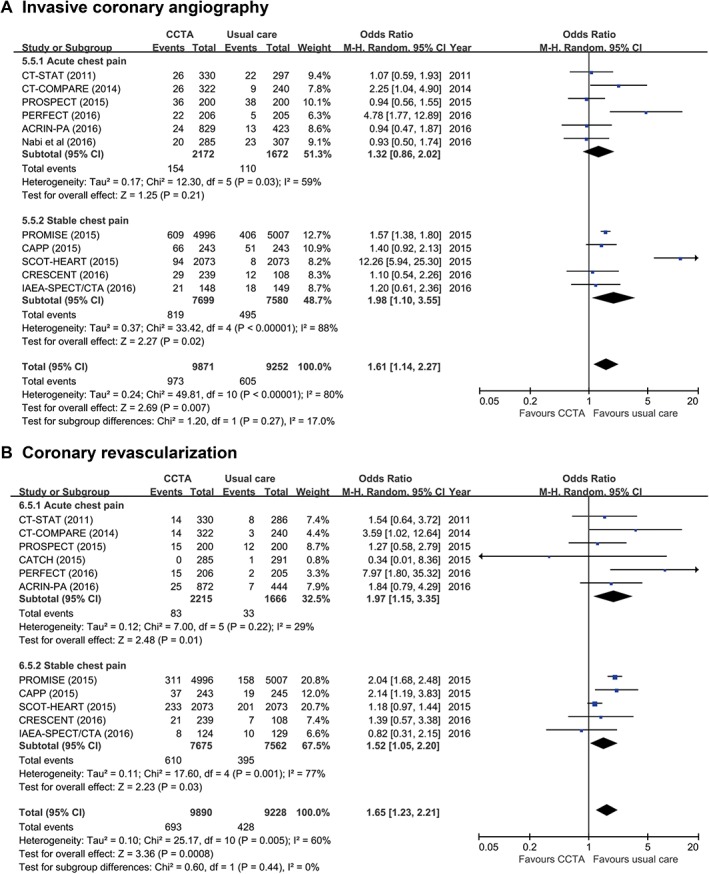
Results: Twelve trials were included (20 014 patients; mean follow-up, 20.5 months). Patients undergoing CCTA as initial noninvasive testing had lower risk of nonfatal MI compared with those treated with usual care (risk ratio [RR]: 0.70, 95% confidence interval [CI]: 0.52-0.94, P = 0.02). There was a tendency for reduced MACE following initial CCTA strategy, but not for risk of all-cause mortality. Compared with functional testing, the CCTA strategy increased use of invasive coronary angiography (RR: 1.53, 95% CI: 1.12-2.09, P = 0.007) and coronary revascularization (RR: 1.49, 95% CI: 1.11-2.00, P = 0.007).
Conclusions: Anatomical testing with CCTA as the initial noninvasive diagnostic modality in patients with suspected CAD resulted in lower risk of nonfatal MI than usual care with functional testing, at the expense of more frequent use of invasive procedures.
Keywords: Anatomical Testing; Coronary Artery Disease; Coronary CT Angiography; Functional Testing; Meta-Analysis.
© 2017 Wiley Periodicals, Inc.
Conflict of interest statement
The authors declare no potential conflicts of interest.
Figures
References
-
- Wolk MJ, Bailey SR, Doherty JU, et al; American College of Cardiology Foundation Appropriate Use CriteriaTask Force. ACCF/AHA/ASE/ASNC/HFSA/HRS/SCAI/SCCT/SCMR/STS 2013 multimodality appropriate use criteria for the detection and risk assessment of stable ischemic heart disease: a report of the American College of Cardiology Foundation Appropriate Use Criteria Task Force, American Heart Association, American Society of Echocardiography, American Society of Nuclear Cardiology, Heart Failure Society of America, Heart Rhythm Society, Society for Cardiovascular Angiography and Interventions, Society of Cardiovascular Computed Tomography, Society for Cardiovascular Magnetic Resonance, and Society of Thoracic Surgeons. J Am Coll Cardiol. 2014;63:380–406. - PubMed
-
- Montalescot G, Sechtem U, Achenbach S, et al. 2013 ESC guidelines on the management of stable coronary artery disease: the Task Force on the management of stable coronary artery disease of the European Society of Cardiology [published correction appears in Eur Heart J. 2014;35:2260–2261]. Eur Heart J. 2013;34:2949–3003. - PubMed
-
- Min JK, Koduru S, Dunning AM, et al. Coronary CT angiography versus myocardial perfusion imaging for near‐term quality of life, cost and radiation exposure: a prospective multicenter randomized pilot trial. J Cardiovasc Comput Tomogr. 2012;6:274–283. - PubMed
-
- Dedic A, Lubbers MM, Schaap J, et al. Coronary CT angiography for suspected ACS in the era of high‐sensitivity troponins: randomized multicenter study. J Am Coll Cardiol. 2016;67:16–26. - PubMed
Publication types
MeSH terms
LinkOut - more resources
Full Text Sources
Other Literature Sources
Medical
Miscellaneous
