


Virtual patients in the acquisition of clinical reasoning skills: does presentation mode matter? A quasi-randomized controlled trial
- PMID: 28915871
- PMCID: PMC5603058
- DOI: 10.1186/s12909-017-1004-2
Virtual patients in the acquisition of clinical reasoning skills: does presentation mode matter? A quasi-randomized controlled trial
Abstract
Background: The objective of this study is to compare two different instructional methods in the curricular use of computerized virtual patients in undergraduate medical education. We aim to investigate whether using many short and focused cases - the key feature principle - is more effective for the learning of clinical reasoning skills than using few long and systematic cases.
Methods: We conducted a quasi-randomized, non-blinded, controlled parallel-group intervention trial in a large medical school in Southwestern Germany. During two seminar sessions, fourth- and fifth-year medical students (n = 56) worked on the differential diagnosis of the acute abdomen. The educational tool - virtual patients - was the same, but the instructional method differed: In one trial arm, students worked on multiple short cases, with the instruction being focused only on important elements ("key feature arm", n = 30). In the other trial arm, students worked on few long cases, with the instruction being comprehensive and systematic ("systematic arm", n = 26). The overall training time was the same in both arms. The students' clinical reasoning capacity was measured by a specifically developed instrument, a script concordance test. Their motivation and the perceived effectiveness of the instruction were assessed using a structured evaluation questionnaire.
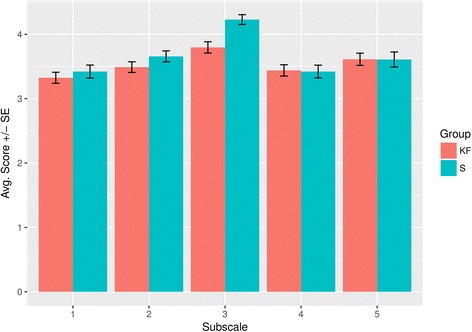
Results: Upon completion of the script concordance test with a reference score of 80 points and a standard deviation of 5 for experts, students in the key feature arm attained a mean of 57.4 points (95% confidence interval: 50.9-63.9), and in the systematic arm, 62.7 points (57.2-68.2), with Cohen's d at 0.337. The difference is statistically non-significant (p = 0.214). In the evaluation survey, students in the key feature arm indicated that they experienced more time pressure and perceived the material as more difficult.
Conclusions: In this study powered for a medium effect, we could not provide empirical evidence for the hypothesis that a key feature-based instruction on multiple short cases is superior to a systematic instruction on few long cases in the curricular implementation of virtual patients. The results of the evaluation survey suggest that learners should be given enough time to work through case examples, and that caution should be taken to prevent cognitive overload.
Keywords: Clinical reasoning; Instructional methods; Key features; Undergraduate medical education; Virtual patients.
Conflict of interest statement
Ethics approval and consent to participate
The study design was presented to and approved by the ethical review board of the University Medical Center of Freiburg. Specifically, the chair stated that a full formal opinion of the committee was not necessary given that our study was educational in nature and that it had been carefully designed along the general requirements for educational studies at the University Medical Center of Freiburg.
Oral informed consent was obtained from all students to participate in the study at the occasion of the introductory session to the surgical clerkship, where students were informed about our study, its course and general purpose. Written informed consent was obtained for pseudonymized analysis of the students’ SCT and MC test results.
Consent for publication
Not applicable.
Competing interests
The authors declare that they have no competing interests.
Publisher’s Note
Springer Nature remains neutral with regard to jurisdictional claims in published maps and institutional affiliations.
Figures


References
Publication types
MeSH terms
LinkOut - more resources
Full Text Sources
Other Literature Sources
