


Lactobacillus rhamnosus GG: An Overview to Explore the Rationale of Its Use in Cancer
- PMID: 28919861
- PMCID: PMC5585742
- DOI: 10.3389/fphar.2017.00603
Lactobacillus rhamnosus GG: An Overview to Explore the Rationale of Its Use in Cancer
Abstract
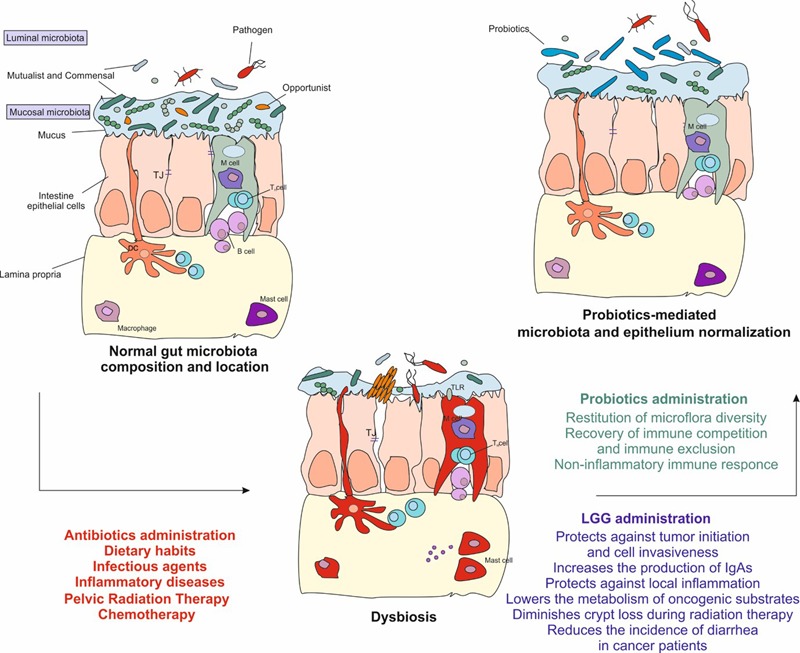
Cancer is the second leading cause of death in the western world. In the era of precision medicine, a significant number of cancer patients can be cured with several anti-cancer therapeutic regimens. However, therapy failure may be caused by treatment side effects, such as diarrhea, especially occurring in patients with gastrointestinal or pelvic malignancies. In particular, diarrhea is one of the most frequent gastrointestinal toxicity during cancer treatment and it can result from nearly bot chemo- and radio-therapeutic strategies currently used. Diarrhea has a serious impact on patients' quality of life and treatment dosing and schedule modification due to its severity can negatively influence treatment outcomes. In this context, probiotics may play an interesting role in several human diseases with an inflammatory bowel involvement and, among these, Lactobacillus rhamnosus GG (LGG) is one of the most characterized and utilized. In particular, LGG is able to reverse intestinal dysbiosis and moderate diarrhea. Moreover, preclinical studies have documented its effects in reducing chronic inflammation associated with cancer development. This review summarizes the preclinical results of LGG on cancer cells proliferation and tumor invasion as well as the potential role of LGG use in cancer patients for the prevention and management of diarrhea associated with cancer treatment. Overall, these encouraging data support further investigation on the use of LGG in stratified patients undergoing specific therapeutic protocols, including chemotherapy and pelvic radiotherapy, in order to reduce the development of severe diarrhea and thus improve the adherence to the therapy and patients' quality of life.
Keywords: Lactobacillus rhamnosus GG; cancer; chemotherapy; diarrhea; immunotherapy; probiotics; radiotherapy.
Figures
References
-
- Andreyev H. J., Davidson S. E., Gillespie C., Allum W. H., Swarbrick E., British Society of Gastroenterology et al. (2012). Practice guidance on the management of acute and chronic gastrointestinal problems arising as a result of treatment for cancer. Gut 61 179–192. 10.1136/gutjnl-2011-300563 - DOI - PMC - PubMed
Publication types
LinkOut - more resources
Full Text Sources
Other Literature Sources
