


Midkine's Role in Cardiac Pathology
- PMID: 28920060
- PMCID: PMC5599136
- DOI: 10.3390/jcdd4030013
Midkine's Role in Cardiac Pathology
Abstract
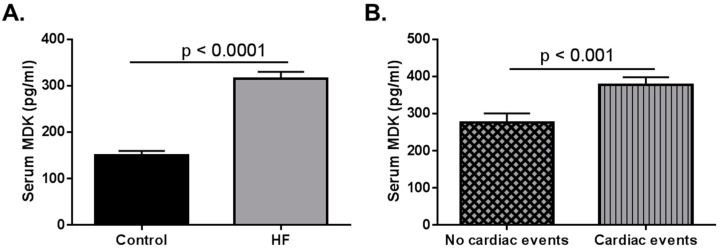
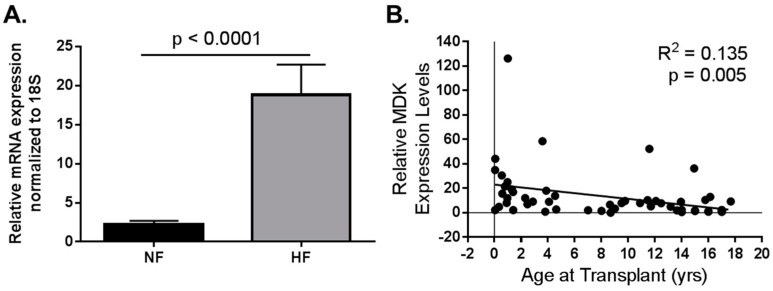
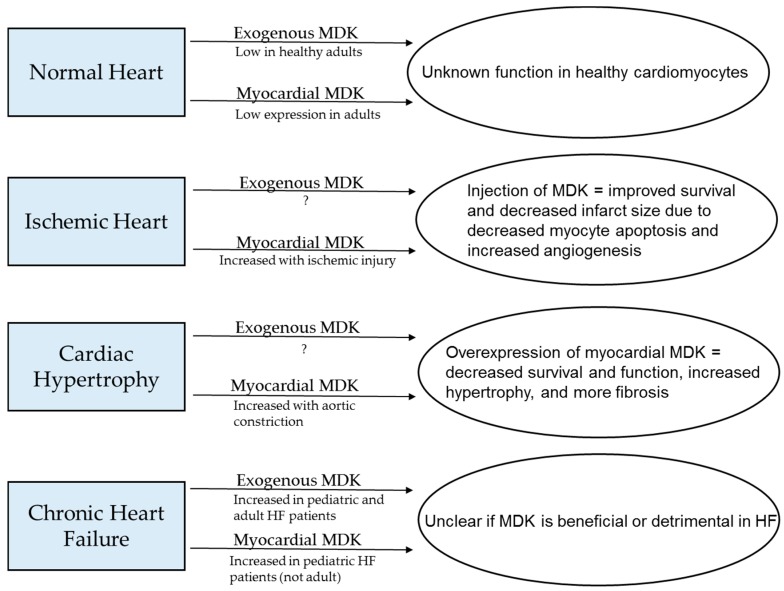
Midkine (MDK) is a heparin-binding growth factor that is normally expressed in mid-gestational development mediating mesenchymal and epithelial interactions. As organisms age, expression of MDK diminishes; however, in adults, MDK expression is associated with acute and chronic pathologic conditions such as myocardial infarction and heart failure (HF). The role of MDK is not clear in cardiovascular disease and currently there is no consensus if it plays a beneficial or detrimental role in HF. The lack of clarity in the literature is exacerbated by differing roles that circulating and myocardial MDK play in signaling pathways in cardiomyocytes (some of which have yet to be elucidated). Of particular interest, serum MDK is elevated in adults with chronic heart failure and higher circulating MDK is associated with worse cardiac function. In addition, pediatric HF patients have higher levels of myocardial MDK. This review focuses on what is known about the effect of exogenous versus myocardial MDK in various cardiac disease models in an effort to better clarify the role of midkine in HF.
Keywords: cardiac pathology; heart failure; midkine.
Conflict of interest statement
Conflicts of Interest: The authors declare no conflict of interest.
Figures
References
-
- Kadomatsu K. Midkine, a heparin-binding growth factor: Its discovery and functions. J. Jpn. Biochem. Soc. 1998;70:1315–1325. - PubMed
-
- Nakamoto M., Matsubara S., Miyauchi T., Obama H., Ozawa M., Muramatsu T. A new family of heparin binding growth/differentiation factors: Differential expression of the midkine (MK) and HB-GAM genes during mouse development. J. Biochem. 1992;112:346–349. doi: 10.1093/oxfordjournals.jbchem.a123903. - DOI - PubMed
Grants and funding
LinkOut - more resources
Full Text Sources
Other Literature Sources
Research Materials
Miscellaneous
