Simulating drinking in social networks to inform alcohol prevention and treatment efforts
- PMID: 28921997
- PMCID: PMC5690806
- DOI: 10.1037/adb0000308
Simulating drinking in social networks to inform alcohol prevention and treatment efforts
Abstract
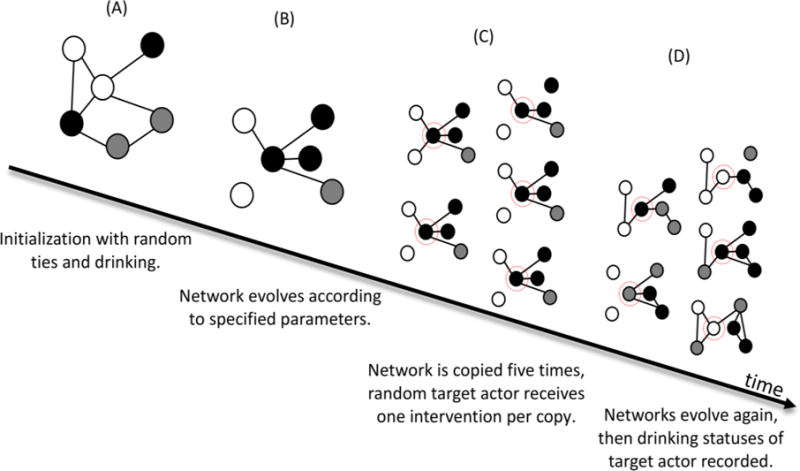
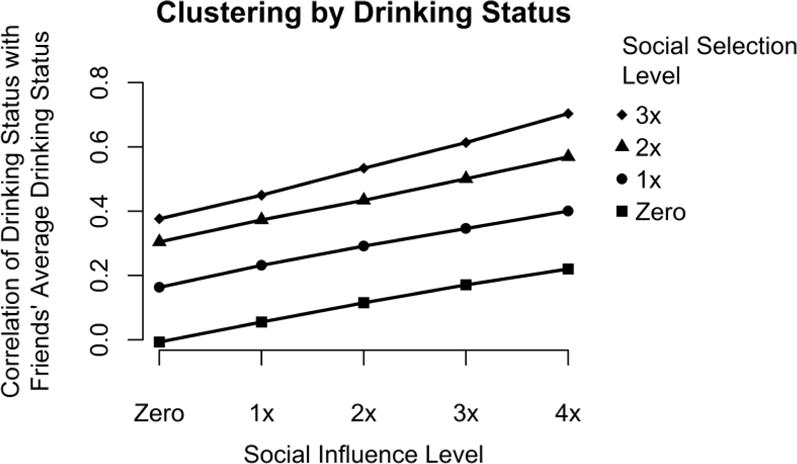
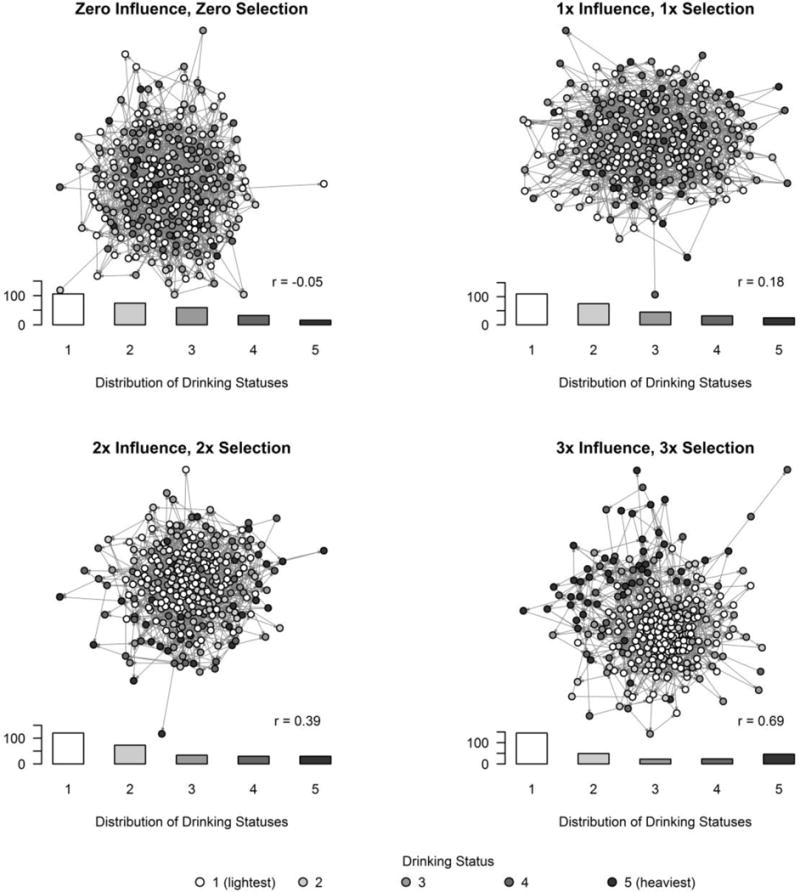
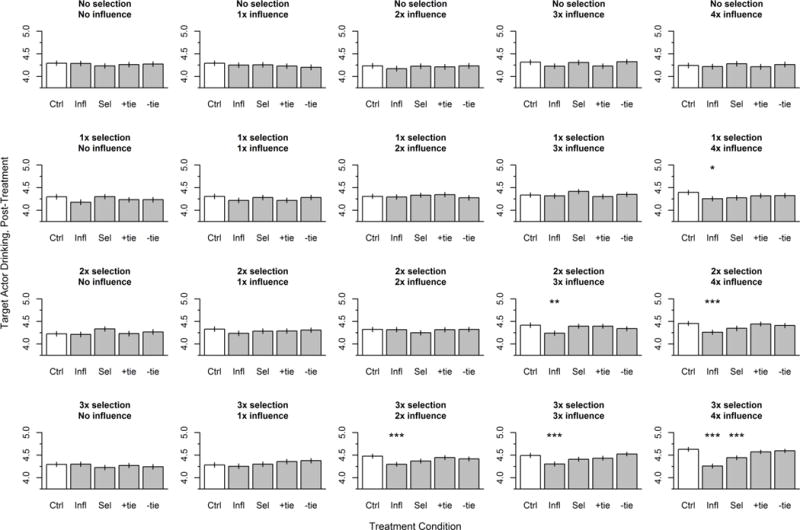
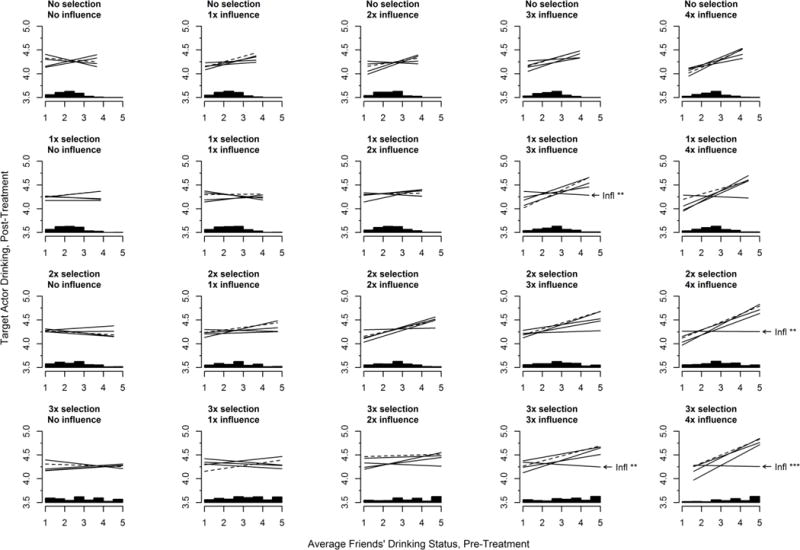
Adolescent drinking influences, and is influenced by, peer alcohol use. Several efficacious adolescent alcohol interventions include elements aimed at reducing susceptibility to peer influence. Modeling these interventions within dynamically changing social networks may improve our understanding of how such interventions work and for whom they work best. We used stochastic actor-based models to simulate longitudinal drinking and friendship formation within social networks using parameters obtained from a meta-analysis of real-world 10th grade adolescent social networks. Levels of social influence (i.e., friends affecting changes in one's drinking) and social selection (i.e., drinking affecting changes in one's friendships) were manipulated at several levels, which directly impacted the degree of clustering in friendships based on similarity in drinking behavior. Midway through each simulation, one randomly selected heavy-drinking actor from each network received an "intervention" that either (a) reduced their susceptibility to social influence, (b) reduced their susceptibility to social selection, (c) eliminated a friendship with a heavy drinker, or (d) initiated a friendship with a nondrinker. Only the intervention that eliminated targeted actors' susceptibility to social influence consistently reduced that actor's drinking. Moreover, this was only effective in networks with social influence and social selection that were at higher levels than what was found in the real-world reference study. Social influence and social selection are dynamic processes that can lead to complex systems that may moderate the effectiveness of network-based interventions. Interventions that reduce susceptibility to social influence may be most effective among adolescents with high susceptibility to social influence and heavier-drinking friends. (PsycINFO Database Record
(c) 2017 APA, all rights reserved).
Figures
References
-
- Andrews JA, Tildesley E, Hops H, Li F. The influence of peers on young adult substance use. Health Psychology: Official Journal of the Division of Health Psychology, American Psychological Association. 2002;21(4):349–357. - PubMed
-
- Barnett NP, Ott MQ, Clark MA. The relevance of network prominence and reciprocity of relationships for alcohol use and alcohol-related problems in a college residence hall network. Psychology of Addictive Behaviors. 2014;28(4):980–989. - PubMed
-
- Borsari B, Carey KB. Peer influences on college drinking: A review of the research. Journal of Substance Abuse. 2001;13(4):391–424. - PubMed
MeSH terms
Grants and funding
LinkOut - more resources
Full Text Sources
Other Literature Sources
Medical